
High pH levels in your pool often result from heavy rainfall, evaporation, or adding too much alkaline chemical like soda ash. Low pH can be caused by acid rain, excessive use of acidic chemicals, or swimmer load introducing contaminants. Environmental factors and chemical imbalances are common culprits. Maintaining proper pH is essential for clear water and equipment safety. If you want to understand how to balance these levels effectively, you’ll find helpful tips below.

Get pool and patio gear delivered free — and shop member deals
- Fast, free delivery on millions of items
- Access to Prime Big Deal Days deals on October 6–7
- Prime Video, Amazon Music and more included
Key Takeaways
- Heavy rain can dilute pool chemicals, lowering pH levels.
- Evaporation concentrates minerals, causing pH to rise.
- Excessive addition of alkaline substances like soda ash increases pH.
- Overuse of acids, such as muriatic acid, can lower pH too much.
- Contamination from environmental factors and improper chemical use disrupt pH balance.
Have you ever wondered why maintaining the right pH balance in a pool is so important? The answer lies in the delicate chemistry that keeps your pool safe, clean, and comfortable. When the pH level drifts too high or too low, it creates chemical imbalances that can cause a host of problems. High pH levels, for example, make it harder for disinfectants like chlorine to work effectively, leading to cloudy water and increased algae growth. On the other hand, low pH levels can cause corrosion of pool equipment and surfaces, as well as skin and eye irritation for swimmers. That’s why understanding the causes of these imbalances and knowing pH adjustment techniques is essential for maintaining a healthy swimming environment.
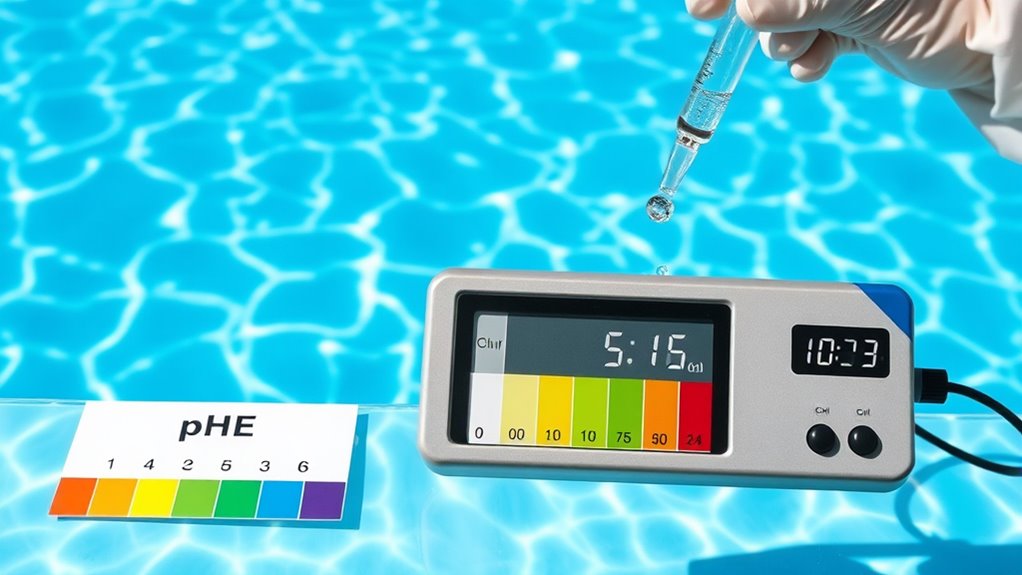
Chemical imbalances often stem from environmental factors or improper chemical use. Heavy rain, for instance, can dilute your pool’s chemicals and lower the pH, while evaporation can concentrate minerals and raise it. Adding too many alkaline substances like sodium carbonate (soda ash) can push the pH too high, resulting in scale buildup and cloudy water. Conversely, adding acid to lower pH may be necessary if it becomes too acidic, but overdoing it can swing the pH too far in the opposite direction. Regular testing helps you stay ahead of these issues, but knowing how to correct them precisely is equally important. pH adjustment techniques often involve using specific chemicals like pH increasers or decreasers, and applying them in proper amounts based on test results. For example, if your pH is too low, you’ll add a pH increaser, such as soda ash, gradually and re-test after each addition to avoid overshooting the target range. If it’s too high, you’ll add an acid like muriatic acid or sodium bisulfate, again carefully monitoring the levels until balance is restored.
Maintaining proper pH isn’t just about comfort; it directly impacts the effectiveness of sanitizers and the longevity of your pool equipment. By regularly testing your water and understanding how to perform pH adjustments, you can prevent many common issues before they escalate. It’s a simple process that requires attention and precision, but it pays off by keeping your pool water clear, safe, and inviting. Remember, small adjustments made consistently are far better than large corrections made infrequently. Developing a good understanding of water chemistry and the factors that influence pH levels can help you maintain your pool more effectively. With proper knowledge of chemical imbalances and pH adjustment techniques, you’ll be equipped to keep your pool in excellent condition all season long.
Frequently Asked Questions
How Often Should Pool Ph Be Tested?
You should test your pool’s pH level at least twice a week using pool test kits to guarantee proper pH balancing. Regular testing helps you catch any fluctuations early, preventing issues like algae growth or irritation. If your pool is heavily used or after heavy rain, check the pH more frequently. Maintaining the right pH level keeps your water comfortable and safe, making pool care easier.
Can High Ph Levels Damage Pool Equipment?
High pH levels can damage your pool equipment by causing equipment corrosion over time. When the pH is too high, it reduces the effectiveness of pool acid, making it harder to maintain proper water balance. This imbalance can lead to buildup and wear on your pool’s pumps, filters, and heaters. Regular testing and adjusting the pH level help prevent equipment damage and keep your pool running smoothly.
What Natural Remedies Can Lower Ph?
To lower pH naturally, you can try pH balancing with natural remedies like adding fresh lemon juice or vinegar to your pool. These acids help reduce alkalinity without harsh chemicals. Always test your water first, then gradually add your chosen remedy, stirring well. Keep monitoring the pH levels regularly to verify they stay within the ideal range. Natural remedies are effective and eco-friendly ways to maintain proper pH balance.
How Does Ph Affect Chlorine Effectiveness?
Proper pH levels promote powerful chlorine performance, ensuring your pool stays pristine. When pH is too high or too low, it hampers chlorine’s ability to kill bacteria and algae effectively. Achieving pH stability enhances chlorine synergy, maximizing its disinfecting prowess. If your pH fluctuates, chlorine becomes less effective, risking pool health. Keep pH balanced to boost chlorine effectiveness, maintain clarity, and create a safe, sparkling swimming environment.
Is Ph Adjustment Necessary After Rain?
Yes, you should modify pH after rain because rainwater dilution often causes pH fluctuation. Rain can lower or raise your pool’s pH, impacting chlorine effectiveness and water balance. Test your water after heavy rain, and if the pH is outside the ideal range (7.2-7.6), add pH adjusters to restore proper levels. Doing this ensures your sanitizer works efficiently and keeps your pool safe and clear.
Conclusion
To keep your pool balanced, you must stay vigilant and adjust pH levels as needed. Remember, neglecting these tweaks can turn your oasis into a veritable Pandora’s box of problems. Think of it like tending a garden—if you ignore the basics, chaos ensues. With consistent care, you’ll enjoy crystal-clear water and a safe swimming environment. So, don’t be a stoic statue—be proactive and keep your pool’s pH just right, or risk a watery mess.
Fall Picks
fall essentials
As an affiliate, we earn on qualifying purchases.