To maintain your saltwater pool system, regularly test and adjust salt and chlorine levels to keep them within recommended ranges, typically 2700-3400 ppm for salt and 1-3 ppm for chlorine. Use reliable test kits and add salt gradually, ensuring it dissolves completely, or remove excess water if levels are too high. Proper monitoring prevents issues and keeps your pool safe and clean. If you continue, you’ll discover more tips to keep your system running smoothly.
Key Takeaways
- Regularly test and adjust salt levels to stay within the recommended 2700-3400 ppm.
- Use reliable test strips or digital testers for accurate salt and chlorine measurements.
- Monitor free chlorine levels (1-3 ppm) and adjust the salt-chlorine generator settings accordingly.
- Remove excess salt through partial water replacement if salt levels become too high.
- Maintain proper system operation by balancing salt, chlorine, and other water chemistry parameters regularly.
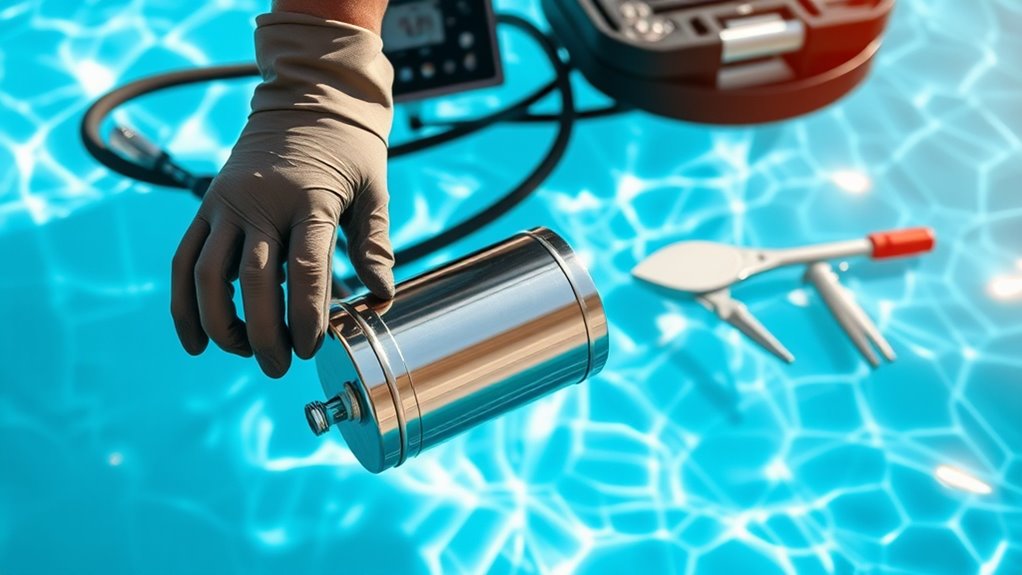
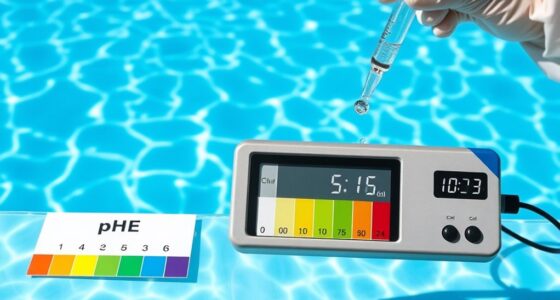
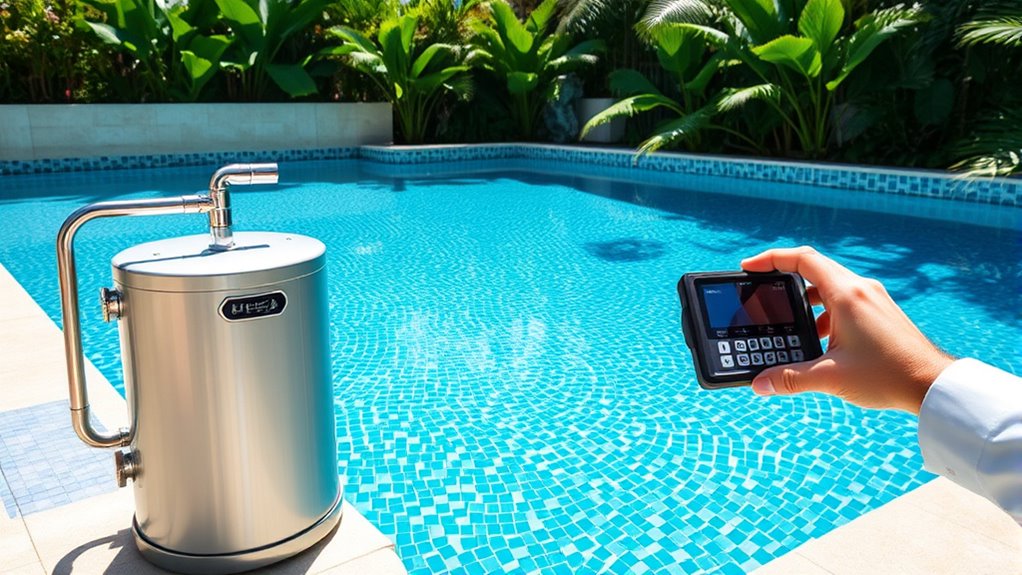
A saltwater pool system offers a modern alternative to traditional chlorine pools by using salt to generate its own sanitizer. Instead of manually adding chlorine, your system relies on a process called chlorine generation, where a salt-chlorine generator converts salt into chlorine as needed. This process keeps your pool water clean and safe, but to guarantee it works efficiently, you need to pay attention to salt level management. Maintaining the right salt levels is vital; too little salt means the generator can’t produce enough sanitizer, resulting in insufficient disinfection, while too much salt can cause damage to the equipment and affect water quality. Regular testing of your pool’s salt levels helps you stay within the recommended range, which is usually between 2700 and 3400 ppm, depending on your system’s specifications. You can use test strips or a digital tester to keep accurate readings. When levels are low, you’ll need to add salt gradually, ensuring it dissolves completely before retesting. Conversely, if levels are too high, partial water replacement can help bring the salt concentration down to suitable levels.
Additionally, using proper testing methods ensures accurate measurements, preventing issues related to incorrect salt levels. Chlorine generation is a continuous process, but it isn’t entirely hands-off. Your system’s output depends on factors like water temperature, pool usage, and sunlight exposure. During peak usage or hot weather, the system may need to work harder to maintain proper sanitation. You should monitor your chlorine levels regularly, aiming for a free chlorine reading between 1 and 3 ppm. If levels drop too low, your pool may become vulnerable to algae and bacteria, so you might need to manually boost sanitation temporarily. Conversely, if chlorine levels are too high, it can cause skin and eye irritation, so adjusting the generator’s output or running the system at a lower setting can help balance things out.
Proper salt level management and regular monitoring of chlorine generation are key to maintaining a healthy, swimmer-friendly pool. Keep a close eye on your test results, and don’t hesitate to make small adjustments as needed. Maintaining the right salt and chlorine levels ensures your system functions smoothly, reducing the need for chemical additives and creating a more pleasant swimming environment. With diligent care, your saltwater pool will stay clear, sanitized, and inviting throughout the season, providing you with a low-maintenance yet effective way to enjoy your backyard oasis.

Salt-Water Pool Test Strips Kit: 125 Counts 8-in-1 for Salt Water Pool Testing Kit, Salt Pool Test Strips for Hot Tub Spa Testing Salt Chlorine pH and More
- Comprehensive Saltwater Test Strips: Tests multiple parameters with one strip
- Extra Value Pack: 125 strips including 25 bonus strips
- Accurate Salt Level Measurement: Measures 0-6000 ppm salt concentration
As an affiliate, we earn on qualifying purchases.
As an affiliate, we earn on qualifying purchases.
Frequently Asked Questions
How Often Should I Replace the Salt in My Pool?
You should replace the salt in your pool when the salt level drops below the recommended range, usually around 2700-3400 ppm. Regular water testing helps you monitor the salt level, so you’ll know when it’s time to add more salt. Typically, you won’t need to replace all the salt often, just top it up as needed. Keep testing regularly to maintain ideal salt levels and guarantee your system runs smoothly.
Can I Use Regular Chlorine Instead of Salt?
You can’t simply replace salt with regular chlorine in a saltwater pool. For example, one pool owner tried using chlorine tablets, but it disrupted their salt conversion system, causing damage. Saltwater pools rely on salt conversion to generate chlorine naturally. Using chlorine alternatives like tablets or liquid chlorine bypasses this process, leading to imbalanced water chemistry. Stick to the system designed for saltwater pools to keep your water clean and balanced.
What Are Common Signs of a Failing Salt Generator?
You’ll notice signs of a failing salt generator through corrosion issues on metal parts and equipment. Additionally, if your pool has low chlorine levels despite regular maintenance, it’s a clear sign the generator isn’t producing enough sanitizer. Keep an eye on these indicators, as they suggest your salt cell may need cleaning, repair, or substitution to ensure your pool stays clean and balanced.
How Do Temperature Changes Affect Saltwater Pool Maintenance?
Temperature fluctuations can considerably impact your saltwater pool maintenance. When the temperature drops or rises, it affects your pool chemistry, causing your salt generator to work harder or less efficiently. You might notice changes in chlorine levels or pH balance. Regularly test your water and adjust chemicals accordingly. Keep an eye on the water temperature, especially during seasonal shifts, to ensure your saltwater system runs smoothly and stays balanced.
Is Professional Servicing Necessary for Saltwater Pool Systems?
You might think DIY maintenance suffices, but professional servicing is often necessary for saltwater pools. Experts thoroughly inspect equipment, identify issues early, and recommend upgrades, guaranteeing your system runs efficiently. While some pool owners attempt equipment upgrades themselves, professional help ensures proper installation and long-term performance. Regular professional checks can save you time and money, preventing costly repairs and ensuring your saltwater pool stays pristine and balanced all season.
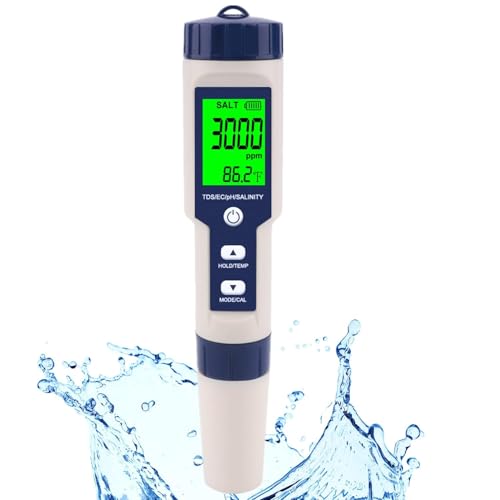
Pool Salt Tester & PH Meter, Hofun Digital Salinity Meter and PH Tester for Aquarium and Pool Saltwater Water, 5 in 1 Salinity PH Temp EC and TDS Meter, Aquarium Swimming Pool Hot Tub, High Accuracy
- Wide Application of PH Meter: Suitable for water, pools, aquariums, and more
- Three Salinity Display Modes: PPM, PPT, and percentage for easy reading
- Automatic Unit Conversion: Switches between ppm and ppt automatically
As an affiliate, we earn on qualifying purchases.
As an affiliate, we earn on qualifying purchases.
Conclusion
Remember, a well-maintained saltwater pool is a joy to swim in. Keep up with regular checks and cleanings, and you’ll enjoy crystal-clear water all season long. Don’t forget, “A stitch in time saves nine,” so address issues early to prevent bigger problems later. With a little effort and attention, your saltwater pool will stay pristine and inviting, giving you countless relaxing moments in the water. Stay diligent, and your oasis will always be ready for you.

Aqua Joe Pool and Spa Salt for Pool Generators, 40 Pound Bag – Fast Dissolving Fine Grain for Above Ground and Inground Pools and Hot Tub Systems, AJ-PS40
- Pool & Spa Salt: Supports chlorine generation and water care
- Fast Dissolving Formula: Quickly dissolves for balanced salt levels
- Generator Compatible: Suitable for pools and hot tubs
As an affiliate, we earn on qualifying purchases.
As an affiliate, we earn on qualifying purchases.

Pool Slide Water Tubing Kit, Spray Hose Kit/Parts for Inground Pool Slide, Swimming Pool Slide Water Sprayer
- Enhanced Sliding Fun: Keeps slide wet and slick for all-day fun
- Complete Kit Included: 2 spray nozzles, 14ft tubing, hose connector
- Durable Material: High-quality tubing with secure, leak-proof seal
As an affiliate, we earn on qualifying purchases.
As an affiliate, we earn on qualifying purchases.