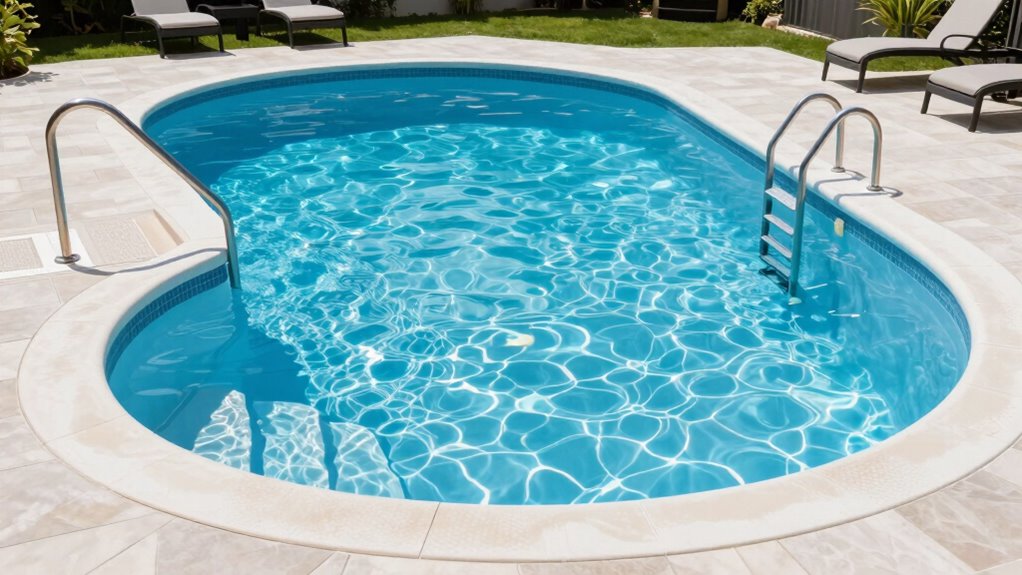

To plan safer pool access points, focus on selecting slip-resistant surfaces and sturdy handrails for all entry areas. Consider zero-entry or wide access points near shaded zones for easier, safer entry, especially for mobility challenges. Guarantee proper lighting around steps and slopes to improve visibility at night. Integrate safety features seamlessly with your overall pool design, making sure access points are convenient from your house or deck. Keep these tips in mind to create a secure, inviting pool space for everyone.
Key Takeaways
- Incorporate slip-resistant surfaces and sturdy handrails at all entry points to enhance safety.
- Choose accessible options like zero-entry or wide steps for easy, gradual water access.
- Ensure proper lighting around access areas for visibility during night-time use.
- Position access points to align with landscape and pool layout for seamless, safe transitions.
- Use durable, weather-resistant materials to maintain safety features and prolong longevity.
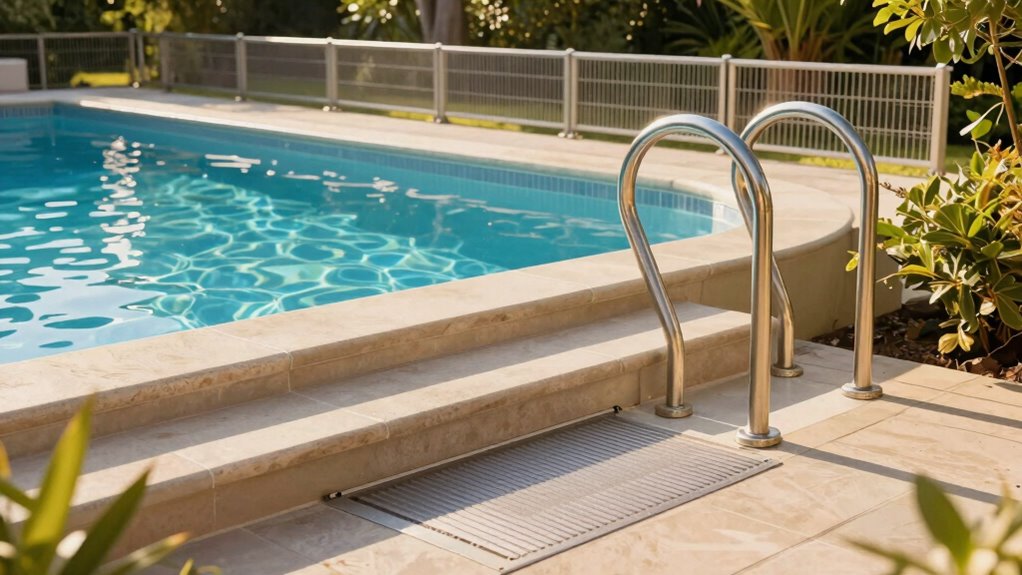
Have you ever wondered how to guarantee smooth and safe access to your pool? Planning your pool access points carefully is essential to assure both convenience and safety for everyone who uses it. Choosing the right entry type is crucial, as different options offer varied benefits in terms of safety and accessibility. Prioritizing pool safety while incorporating accessibility features that accommodate all users, including those with mobility challenges, is key. When designing your pool entry, think about how people will get in and out comfortably without risking slips or falls. A well-thought-out access point reduces accidents and makes your pool area more inviting.
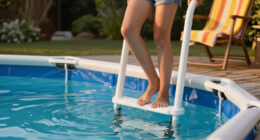
Start by examining the type of entry that best suits your space and needs. Steps are common, but they can be slippery and tricky for some users. Installing slip-resistant surfaces around steps and handrails can dramatically improve safety. If you want to make your pool more accessible, think about adding a zero-entry design, also called beach entry. This gradual slope allows users to walk in easily without stairs, making it perfect for children, the elderly, or anyone with mobility issues. Zero-entry pools blend safety with accessibility features, creating a seamless changeover from deck to water. Incorporating pool safety standards into your planning can help ensure your design meets recommended guidelines and reduces risks. Additionally, considering water quality management can help prevent slips caused by algae or debris on entry surfaces. Proper water circulation and filtration are essential for maintaining a clean and safe environment around your access points.
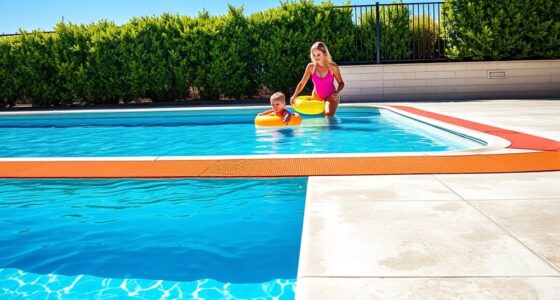
Consider zero-entry pools for easy, safe water access without stairs, ideal for all mobility levels.
When planning access points, think about their placement. You want multiple entry options if possible, especially near seating areas or shaded zones, so users can choose the most convenient spot. Make sure these access points are wide enough to allow easy entry, and keep pathways clear of obstructions. Incorporate handrails along stairs or slopes to provide extra support, and ensure they are sturdy and easy to grip. Non-slip surfaces are non-negotiable around all access points to prevent accidents caused by wet or slippery conditions. Considering installation guidelines can help you select the best materials and methods for a durable, safe setup.
Lighting is another vital aspect to consider. Well-lit access points ensure safe entry and exit during evening hours or in low-light conditions. Use weather-resistant lighting fixtures that illuminate steps, slopes, and pathways clearly. This not only enhances safety but also adds to the aesthetic appeal of your pool area. Thoughtful lighting design can also deter potential accidents by making hazards more visible. Incorporating appropriate lighting can further improve safety and ambiance, especially during night-time use.
Finally, think about how your access points integrate with the overall pool design. Ensure they complement the landscape and are easily accessible from your house or deck. Safety and accessibility should guide every decision, from the materials used to the positioning of entryways. By thoughtfully planning your pool access points, you create a safer environment for everyone to enjoy. You’ll find that a combination of safety features and accessible design makes your pool a more enjoyable, inclusive space for family and friends alike.
As an affiliate, we earn on qualifying purchases.
Frequently Asked Questions
What Is the Ideal Distance Between Pool Access Points?
You should space pool access points about 25 to 50 feet apart to guarantee safety and convenience. Proper pool lighting around each access point enhances visibility at night, while safety signage reminds users of proper entry and exit procedures. This setup minimizes accidents and makes it easier for swimmers to find safe entry and exit spots, especially in emergencies. Regularly inspect lighting and signage to maintain a safe swimming environment.
How Many Access Points Are Recommended for Large Pools?
Think of a large pool with multiple access points like a busy city street, needing clear pathways. For safety, you should have at least two to four access points, ensuring easy water flow control and quick exits. Proper pool gate safety measures are essential, so each access point should have secure gates and non-slip surfaces. This setup minimizes congestion and enhances safety during peak hours or emergencies.
Should Access Points Be Heated or Cooled?
Access points should be equipped with temperature regulation features, like heating or cooling systems, to enhance climate control and comfort. Heated access points are ideal in colder climates, ensuring safe, comfortable entry regardless of outside temperatures. Conversely, cooled access points can prevent overheating in hot weather. Proper climate control at entry points helps maintain a safe environment, reduces slips and falls, and encourages frequent, comfortable use of your pool.
What Materials Are Best for Slip-Resistant Pool Steps?
For slip-resistant pool steps, choose pool step materials like textured concrete, non-slip ceramic tiles, or thermoplastic coatings. These materials offer excellent slip resistance, reducing fall risks. You should avoid smooth surfaces like polished stone or glazed tiles, which become slippery when wet. Prioritize textured finishes or specialized non-slip coatings to enhance safety. Regular maintenance and cleaning also help maintain slip resistance, ensuring your pool steps remain safe and secure for everyone.
How to Ensure Accessibility for Disabled Users?
To guarantee accessibility for disabled users, you should install features like ramps and handrails that meet ADA standards. Add clear, visible accessible signage to guide users easily. Regular maintenance routines are essential to keep these features in good condition, preventing hazards. By prioritizing accessible design and consistent upkeep, you create a safer, more inclusive environment where everyone can enjoy the pool comfortably and independently.
As an affiliate, we earn on qualifying purchases.
Conclusion
Now that you’ve mapped out your pool’s access points, the real challenge begins. Will your design prevent accidents and guarantee easy entry for everyone? Think carefully about every detail—hidden hazards, emergency exits, and user flow. The next step could make or break your pool’s safety. Are you ready to implement your plan and turn your vision into a secure, accessible oasis? The future of safe swimming is in your hands—don’t wait to find out what’s next.
As an affiliate, we earn on qualifying purchases.
As an affiliate, we earn on qualifying purchases.