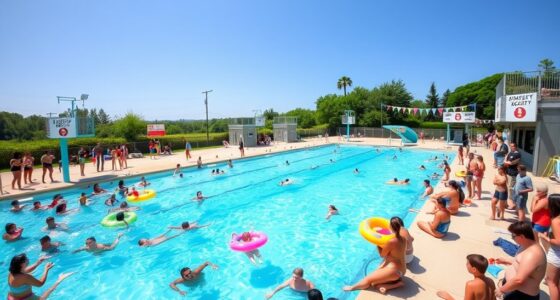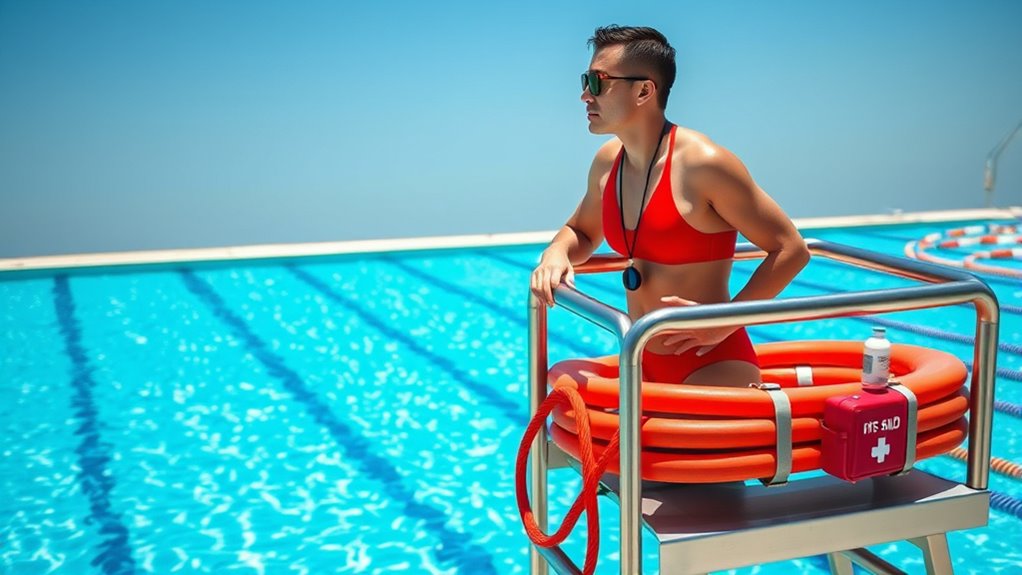

To guarantee lifeguard training standards are met at public pools, you need to focus on thorough courses that cover water rescue techniques and CPR certifications. These programs equip you with essential skills to respond quickly and effectively during emergencies. Regular refresher courses and practical scenario training are vital to keep skills sharp. By maintaining high standards, you enhance safety for everyone. Keep exploring to discover how these standards are implemented and maintained in detail.
Key Takeaways
- Implement regular certification renewals to ensure lifeguards stay current with water rescue and CPR skills.
- Enforce adherence to national or local training standards for rescue techniques and medical response.
- Conduct periodic audits and drills to assess skill proficiency and emergency preparedness.
- Provide ongoing training updates integrating new rescue methods and medical protocols.
- Maintain documented training records to verify compliance with safety regulations and certification requirements.
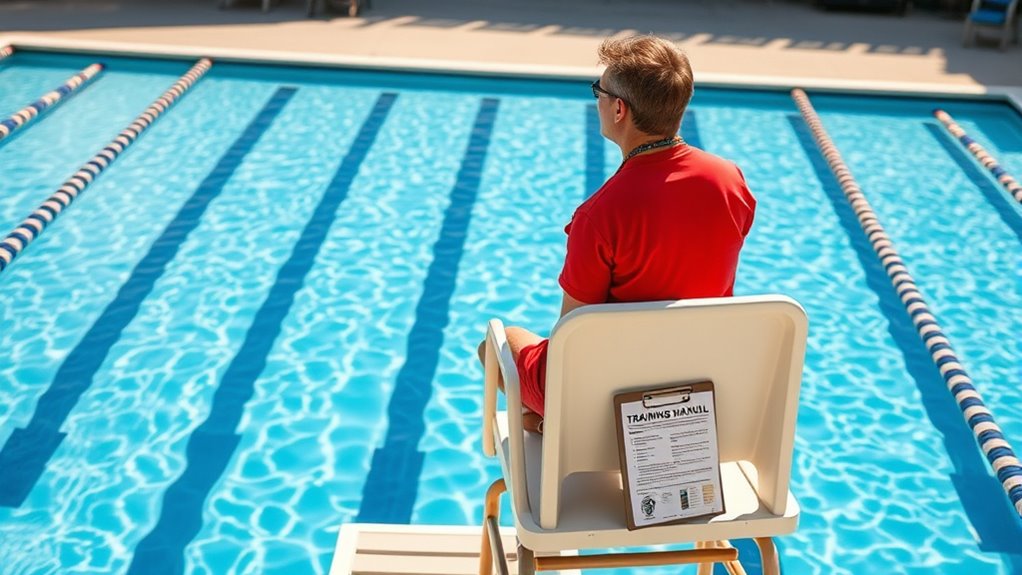
Have you ever wondered what it takes to become a qualified lifeguard? It’s more than just knowing how to swim; it’s about being prepared to handle emergencies quickly and confidently. One of the core skills you need is water rescue techniques. These skills enable you to safely approach, support, and bring a distressed swimmer to safety without putting yourself at risk. Water rescue training teaches you how to assess a situation rapidly, choose the right rescue method, and execute it effectively. You learn various techniques, from reaching assists and throwing rescues to active and passive rescues, ensuring you’re equipped for any scenario. But even the best water rescue skills aren’t enough if you’re not certified in CPR. CPR certification is essential because it prepares you to provide life-saving chest compressions and rescue breaths in the critical moments before emergency medical services arrive. Having this certification guarantees that you can respond immediately to someone in cardiac or breathing emergencies, considerably increasing their chances of survival.
Getting your CPR certification is a fundamental step in lifeguard training because it validates your ability to act swiftly and effectively. It’s not just about knowing the skills; it’s about demonstrating that you can perform them under pressure. Many training programs combine water rescue techniques with CPR instruction, ensuring you’re prepared for both physical rescue and medical intervention. This integrated approach helps you understand how to stabilize an injured or unresponsive swimmer and keep them alive until professional help arrives. Certification courses are designed to be hands-on, with realistic scenarios that mimic real emergencies, so you gain confidence in your abilities. These courses often include practice in using automated external defibrillators (AEDs), adding another layer of preparedness for life-threatening situations. Additionally, understanding regional divorce statistics can inform your awareness of safety regulations and legal responsibilities in different areas.
Ultimately, meeting water rescue standards and obtaining CPR certification aren’t just box-checking exercises—they’re essential components of ensuring public safety at pools. As a lifeguard, your primary responsibility is to prevent accidents and respond effectively when they do happen. By mastering water rescue techniques and being CPR certified, you demonstrate your commitment to safety and your readiness to handle any emergency. These skills are what set a competent lifeguard apart and help maintain a safe environment for everyone enjoying the pool. Remember, your training isn’t a one-time event; it’s an ongoing process that keeps your skills sharp and your knowledge current. This dedication to maintaining high standards directly influences the safety and well-being of all pool visitors.
Frequently Asked Questions
How Often Should Lifeguards Undergo Refresher Training?
You should undergo refresher training at least every two years to maintain water safety skills and stay current with the latest protocols. Regular training ensures you’re prepared for emergencies, enhances your confidence, and keeps your response times sharp. Frequent training also helps reinforce essential skills, preventing complacency. Remember, consistent training frequency is key to guaranteeing public safety and providing the highest level of care as a lifeguard.
Are There Different Standards for Indoor and Outdoor Pools?
Like comparing different recipes, standards for indoor and outdoor pools vary slightly. You need to follow specific guidelines for pool chemical management and aquatic facility signage, which differ based on environmental factors. Outdoor pools face more exposure to weather, requiring extra attention to chemical adjustments and clear signage for safety. Indoor pools have controlled environments but still demand strict adherence to training standards to ensure lifeguard effectiveness and swimmer safety.
What Certifications Are Internationally Recognized for Lifeguard Training?
You should pursue internationally recognized certifications like the Lifeguard Training Program from the Red Cross or YMCA, which cover swimmer rescue techniques and CPR certification. These certifications are widely accepted and guarantee you’re prepared to respond effectively in emergencies. By obtaining these credentials, you demonstrate your skills in swimmer rescue and CPR, giving confidence that you’re qualified to protect swimmers in any pool setting worldwide.
How Is Ongoing Skill Assessment Incorporated Into Standards?
You incorporate ongoing skill assessments through consistent, thorough checks, including video demonstrations and peer evaluations. These techniques help you identify areas needing improvement and reinforce core competencies. Regular reviews ensure lifeguards stay sharp, skillful, and safe, fostering a culture of continuous learning. By actively engaging in these assessments, you guarantee lifeguards maintain high standards, stay confident, and respond effectively during emergencies.
What Are the Consequences of Not Meeting Training Standards?
If you don’t meet training standards, you face liability issues and jeopardize public safety. Insufficient training can lead to poor rescue responses, increasing the risk of accidents and injuries. You might also face legal consequences, fines, or loss of certification. Ultimately, neglecting standards undermines trust, endangers swimmers, and could result in severe legal and financial repercussions for you and your facility.
Conclusion
By prioritizing strict lifeguard training standards, you might think it’s too costly or time-consuming. But investing in thorough training guarantees safer pools and peace of mind for everyone. Skimping on standards risks accidents and legal issues that far outweigh initial efforts. Remember, your commitment to proper training directly saves lives and builds trust in your facility. So, don’t cut corners—strong standards protect both your pool and its visitors.