To install a concrete pool, start by accurately marking the shape and carefully excavating the site using heavy machinery. Next, set up plumbing lines and embed pipes securely before pouring concrete. Build forms with wood or metal and install rebar for strength. Pour and vibrate the concrete evenly, then smooth and cure it properly. After curing, remove the forms and inspect everything thoroughly — if you keep going, you’ll learn each detailed step involved in creating a durable concrete pool.
Key Takeaways
- Mark and excavate the pool outline, ensuring proper slope, depth, and dimensions.
- Install plumbing lines for skimmers, drains, and jets before pouring concrete.
- Construct forms and reinforce with rebar according to engineering specifications.
- Pour, vibrate, and finish the concrete evenly, then allow it to cure properly.
- Remove forms, inspect structural integrity, and verify plumbing and reinforcement before proceeding.

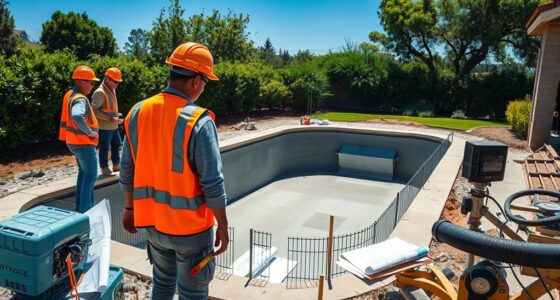
Installing a concrete pool involves a step-by-step process that requires careful planning and precise execution. Your journey begins with thorough excavation preparation. You’ll need to mark out the pool’s shape accurately on your yard, ensuring measurements align with your design plans. Once marked, excavation starts, removing soil carefully to create the pool’s foundation. During this stage, it’s essential to maintain proper slope and depth, preventing uneven walls and ensuring stability. You’ll likely use heavy machinery like excavators, but you must stay vigilant, double-checking dimensions as you go. Proper excavation preparation sets the stage for a successful build, reducing future issues like structural stress or leaks.
Thorough excavation preparation ensures a stable, durable concrete pool foundation.
After the excavation, your next focus is the plumbing setup. This step is vital because it ensures water circulation, filtration, and overall pool functionality. You’ll install the plumbing lines before the concrete is poured, embedding pipes for skimmers, drains, and return jets. It’s fundamental to double-check all connections for leaks and misalignments. Running tests at this stage saves you from costly repairs later. Securely anchoring plumbing fixtures and fixing them in place ensures they won’t shift during concrete pouring. This setup must be precise, as improper plumbing can lead to inefficient circulation or water loss down the line.
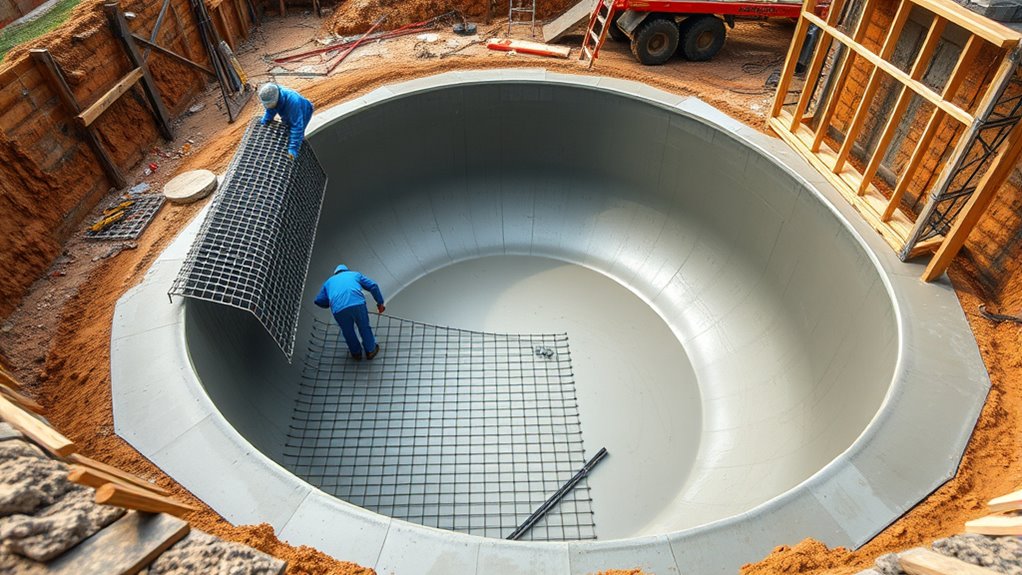
Once the plumbing setup is complete, you’ll move on to framing and reinforcement. Wooden or metal forms outline the pool’s shape, providing a mold for the concrete. Reinforcing steel bars (rebar) are then installed within the forms, strengthening the structure against pressure and cracking. The rebar grid must follow engineering specifications, with proper spacing and coverage to prevent corrosion and ensure durability. This step demands meticulous attention because it directly impacts the longevity and safety of your pool.
When the framing and reinforcement are in place, you’re ready for the concrete pour. You’ll need to coordinate with concrete professionals to pour the mixture evenly into the forms, ensuring all spaces are filled without air pockets. Vibrating the concrete helps eliminate voids, creating a solid, uniform shell. After pouring, the surface is smoothed and finished to your desired texture. Once cured, typically over several days, the forms are removed, revealing your sturdy concrete shell. From excavation preparation to plumbing setup, each step is essential, and your careful attention ensures a safe, durable, and beautiful pool that lasts for years to come.
Frequently Asked Questions
How Long Does a Concrete Pool Installation Typically Take?
A concrete pool installation typically takes about 8 to 12 weeks, depending on size and complexity. During this time, you should prioritize pool remodeling and safety considerations, ensuring proper planning and quality work. You’ll need patience as the process involves excavation, setting, curing, and finishing. Regular communication with your contractor helps keep the project on track, so your new pool is both beautiful and safe for years to come.
What Permits Are Required for Installing a Concrete Pool?
You’ll need to get local building permits before installing your concrete pool, which often include requirements for pool fencing to guarantee safety. The permits also cover aspects like water chemistry management to keep your pool safe and compliant. Contact your city or county building department early, as they’ll guide you through necessary paperwork and inspections, helping you avoid delays or legal issues during your pool installation.
How Much Does a Concrete Pool Generally Cost?
Ever wondered how much a concrete pool might set you back? Typically, concrete pools cost between $35,000 and $65,000, but the actual price depends on factors like size, design, and additional features. Budget considerations, such as site preparation and finishing touches, also impact the total. Are you prepared to invest in a durable, custom pool that transforms your backyard into a personal paradise?
What Are the Maintenance Requirements for Concrete Pools?
You need to regularly perform pool cleaning to remove debris and prevent algae growth. Keep the chemical balance in check by testing the water weekly and adjusting pH, chlorine, and alkalinity levels. You should also inspect the concrete surface for cracks or damage, and consider sealing it annually to protect against wear. Proper maintenance guarantees your pool stays clean, safe, and enjoyable for years to come.
Can I Customize the Shape and Size of My Concrete Pool?
You can definitely tailor your concrete pool’s shape and size to match your vision. With pool shape options ranging from freeform to geometric designs, you have plenty of choices. Pool size customization allows you to create a spacious oasis or a cozy retreat. Working with a professional ensures your design aligns perfectly with your space and lifestyle, turning your dream pool into a reality.
Conclusion
Once you’ve completed the installation, your new concrete pool stands ready like a masterpiece waiting to be enjoyed. Regular maintenance and gentle cleaning will keep it pristine, ensuring many years of relaxation. Think of it as nurturing a garden—you nurture the pool, and it rewards you with endless moments of joy. With proper care, your concrete pool becomes a stunning centerpiece, transforming your backyard into a personal oasis where every swim feels like a luxurious escape.