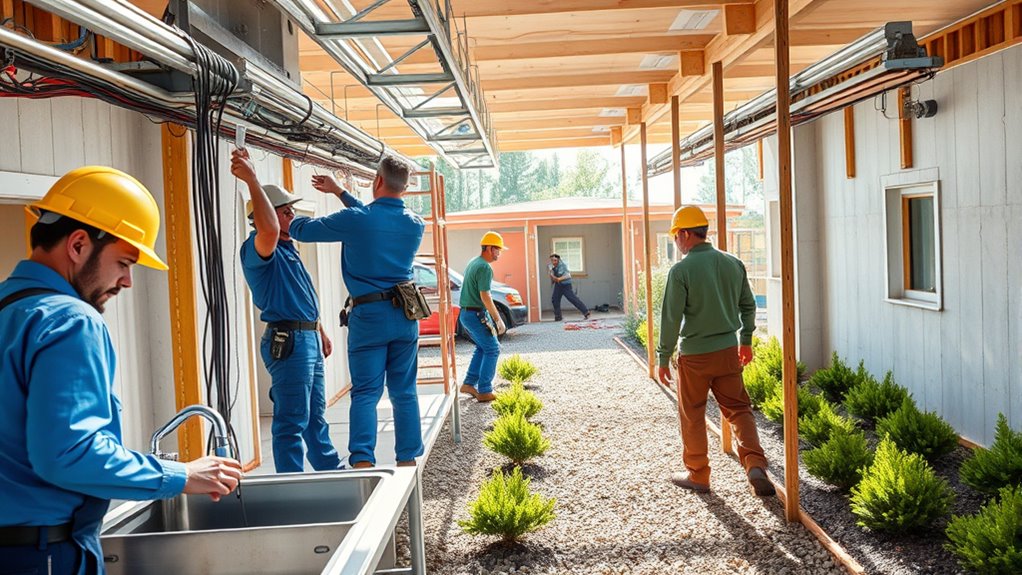

To effectively coordinate electricians, plumbers, and landscapers, clear and consistent communication is key. You should establish detailed schedules, identify task dependencies early, and use digital tools for real-time updates. Address conflicts promptly, stay flexible with your plans, and foster open dialogue among trades. By doing so, you’ll prevent delays and ensure smooth project flow. Keep these strategies in mind, and you’ll discover even more ways to keep everything running seamlessly.
Key Takeaways
- Develop a detailed schedule highlighting task dependencies among electricians, plumbers, and landscapers for smooth sequencing.
- Use digital tools like project management software and shared calendars for real-time updates and visibility.
- Communicate early and clearly about scope overlaps and schedule conflicts to prevent delays.
- Address issues promptly through collaborative problem-solving to maintain project flow.
- Maintain flexibility to adapt plans quickly when unforeseen delays or changes arise among trades.
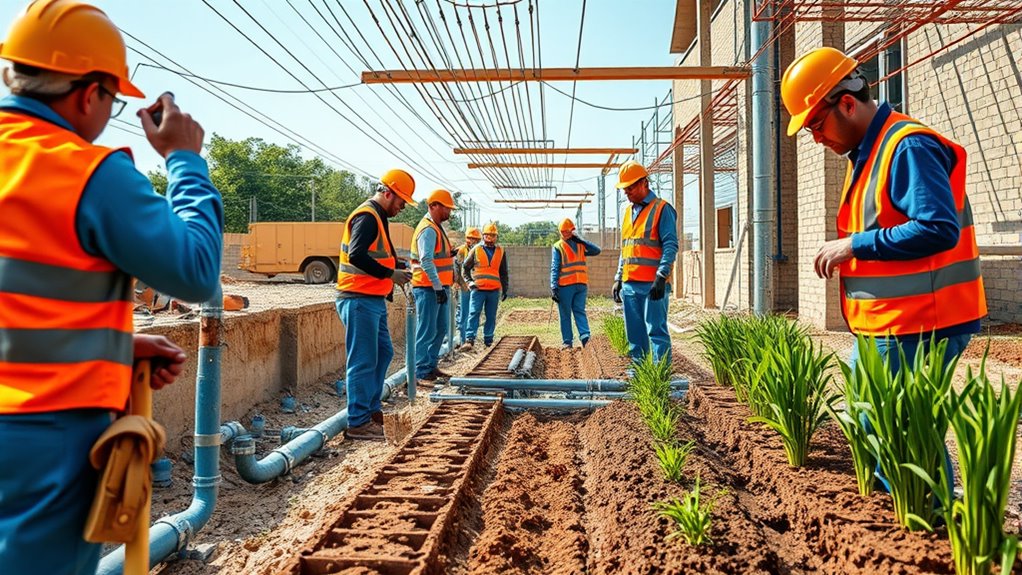
Have you ever wondered how to effectively manage multiple trades on a project? Coordinating electricians, plumbers, and landscapers can be a complex task, especially when scheduling conflicts threaten to delay the entire process. To keep everything running smoothly, you need solid communication strategies in place. Clear, consistent communication is the backbone of successful coordination, enabling you to anticipate potential issues before they become problems.
Start by establishing a thorough schedule that accounts for each trade’s specific tasks and timelines. When you plan ahead, you can identify potential scheduling conflicts early on and adjust accordingly. For example, electricians might need access to certain areas before the landscapers begin their work, and recognizing this sequence helps avoid delays. Communicate these dependencies clearly with all parties involved, so everyone understands their roles and deadlines.
Using effective communication strategies involves more than just passing along information. It’s about fostering an open dialogue where questions are encouraged, and updates are shared regularly. Daily or weekly check-ins can help keep everyone on the same page, minimizing misunderstandings and last-minute surprises. Digital tools like project management software or shared calendars can streamline this process, providing real-time updates and visual timelines that everyone can access. This transparency allows trades to coordinate their activities better and adapt quickly if any changes occur.
Another key aspect is proactive problem-solving. When conflicts arise, don’t wait until they escalate. Instead, address issues immediately with all relevant parties. For instance, if a plumber’s schedule overlaps with an electrician’s, work together to find a solution—perhaps rescheduling or adjusting the scope of work. Building strong communication strategies ensures everyone feels heard and involved in decision-making, which fosters cooperation and reduces friction.
Moreover, maintain flexibility in your approach. Even the best plans can encounter unforeseen delays or changes. By keeping lines of communication open and encouraging collaboration, you can swiftly reconfigure schedules and prevent minor setbacks from snowballing into major delays. Remember, effective coordination isn’t just about sticking to a plan; it’s about adapting and working together to keep the project moving forward. Additionally, integrating principles of personal development can enhance team communication and problem-solving skills, leading to more efficient project management.
Frequently Asked Questions
How Do I Select the Best Tradespeople for My Project?
To select the best tradespeople, start by checking their trade qualifications to make certain they’re certified and experienced. Use clear communication strategies to discuss your project needs and gauge their understanding. Ask for references and review past work to assess reliability and quality. Trust your instincts during interviews, and choose professionals who demonstrate professionalism, good communication, and a solid track record, guaranteeing your project runs smoothly from start to finish.
What Should I Include in a Comprehensive Project Timeline?
You should include timing considerations like start and end dates for each task, dependencies between trades, and potential delays. Clearly define milestones and deadlines to keep everyone on track. Incorporate communication strategies such as regular updates, check-ins, and a shared schedule to guarantee seamless coordination. This way, you minimize surprises, keep trades aligned, and ensure the project progresses smoothly without unnecessary setbacks.
How Can I Prevent Scheduling Conflicts Between Trades?
To prevent scheduling conflicts between trades, you need to anticipate trade overlap and plan accordingly. Use a detailed project timeline to align each trade’s work, highlighting critical milestones. When conflicts arise, employ conflict resolution strategies like adjusting schedules or prioritizing tasks. Clear communication and regular updates keep everyone on the same page, reducing delays. This proactive approach guarantees smooth coordination and prevents costly hold-ups between electricians, plumbers, and landscapers.
What Permits Are Needed for Multi-Trade Renovations?
You’ll need to check permit requirements for each trade involved in your multi-trade renovation. Typically, you’ll require building permits, electrical permits, plumbing permits, and possibly landscaping permits. Make certain you obtain all necessary multi-trade approvals from your local authorities before starting work. This helps avoid delays and fines. Contact your city’s building department to confirm specific permit requirements and streamline the approval process for your renovation project.
How Do I Handle Unexpected Delays or Issues During Coordination?
When unexpected delays hit, think of it as steering a stormy sea. You should implement contingency planning and stay flexible. Keep communication strategies clear and open, like beacons guiding ships, so everyone stays in sync. Address issues promptly, adjust schedules if needed, and maintain calm. By proactively managing surprises, you turn rough waters into manageable waves, ensuring your project stays afloat and on course.
Conclusion
By coordinating trades like electricians, plumbers, and landscapers, you weave a seamless tapestry of progress. When everyone’s on the same page, the project moves smoothly, avoiding delays and costly mistakes. Think of it as conducting an orchestra—you’re the conductor guiding each instrument to play in harmony. With clear communication and planning, you turn potential chaos into a symphony of success, ensuring your project finishes on time and looks perfect as a well-choreographed dance.