To prepare your pool site, start with thorough grading to create a level surface and guarantee proper drainage away from the pool area. Conduct soil testing to assess soil stability and load-bearing capacity, helping you identify any needed stabilization or drainage solutions. Proper site prep prevents future issues like shifting, settling, or water damage. Keep in mind that addressing these steps carefully leads to a durable, safe pool. If you want to know more, you’ll discover essential tips for a successful project.

Get pool and patio gear delivered free with Prime
- Fast, free delivery on millions of items
- Prime Video, Amazon Music and more included
- Member-only deals all year
Key Takeaways
- Proper grading ensures the pool site is level and slopes appropriately for effective water drainage and structural stability.
- Soil testing assesses soil composition and load capacity, determining if stabilization or soil replacement is necessary.
- Site preparation involves clearing, leveling, and shaping the land to create a solid foundation for pool installation.
- Stabilization and drainage solutions prevent settling, shifting, and water pooling, ensuring long-term site stability.
- Correct grading and soil management reduce risks to deck integrity, prevent water damage, and promote safe, durable construction.
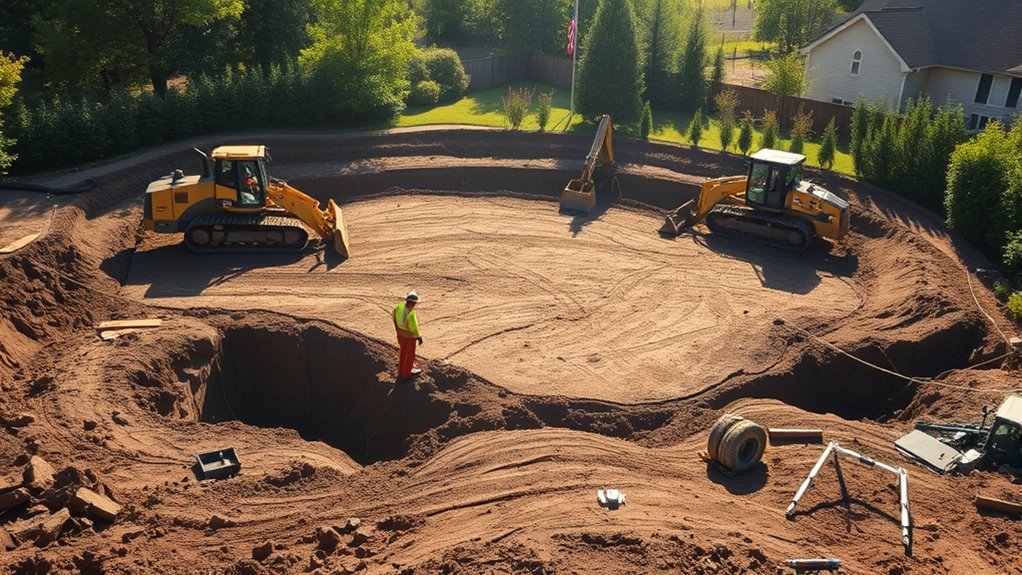
Preparing the site is an essential first step in pool construction, as it sets the foundation for a smooth installation process. Before you start laying the pool shell or installing features like a deck, you need to ensure the ground is properly graded and tested for soil stability. Grading involves leveling and shaping the land so water drains away from the pool area, preventing water pooling or erosion that could compromise the structure. Proper grading is vital because poor drainage can lead to flooding, damage to the pool shell, or uneven settling over time. You’ll want to establish a slope that directs water toward designated drainage solutions, such as french drains or stormwater systems, to keep the area dry and stable.
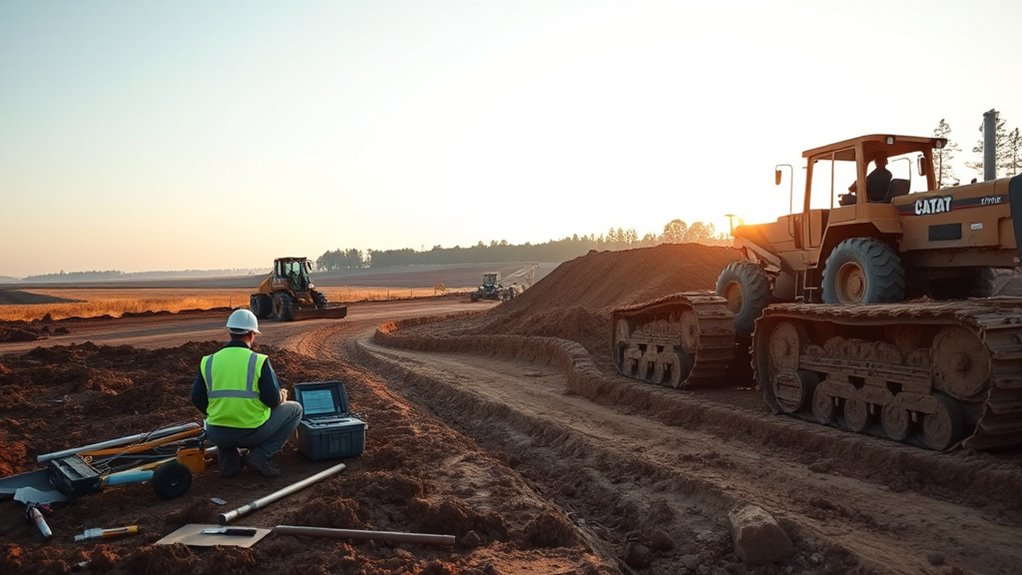
Soil testing is equally important. You need to assess the soil’s composition and load-bearing capacity to determine if it can support the weight of the pool and surrounding structures like decks. Soft or clay-heavy soils may require additional stabilization, such as compaction or soil replacement, to prevent shifting or settling later. Knowing the soil type also informs your drainage solutions, as certain soils retain water more than others, increasing the risk of waterlogging and weakening the foundation. If the soil’s drainage properties are poor, you might need to incorporate drainage solutions like perforated pipes or gravel beds to enhance water movement away from the pool site. Additionally, understanding the soil’s self-watering characteristics can help in planning effective drainage and stabilization measures.
Once you’ve completed grading and soil testing, you can plan your deck installation with confidence. Properly graded ground ensures a level surface for your deck, reducing the risk of uneven settling or cracking over time. It also helps in designing drainage solutions around the deck area, preventing water from pooling and causing damage to the structure or creating safety hazards. When you’re installing the deck, make sure the surface is stable and well-drained; otherwise, water accumulation can lead to wood rot or deck instability.
Frequently Asked Questions
How Long Does the Grading and Soil Testing Process Typically Take?
The grading and soil testing process usually takes about 1 to 2 weeks. During this time, you’ll examine soil composition and perform testing procedures to determine its suitability for your pool. The timeline depends on factors like the size of your site and soil complexity. You might experience some delays if testing reveals the need for soil amendments or additional assessments, but generally, it’s a straightforward process.
What Are the Signs of Poor Soil Quality Before Testing?
You should watch for signs of poor soil quality like soil compaction, which makes digging difficult and causes uneven settling. Drainage issues, such as water pooling or slow runoff after rain, also indicate potential problems. These signs suggest your soil may need testing to determine its suitability for pool construction. Addressing these issues early helps prevent future structural problems and guarantees a successful, long-lasting pool.
Can Grading and Soil Testing Be Done in Adverse Weather Conditions?
You can usually do grading and soil testing despite weather challenges, but it depends on the severity. Mild rain or wind might not disrupt testing feasibility, but heavy storms or snow can delay or compromise results. Always consult your contractor, as they’ll assess current conditions and determine if testing can proceed safely and accurately. It’s best to schedule during favorable weather for reliable results and smooth progress.
What Are the Costs Associated With Soil Testing and Grading?
You’ll typically spend between $300 and $1,000 for soil testing, depending on the complexity and location, while grading costs vary widely based on site size and terrain. Keep in mind that soil stabilization might be needed if tests show unstable soil, which adds to costs. Proper grading and testing guarantee a solid foundation, ultimately saving you money and preventing future issues.
How Often Should Soil Be Re-Tested During Construction?
You should re-test your soil sample every 4 to 6 weeks during construction to verify stability. Studies show that soil conditions can change rapidly, affecting your project’s success. Regular testing frequency helps catch issues early, preventing costly delays. Keep monitoring soil stability throughout the process, especially after heavy rain or significant earth movement, to maintain a solid foundation and avoid future problems with your pool.
Conclusion
Proper site preparation might seem like just groundwork, but it’s the foundation of your perfect pool. Skimp on grading or skip soil testing, and you risk costly future repairs, turning your dream oasis into a nightmare. Think of it as building a sturdy house—without a solid foundation, everything else crumbles. So, take the time now to prepare thoroughly; it’s the difference between a beautiful backyard retreat and a pool that’s trouble from day one.
Halloween Picks
halloween
As an affiliate, we earn on qualifying purchases.