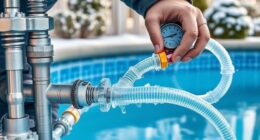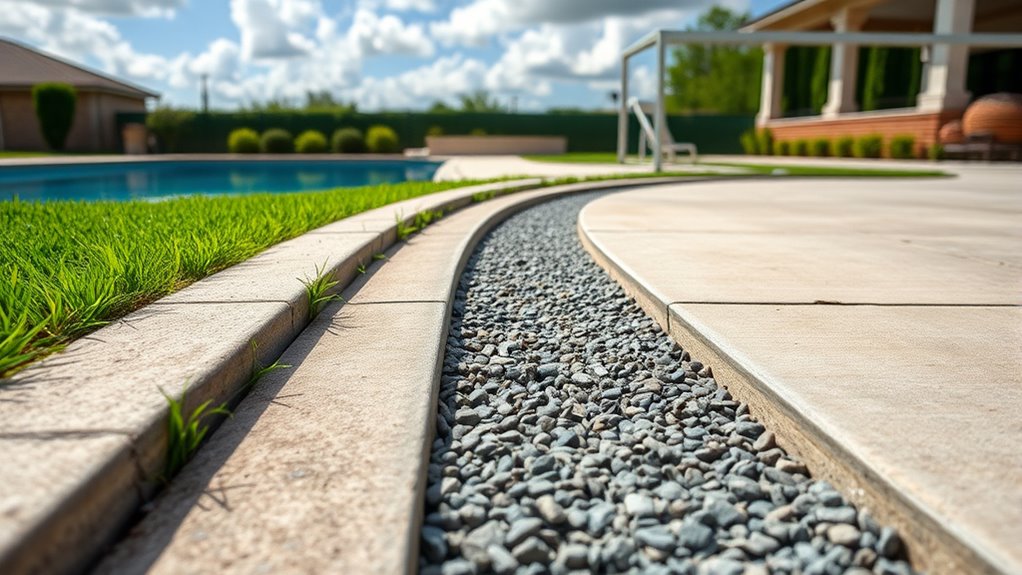

To guarantee proper drainage around your pool, you should grade the landscape to direct water away from the area and install suitable drains such as French or trench drains. Regularly inspect and clean your drainage systems to prevent clogs and erosion. Upgrading existing drainage features or adding new ones can improve water flow and prevent pooling or flooding. Maintaining your pool cover also reduces excess water on top, helping your drainage system work efficiently. Keep exploring for more tips on protecting your property from water damage.
Key Takeaways
- Regularly inspect and clear pool drains and surrounding areas to prevent blockages and ensure efficient water flow.
- Regrade the landscape to direct water away from the pool and foundation, promoting proper runoff.
- Install additional drainage features like French drains or trench drains to prevent pooling and erosion.
- Maintain and upgrade drainage systems proactively when signs of water accumulation or erosion appear.
- Keep pool covers clean and well-maintained to reduce excess water and debris that can impair drainage efficiency.
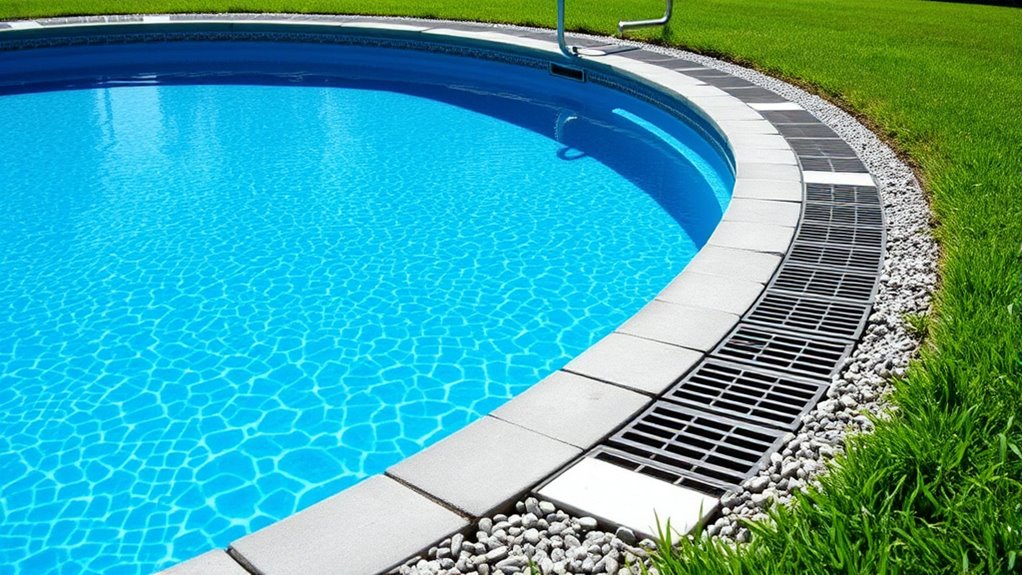
Proper pool drainage is vital to prevent water accumulation and protect your property from damage. When water isn’t directed away properly, it can seep into your yard, weaken the foundation, or cause erosion around your pool area. To avoid these issues, you need to pay close attention to how you manage water flow and ensure your drainage system is functioning at its best. One key aspect often overlooked is pool cover maintenance. A well-maintained cover doesn’t just keep debris out; it also helps prevent excess water from pooling on top, which can add unnecessary stress to your drainage system. Regularly inspect and clean your pool cover to guarantee it’s intact and functioning correctly, especially after storms or heavy rainfall. Clearing leaves, dirt, and any standing water helps reduce the load on your drainage system and minimizes potential blockages. Additionally, understanding proper drainage systems can help you choose the most effective solutions for your pool area.
Maintaining your pool cover reduces debris and prevents water pooling, easing drainage system stress and protecting your property.
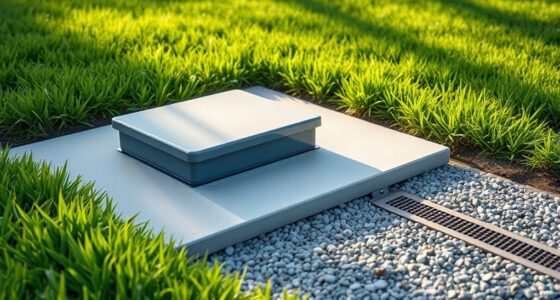
Along with maintaining your pool cover, upgrading your drainage system can greatly improve water management around your pool. Modern drainage solutions are more efficient at diverting water away from the pool area, reducing the risk of flooding and erosion. If you notice pooling water or inconsistent drainage, it might be time to consider drainage system upgrades. Installing additional drains, French drains, or improving existing trench drains can help channel water away more effectively. These upgrades prevent water from stagnating near the pool’s perimeter, which can lead to damage or unsightly puddles that interfere with your landscape.
It’s also essential to ensure that your existing drainage system is clear of debris and functioning properly. Regularly check for clogs or erosion around the drains, and clear any blockages immediately. Proper grading of the landscape around your pool plays a key role as well; the ground should slope away from the pool to encourage water to flow toward the drains rather than pooling near the foundation. If you notice uneven terrain or standing water, it’s wise to regrade the area or add additional drainage features.
In addition, consider investing in landscape features that promote drainage, such as gravel beds or permeable paving, which allow water to seep into the ground instead of pooling on the surface. Proper pool drainage isn’t a one-time task; it’s an ongoing process that involves regular inspection, maintenance, and upgrades when necessary. Staying proactive ensures your pool remains safe, clean, and free from water-related damage, giving you peace of mind and protecting your investment for years to come.
Frequently Asked Questions
How Often Should Pool Drainage Systems Be Inspected?
You should inspect your pool drainage system at least once a year to make certain proper drainage system maintenance. Regular inspections help identify issues caused by debris, cracks, or improper pool area grading that could lead to water pooling or damage. After heavy storms or seasonal changes, check more frequently. Keeping your drainage system in top shape prevents costly repairs and maintains a safe, well-drained pool area.
What Are Signs of Poor Drainage Around Pools?
Think of your pool area as a balance scale; when drainage suffers, the imbalance shows. You might notice uneven landscape grading, with slopes shifting or sinking, and soil erosion revealing roots or creating gullies. Pool water could also pool around the edges or create muddy spots, signaling poor drainage. These signs warn you that your landscape needs attention to prevent further damage and maintain a safe, stable environment around your pool.
Can Improper Drainage Cause Pool Foundation Damage?
Yes, improper drainage can cause pool foundation damage. When drainage isn’t maintained, soil erosion occurs around your pool, weakening the foundation over time. Excess water from poor drainage can lead to uneven settling or cracking, risking structural integrity. To prevent this, you need to regularly check drainage systems and perform drainage maintenance, ensuring water flows away from the foundation. Proper drainage safeguards your pool and keeps its foundation solid.
What Drainage Solutions Are Best for Uneven Terrain?
Think of uneven terrain as a rocky mountain trail—you need proper drainage solutions to keep it flowing smoothly. You should focus on strategic drainage pipe placement and slope grading techniques to direct water away from your pool. For example, installing perforated pipes with a gentle slope ensures water doesn’t pool, preventing erosion or damage. Properly graded slopes and well-placed pipes create a reliable drainage system that adapts to uneven ground.
How Does Climate Affect Pool Drainage Requirements?
Your climate zone directly impacts your pool’s drainage design needs. In rainy areas, you’ll need a robust drainage system to handle excess water, preventing flooding and erosion. Conversely, in dry climates, focus on retaining water and minimizing runoff. Understanding your climate zone helps you select the right drainage solutions, ensuring your pool remains safe and functional year-round. Properly tailored drainage design protects your investment and maintains landscape integrity.
Conclusion
By ensuring proper drainage around your pool, you’re building a fortress against water damage. Think of it as guiding a gentle stream away from your treasure, keeping your oasis safe and serene. When you take these steps, you’re not just preventing issues—you’re creating a well-tuned symphony where water flows seamlessly, safeguarding your paradise. So, stay vigilant and let your pool’s drainage system be the steady hand that keeps your backyard haven thriving for years to come.