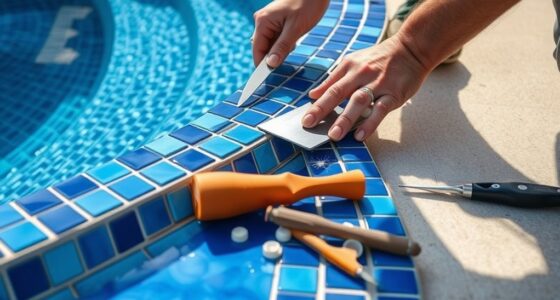
Building a retaining wall around your pool improves safety, boosts visual appeal, and helps manage water drainage. Choose materials like natural stone or concrete blocks to match your landscape style, and guarantee proper drainage with gravel backfill and outlets. Proper construction with reinforced foundations prevents shifting and erosion, especially in areas with heavy rain or soil movement. Regular maintenance keeps the wall in top shape. Keep exploring to discover detailed tips on creating a durable and attractive pool surround.
Key Takeaways
- Select materials that match your landscape style and ensure durability, such as natural stone or concrete blocks.
- Incorporate proper drainage solutions like weep holes and gravel backfill to prevent water buildup behind the wall.
- Ensure structural stability with reinforced foundations and geogrid in taller walls, especially in areas with shifting soil.
- Maintain the wall regularly by inspecting for cracks, clearing drainage pathways, and sealing materials to extend longevity.
- Design the wall to enhance pool aesthetics, define yard zones, and complement the overall landscape for a cohesive outdoor space.

A well-designed retaining wall around your pool not only enhances its appearance but also provides essential support to prevent soil erosion and shifting. When planning this feature, you need to contemplate how it fits into your overall landscape design. A thoughtfully integrated retaining wall can serve as a focal point, framing your pool area and creating visual interest. It can also define different zones within your yard, such as seating areas or garden beds, adding structure and cohesion to your outdoor space. To achieve this, choose materials that complement your existing landscape and style preferences, whether that’s natural stone for a rustic look or concrete blocks for a modern aesthetic.
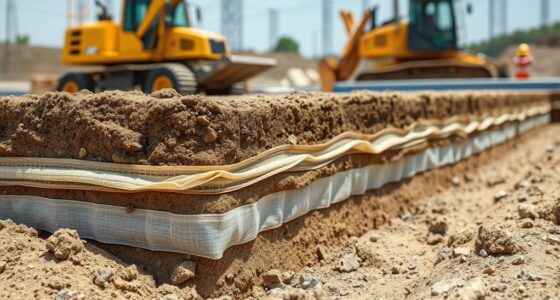
Drainage solutions are critical when building retaining walls, especially around pools where water management is crucial. Poor drainage can lead to water pooling behind the wall, increasing pressure and risking structural failure. Incorporate drainage pipes or weep holes within the wall to allow water to escape efficiently. Proper drainage not only protects your investment but also helps prevent issues like soil saturation, which can cause the wall to shift or collapse over time. When designing your retaining wall, ensure it slopes slightly away from the pool area to facilitate water runoff, and consider installing gravel backfill behind the wall to improve drainage and reduce water retention. Additionally, understanding the cost considerations involved in construction can help you plan your project within your budget constraints.
Proper drainage with weep holes and gravel backfill prevents water pooling and structural failure.
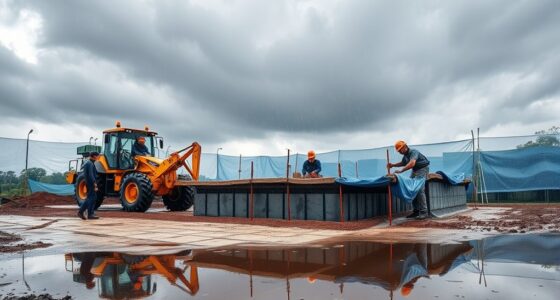
You also need to think about the height and stability of your retaining wall. Taller walls require reinforced foundations and possibly geogrid reinforcement to withstand lateral pressure from the soil. If you’re unsure about these technical aspects, consulting with a landscape architect or professional contractor can save you headaches later. They can help you select the right materials and construction techniques to guarantee the wall remains sturdy and safe, especially in areas prone to heavy rain or shifting soil. Remember, a well-constructed wall not only supports your pool but also adds value and durability to your entire outdoor setup.
Maintenance is another consideration. Regular inspections for cracks or signs of movement can catch problems early before they become costly repairs. Keep drainage pathways clear of debris and ensure that water flows freely away from the wall. Over time, some materials may require sealing or sealing to prevent deterioration, particularly in climates with harsh weather conditions. By maintaining your retaining wall properly, you prolong its lifespan and ensure it continues to serve both functional and aesthetic purposes within your landscape design.
Frequently Asked Questions
What Are the Best Materials for Pool Retaining Walls?
You should consider using natural stone, concrete blocks, or poured concrete for pool retaining walls. These materials provide durability and a sleek look that complements garden decor and water features. Natural stone adds a rustic charm, while concrete options are versatile and cost-effective. Whichever you choose, guarantee it’s strong enough to handle soil pressure and enhances your pool area’s aesthetic, making your outdoor space both functional and beautiful.
How High Can a Retaining Wall Around a Pool Be Built?
A stitch in time saves nine, so knowing your limits is key. You can build a pool retaining wall up to 4 feet high without additional reinforcement, but for safety and aesthetics, taller walls often require engineering and permits. Always prioritize pool safety by ensuring the wall’s stability, and consider the aesthetic design to complement your landscape. Consult local codes to determine the maximum height for your specific project.
Do Retaining Walls Require Special Permits or Inspections?
Yes, retaining walls around pools typically require permits and inspections. You need to check local permit requirements because rules vary by location. The inspection process guarantees your wall is built safely and meets code standards. Failing to obtain necessary permits can lead to fines or having to redo work. Always contact your local building department before starting construction to ensure you follow all permit requirements and pass inspection processes smoothly.
How Long Do Pool Retaining Walls Typically Last?
Pool retaining walls typically last 20 to 30 years if you maintain them well. Think of them as the backbone of your pool’s aesthetics, holding everything in place while blending with your landscape. Proper drainage solutions prevent water damage, which can shorten their lifespan. Regular inspections and timely repairs keep your wall standing strong, ensuring your pool remains both beautiful and safe for many years to come.
Can DIY Methods Be Effective for Building Pool Retaining Walls?
DIY methods can be effective for building pool retaining walls if you prioritize safety and stick to your budget. You need to understand proper construction techniques, use quality materials, and follow safety guidelines to prevent accidents. While DIY can save money, it’s vital to assess your skills honestly. If unsure, consulting a professional ensures the wall’s durability and safety, avoiding costly mistakes later.
Conclusion
Building retaining walls around your pool not only enhances its beauty but also prevents erosion and structural issues. When you choose the right materials and design, you create a safe, inviting space that lasts for years. Think of it as investing in your backyard’s future—solid, reliable, and visually appealing. So, don’t just build a wall; craft a foundation for unforgettable memories. With proper planning, your pool area becomes a stunning centerpiece you’ll enjoy every season.