
To cut pool chemical costs without sacrificing safety, focus on optimizing water testing and adjusting chemicals accordingly, rather than routine dosing. Implement alternative sanitation methods like UV or ozone systems, and keep your filtration well-maintained to reduce chemical reliance. Investing in advanced water treatment and practicing regular maintenance also helps keep water clean and safe while lowering expenses. Stay informed about new technologies—they can make your pool safety and budget go further.
Key Takeaways
- Explore alternative sanitation methods like UV sterilization and ozonation to reduce chemical reliance.
- Regularly test water accurately and adjust chemicals accordingly to prevent overuse and waste.
- Maintain filters properly and optimize circulation to improve efficiency and decrease chemical needs.
- Invest in advanced water treatment technologies that require fewer chemicals for high water quality.
- Conduct routine maintenance and stay updated on new products to prevent issues and minimize chemical expenses.
Managing pool chemical costs can substantially lower your overall maintenance expenses, especially if you adopt smart practices. One of the most effective strategies is exploring alternative sanitation methods that reduce reliance on traditional chemicals like chlorine or bromine. For instance, considering options such as saltwater systems, UV sterilization, or ozonation can provide cleaner water with less chemical input. These alternatives often lead to cost-effective maintenance because they require fewer chemicals over time and can extend the lifespan of your pool equipment. Plus, they tend to produce fewer chemical odors and irritants, making your pool safer and more comfortable for swimmers.
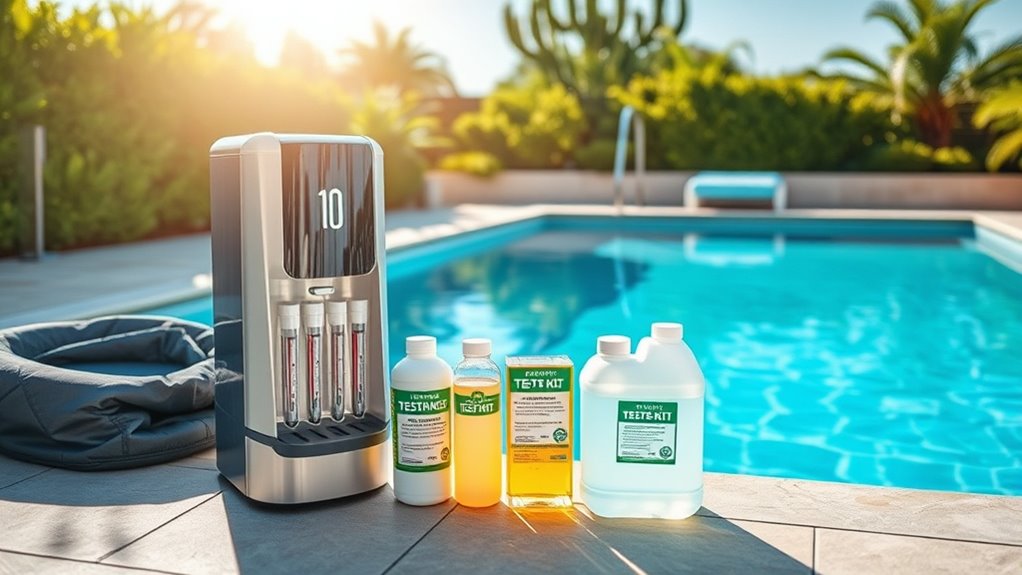
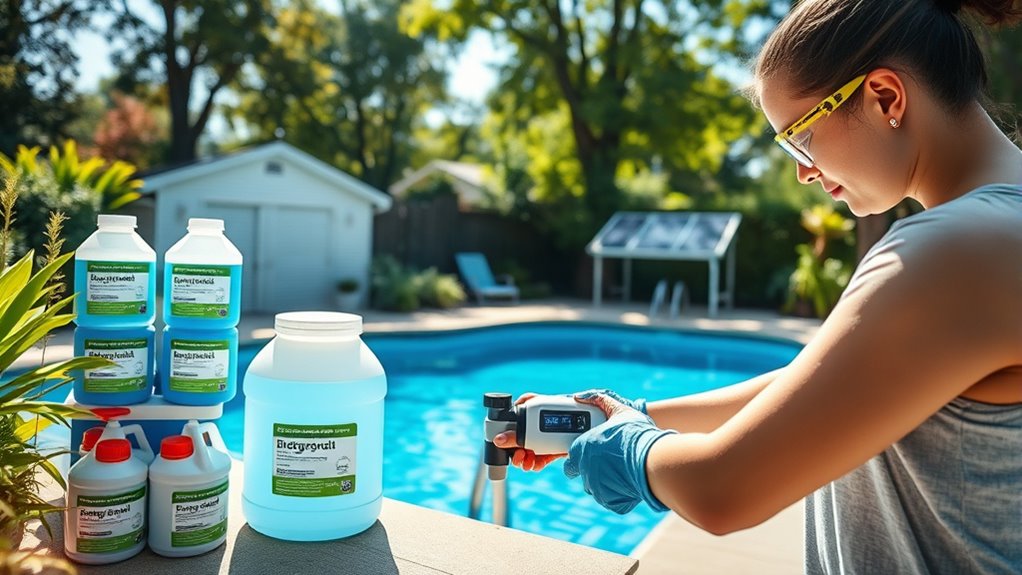
Another way to cut costs without sacrificing safety is to optimize your water testing and chemical application routines. Regular testing helps you understand exactly what your pool needs, preventing overuse of expensive chemicals. Invest in reliable test kits or digital testers to monitor pH, chlorine levels, alkalinity, and stabilizer levels accurately. Adjust chemicals precisely based on test results rather than routine, guesswork dosing. This targeted approach minimizes waste, reduces excess chemical purchases, and maintains a safe, balanced pool environment. It also prevents issues like algae growth or bacterial contamination, which can become costly if neglected.
Optimizing water testing and chemical adjustments reduces waste and keeps your pool safe and cost-efficient.
Implementing smart filtration and circulation practices can also lead to significant savings. Properly maintained filters ensure efficient water turnover, reducing the amount of chemicals needed to keep water clear and safe. Regularly cleaning and backwashing filters prevents clogging and prolongs their lifespan, saving on replacement costs. Additionally, running your pool pump during off-peak hours can save energy, indirectly lowering expenses associated with chemical use since consistent circulation helps distribute chemicals evenly and prevents localized imbalances.
Furthermore, investing in advanced water treatment technologies can improve efficiency and reduce ongoing costs by maintaining better water quality with less chemical input. Education and routine maintenance are key to cost-effective pool management. By establishing a consistent schedule for testing, cleaning, and inspecting your equipment, you catch potential issues early, avoiding costly repairs or chemical overuse. Training yourself or staff to follow best practices guarantees chemicals are used efficiently and safely, preventing waste and reducing expenses. Staying informed about new sanitation technologies and products can also help you adapt your maintenance plan to include more sustainable, budget-friendly options.
Frequently Asked Questions
Can Natural Alternatives Replace Traditional Pool Chemicals?
Natural alternatives can sometimes substitute traditional pool chemicals, but you need to evaluate their chemical effectiveness first. You might consider options like mineral-based systems or UV sanitizers, which reduce reliance on harsh chemicals. However, keep in mind that these alternatives may not be as consistently effective, especially in large or heavily used pools. Always test water regularly to ensure safety and clarity while exploring natural options.
How Often Should I Test My Pool Water?
You should test your pool water at least twice a week to maintain proper chemical balance. Studies show that consistent testing helps prevent algae growth and bacteria buildup, saving you money on unnecessary chemicals. During heavy usage or after storms, test more frequently. This routine guarantees safe, clean water, reducing chemical waste and costs. Effective pool maintenance depends on regular testing, so stay diligent to keep your pool safe and budget-friendly.
Are There Specific Brands That Are More Cost-Effective?
Yes, some brands offer more cost-effective options. When comparing brands, look for those with good reviews and proven reliability in brand comparison tests. You can save money by choosing store brands or lesser-known brands that meet safety standards. Consistently buying in bulk also helps cut costs. Remember, the most cost-effective option balances affordability with quality, ensuring your pool remains safe and well-maintained without overspending.
What Are the Signs of Overusing Pool Chemicals?
If you notice cloudy water, frequent algae growth, or skin and eye irritation, you’re likely overusing chemicals. Chemical overuse can cause water imbalances, leading to pH swings and cloudiness. Test your water regularly to maintain proper levels and avoid excess chemicals. Keep an eye on chemical readings and adjust accordingly to prevent overuse, ensuring your pool stays safe and cost-effective without compromising water quality.
How Can I Optimize Filtration to Reduce Chemical Use?
To enhance filtration and reduce chemical use, you should improve filtration efficiency by regularly cleaning and backwashing your pool filter. Use a high-quality filter system to trap debris more effectively, which minimizes chemical demand. Implement chemical reduction strategies like maintaining proper pH and chlorine levels, as cleaner water needs fewer chemicals. Regular maintenance ensures your filtration system works at its best, helping you save on chemicals without compromising safety.
Conclusion
By following these tips, you can cut pool chemical costs without sacrificing safety. Keep a close eye on your water chemistry, use the right amount of chemicals, and perform regular maintenance. Remember, saving money is a balancing act—don’t let your efforts go down the drain. When you stay vigilant, you’ll keep your pool safe and sparkling, proving that with a little effort, you can have your cake and eat it too.