
TL;DR

Get pool and patio gear delivered free with Prime
- Fast, free delivery on millions of items
- Prime Video, Amazon Music and more included
- Member-only deals all year
A November 8, 2026, Amateur Gardening report lists seven plants garden designer Fi Boyle recommends for sloping gardens, from hardy geranium to creeping rosemary. Boyle says gardeners should match plants to their soil and the slope’s aspect; the choices vary in sunlight, moisture and drainage needs.
Garden designer Fi Boyle has recommended seven plants for adding colour and ground cover to sloping gardens, in a report published by Amateur Gardening on November 8, 2026. The list includes options for different light and soil conditions, but Boyle cautions that choosing plants suited to a site is key to avoiding extra care and poor growth.
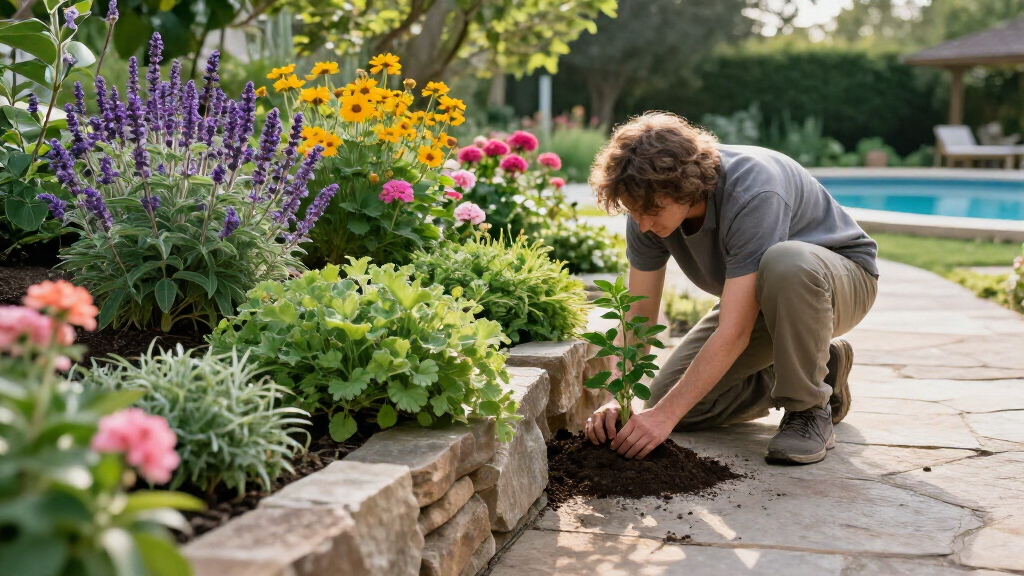
Boyle, of Fi Boyle Garden Design, draws on experience with a garden created on a former quarry. She recommends considering soil type and aspect—the direction and exposure of the site—before selecting plants. Ground-cover plants, she says, can help disguise bare patches on sloping flower beds.
Her suggestions are Geranium macrorrhizum, for a range of soils and dry shade; evergreen Vinca minor, for spreading cover and a long flowering season; and Ajuga reptans, which the report describes as pollinator-friendly. Ajuga prefers moist clay or loam and should not be planted too close to other spreading ground covers, as it may compete with them.
The other four are ground-cover roses, which need moisture; sunny-site Erigeron karvinskianus, also known as Mexican fleabane; fragrant, drought-resistant creeping rosemary, listed as Rosmarinus ‘Prostratus’; and Sedum spurium, a low-growing plant with summer flowers. The report gives growing conditions and maintenance tips for each, including watering Ajuga during drought and mulching roses to help retain moisture.
Choosing Plants for a Sloping Site
A slope can leave areas of exposed soil that are difficult to plant and maintain. The recommendations offer gardeners a way to compare plants by sunlight, soil, moisture and spread, rather than treating all sloping beds as the same. That distinction matters: a plant that suits a dry, sunny bank may not thrive in a shaded or moisture-retentive area.
Several picks spread to form ground cover, while the report highlights different benefits, including seasonal flowers, evergreen foliage, pollinator interest and fragrance. These are the report’s gardening recommendations, not a guarantee that a plant will succeed in every garden. Local conditions and the chosen variety can affect its performance.
Products Worth Considering

Blueair Blue Pure 511i Max Smart Air Purifier

LEVOIT Vital 200S-P Smart Air Purifier for Large Rooms

Roborock Q7 L5 Robot Vacuum and Mop Combo, 8,000 Pa Suction
As an affiliate, we earn on qualifying purchases.
Boyle’s Seven Plant Choices
The list spans plants with different habits and flowering periods. Geranium macrorrhizum forms a semi-evergreen mat, with fuchsia-pink flowers in summer and foliage colour in autumn. Vinca minor is evergreen and may flower from spring into September in suitable conditions; the report says sunnier sites can produce more flowers. Ajuga flowers in May and June and can be divided every few years to propagate it.
Ground-cover roses are suggested for sunny to lightly shaded, well-drained sites, with the report advising spring and winter fertiliser. Mexican fleabane flowers from May to October and can self-seed. Creeping rosemary suits full sun and chalk, loam or sandy soils; the report suggests taking cuttings in summer. Sedum spurium also favours full sun and well-drained soil, and can be lifted and divided in spring. Reported height and spread vary by plant and, for roses, by variety.
Boyle’s experience in a former quarry garden is the practical background to the advice. The article also points readers to a separate report on that garden, but its plant list focuses on matching individual choices to the conditions of a particular slope.
“What works depends so much on the aspect and soil. The key is to match the plant to its surroundings, otherwise it won’t thrive and will need a lot of care.”
— Fi Boyle, Fi Boyle Garden Design, quoted by Amateur Gardening
Conditions That Affect Plant Success
The report does not specify a single climate or region in which all seven choices will perform, and it does not provide a universal planting plan for slopes. Results will depend on local conditions, including drainage, exposure and moisture, as well as the particular variety selected. The stated height, spread and flowering periods are guidance, not guarantees for every garden.
The article also does not claim that the listed plants will stabilise a bank or prevent erosion. Its focus is on colour, interest and covering bare soil. Gardeners dealing with unstable ground or significant erosion may need advice beyond plant selection.
Match the List to Your Garden
The next step for gardeners is to check the slope’s light, soil and drainage, then compare those conditions with the needs of the plants under consideration. Boyle’s advice is to make that match before planting. For instance, the report points to creeping rosemary and Sedum spurium for sunny, well-drained settings, while Ajuga is listed for moist clay or loam and partial shade or full sun.
After planting, care will vary: the report recommends watering Ajuga during dry spells, retaining moisture around roses with mulch, and cutting back Sedum flowers after they die back. No additional announcement or follow-up milestone is given in the source report; the practical outcome depends on each garden’s conditions and ongoing care.
Key Questions
Which plants did Fi Boyle recommend for sloping gardens?
Her seven recommendations are Geranium macrorrhizum, Vinca minor, Ajuga reptans, ground-cover roses, Erigeron karvinskianus, Rosmarinus ‘Prostratus’ and Sedum spurium.
What should gardeners check before choosing plants?
Boyle advises checking the slope’s soil and aspect, along with its moisture and drainage conditions, so the plants are suited to the site.
Which of the listed plants suit sunny, well-drained slopes?
The report lists creeping rosemary and Sedum spurium for full sun and well-drained conditions. Mexican fleabane also prefers full sun and well-drained soil.
Will these plants prevent erosion on a bank?
The report recommends them for ground cover, colour and interest, but does not claim that they will stabilise a bank or prevent erosion. Conditions and the slope itself vary, so the list should not be treated as an erosion-control plan.
Source: amateurgardening.com