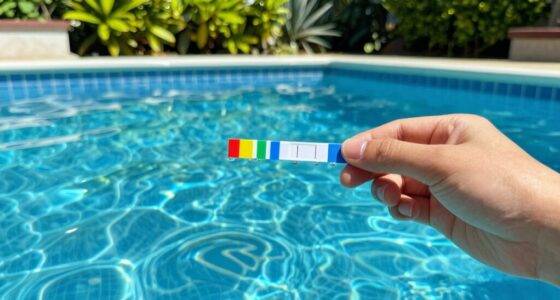
Choosing the right pool sanitizer depends on your needs, environment, and preferences. Chlorine is most common and quickly kills germs, but it can be harsh on skin and eyes. Bromine works well for hot tubs and indoor pools, offering gentler comfort. UV and ozone systems reduce chemical use but still require some sanitizer, making them eco-friendly options. To find the best fit for your pool, consider each option’s benefits and maintenance, and you’ll discover which is best suited for your oasis.

Get pool and patio gear delivered free with Prime
- Fast, free delivery on millions of items
- Prime Video, Amazon Music and more included
- Member-only deals all year
Key Takeaways
- Consider chlorine for quick, effective disinfection but be aware of its potential skin and eye irritation.
- Choose bromine for indoor or hot tub use due to its gentler, more stable, and less odorous properties.
- Use UV or ozone systems as supplemental sanitation; they reduce chemical use but don’t provide residual disinfectant.
- Maintain proper water chemistry (pH, alkalinity) to maximize sanitizer effectiveness regardless of type.
- Evaluate your pool environment, maintenance preferences, and sensitivity to chemicals to select the most suitable sanitizer.
Keeping your pool clean and safe requires choosing the right sanitizer, but with so many options available, it can be overwhelming. The key is understanding how each sanitizer impacts your pool’s chemical balance and how effective it is at killing germs, algae, and other contaminants. When selecting a sanitizer, you need to take into account how it interacts with your pool’s water chemistry and how reliably it maintains sanitizer effectiveness over time.
Chlorine is the most common and widely used pool sanitizer. It’s effective at rapidly killing bacteria and algae, which makes it a popular choice for many pool owners. However, chlorine can be harsh on your skin, eyes, and hair, especially if not properly balanced. Maintaining proper pool chemical balance is essential when using chlorine; if the pH or alkalinity levels are off, chlorine’s sanitizer effectiveness drops, leading to cloudy water or algae growth. Regular testing and adjusting your pool’s chemistry ensure chlorine works efficiently, providing consistent sanitation without irritating your skin or eyes.
Chlorine is effective but can be harsh; proper balance ensures safe, clear swimming water.
Bromine serves as a viable alternative to chlorine, especially in hot tubs and indoor pools. It’s gentler on the skin and more stable at higher temperatures, which helps it maintain sanitizer effectiveness in environments where chlorine might degrade faster. Bromine also tends to produce fewer strong odors, making your swimming experience more pleasant. Like chlorine, it requires a careful balance of pool chemicals to keep it functioning properly. Bromine’s slower action can sometimes mean it needs to be supplemented with shocks or stabilizers to ensure continuous sanitation, particularly if the water is heavily used or exposed to contaminants.
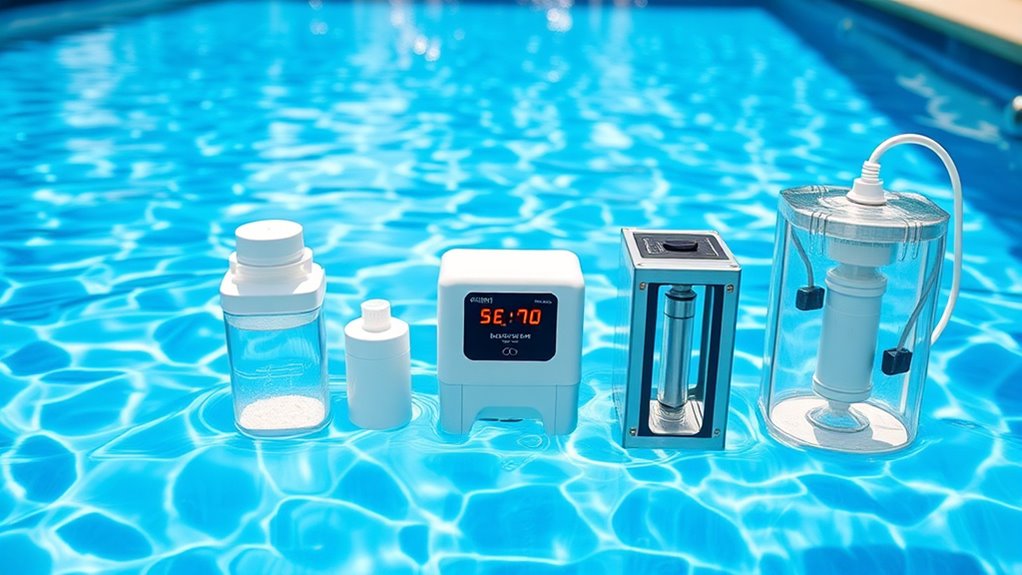
UV and ozone systems offer chemical-free or reduced-chemical sanitation options. UV sanitizers use ultraviolet light to destroy bacteria and viruses as water passes through their chambers. They’re highly effective at targeting microorganisms without adding chemicals to your pool, but they don’t provide residual sanitation, meaning you still need some form of chemical sanitizer to maintain water safety between treatments. Ozone systems generate ozone gas, which is a powerful oxidizer that destroys organic contaminants and enhances overall water quality. While both UV and ozone systems are excellent at boosting sanitizer effectiveness and reducing chemical use, they require proper installation and maintenance to work efficiently. These systems complement traditional sanitizers but shouldn’t replace them entirely.
Additionally, understanding the contrast ratio of your projector can significantly impact your viewing experience by providing deeper blacks and brighter whites, especially in darker scenes. Choosing the right sanitizer involves balancing effectiveness, water chemistry, and your personal preferences. No matter which option you pick, keeping your pool’s chemical balance in check ensures your sanitizer performs at its best, giving you clear, safe, and inviting water.
best pool sanitizer for outdoor pools
As an affiliate, we earn on qualifying purchases.
As an affiliate, we earn on qualifying purchases.
Frequently Asked Questions
How Do Sanitizer Choices Affect Pool Water Clarity?
Your sanitizer choice directly impacts your pool water clarity. Chlorine and bromine maintain a balanced pool chemical level, preventing algae and bacteria growth that cloud water. UV and ozone systems boost water filtration, eliminating contaminants more effectively. When you keep your pool’s chemical balance in check and use proper water filtration systems, your water stays clear, inviting, and safe for swimming. Proper sanitizer selection guarantees pristine, sparkling water all season long.
Are There Health Risks Associated With Different Sanitizers?
Think of pool sanitizers like ingredients in a recipe—you want the right mix for safety. Chlorine, while effective, can cause skin and eye irritation, especially if you have a sanitizer allergy. Bromine tends to be gentler but still risks chemical interactions. UV and ozone systems offer chemical-free options, reducing health concerns. Always consider sanitizer allergy considerations and read labels carefully to keep your swim safe and enjoyable.
What Maintenance Is Required for UV and Ozone Systems?
You’ll need to regularly inspect your UV and ozone systems to guarantee peak performance. For UV systems, replace the UV bulbs every 1 to 2 years as their lifespan diminishes, and clean the quartz sleeves periodically. Ozone systems require proper installation and occasional checks of the ozone generator for leaks or malfunctions. Routine maintenance keeps these systems running efficiently, providing clean water without extensive upkeep.
Can Multiple Sanitizers Be Used Simultaneously?
You can use multiple sanitizers simultaneously, like combining chlorine with UV treatment, but you need to take into account chemical interactions and system compatibility. For example, in a large commercial pool, adding ozone alongside chlorination reduces chemical demand while maintaining water quality. Ensure your equipment is compatible and monitor chemical levels regularly to prevent adverse reactions. Proper system design and professional advice help you safely maximize sanitation benefits without compromising pool safety.
How Do Costs Compare Over the Long Term?
You’ll find that cost comparison over the long term varies, with chlorine generally being the cheapest initial and ongoing expense. Bromine costs are higher but last longer, reducing frequency. UV and ozone systems have higher upfront costs but lower ongoing expenses due to less chemical use. Consider your pool size, maintenance, and chemical costs to determine which sanitizer offers the best balance for your long-term expenses.
As an affiliate, we earn on qualifying purchases.
Conclusion
Choosing the right sanitizer is like selecting a guardian for your oasis—each has its own strength. Chlorine and bromine act as steadfast shields, while UV and ozone serve as swift, unseen protectors. Your pool’s health reflects your choice; pick the one that best embodies your commitment to clarity and safety. Remember, the right sanitizer isn’t just a chemical—it’s the key to turning your pool into a sparkling sanctuary, a symbol of your care and vigilance.
As an affiliate, we earn on qualifying purchases.
As an affiliate, we earn on qualifying purchases.
Fall Picks
fall essentials
As an affiliate, we earn on qualifying purchases.