
To create a sustainable, low-maintenance poolside landscape, choose native plants and xeriscaping techniques. Native plants thrive with minimal water and support local ecosystems, while drought-tolerant options like succulents and ornamental grasses reduce your irrigation needs. Incorporate efficient watering methods such as drip systems and mulching to conserve moisture. By combining these strategies, you’ll enjoy a vibrant, eco-friendly space that saves water and requires less upkeep—keep exploring to find out how to make your pool area truly eco-conscious.
Key Takeaways
- Incorporate native, drought-tolerant plants like succulents and ornamental grasses for sustainable poolside landscaping.
- Use xeriscaping principles such as plant grouping, mulching, and soil preparation to conserve water around pools.
- Implement efficient watering systems like drip irrigation to reduce runoff and evaporation.
- Select low-maintenance native plants to minimize chemical use and support local ecosystems.
- Design with water-wise plant placement and mulching to create a vibrant, eco-friendly poolside environment.

Ever wondered how to create a lush, eco-friendly poolside oasis? The key lies in choosing the right plants and landscaping techniques that prioritize water conservation and sustainability. When you focus on drought-tolerant plants, you not only reduce your water usage but also create a vibrant, low-maintenance environment that thrives in your climate. Incorporating native plants into your poolside landscape is one of the smartest ways to achieve this. These plants are naturally adapted to your area’s soil, climate, and rainfall patterns, making them more resilient and requiring less intervention. By selecting native species, you minimize water consumption and avoid the need for chemical fertilizers or pesticides, which can harm the surrounding environment.
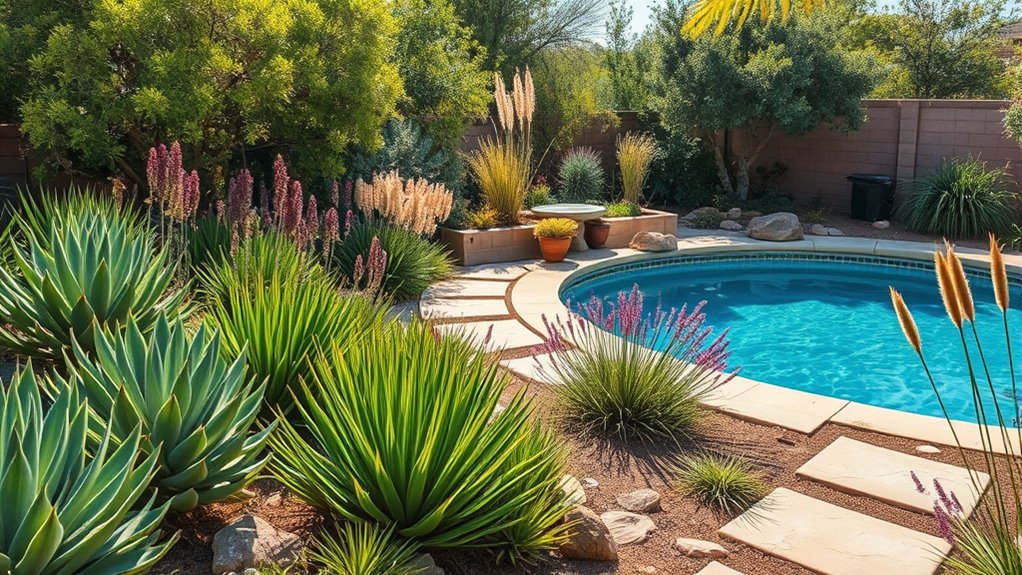
Using drought-tolerant plants around your pool area helps you cut down on water waste considerably. These plants have evolved to survive with minimal water, so they bounce back quickly after dry spells, remaining lush and attractive without constant watering. Think of succulents, lavender, or ornamental grasses—these are just a few examples of hardy, drought-tolerant options that add texture and color to your landscape. When you pair these plants with efficient irrigation methods, like drip systems or soaker hoses, you further optimize water use, directing moisture precisely where it’s needed and reducing runoff or evaporation.
Another essential aspect of water-wise landscaping is designing your garden with xeriscaping principles. This approach emphasizes reducing or eliminating the need for supplemental water by carefully planning plant placement and soil preparation. By grouping drought-tolerant plants with similar water needs, you prevent overwatering and ensure each plant gets just what it needs. Mulching around your plants also plays an important role, helping retain soil moisture and suppress weeds, which compete for water and nutrients. Additionally, choosing low-impact gardening tools can further minimize disturbance to your landscape and reduce water runoff.
Creating a landscape that prioritizes water conservation isn’t just good for the environment; it’s also easier on your wallet. Less water usage means lower utility bills, and native, drought-tolerant plants tend to require less maintenance overall. Plus, a landscape that uses fewer resources becomes a beautiful, sustainable retreat that supports local ecosystems, attracts pollinators, and requires fewer chemical inputs. With careful planning, selecting native plants, and implementing xeriscaping principles, you can craft a striking, eco-friendly poolside garden that remains vibrant year-round while conserving essential water resources.
Frequently Asked Questions
What Are the Best Native Plants for Shaded Pool Areas?
You should choose shade-tolerant flora like ferns, hostas, and native shade plants such as Oakleaf hydrangeas or sweetbox. These plants thrive in shaded pool areas, requiring minimal sun and water. Incorporating native shade plants not only enhances your landscape’s beauty but also supports local ecosystems. Opt for these hardy, low-maintenance options to create a lush, inviting environment around your pool that stays vibrant year-round.
How Do Xeriscaping Principles Reduce Poolside Maintenance?
Xeriscaping principles reduce poolside maintenance by choosing drought-tolerant native plants that need less watering, which minimizes soil erosion and keeps your landscape stable. These plants also naturally resist pests, reducing the need for chemical pest control. By designing with xeriscaping, you cut down on watering, trimming, and pest management, making your pool area easier to maintain while creating a sustainable, attractive environment.
Can Native Plants Improve Pool Water Quality?
Native plants can improve your pool water quality by naturally filtering water through their roots and foliage. Their benefits include reducing runoff and minimizing chemical use, which helps keep pool water cleaner and clearer. Plus, native plants attract beneficial insects and support local ecosystems. By incorporating them around your pool, you enhance water filtration naturally, making your pool environment healthier and more sustainable with less maintenance effort.
What Climate Conditions Favor Xeriscaping Around Pools?
You’ll find that xeriscaping around pools thrives in climates with hot, dry conditions and minimal rainfall. Drought-tolerant species, which require low water, excel in these areas, making them ideal for low water landscaping. If you live in arid or semi-arid regions, this approach reduces water use while maintaining a lush appearance. These plants adapt well to drought, ensuring your poolside landscape stays vibrant with less irrigation effort.
Are There Any Safety Concerns With Native Plants Near Pools?
Sure, native plants near pools can be charming—until you realize some are poisonous or invasive species, turning your paradise into a botanical hazard zone. You should be cautious, as these plants can pose safety concerns, especially for children or pets, with toxic leaves or berries. Always research and select safe, non-poisonous native plants, avoiding invasive species that might spread and cause more chaos than beauty around your pool area.
Conclusion
By choosing native plants and xeriscaping around your pool, you create a lush oasis that’s both beautiful and eco-friendly. Think of it as giving your backyard a gust of fresh air, where sustainability blooms effortlessly. With these green landscaping tips, you’ll enjoy a vibrant, low-maintenance paradise that feels as natural as a walk in the park. Embrace this eco-conscious approach, and watch your pool area flourish like a garden in full bloom.