To choose low-impact pool cleaners and chemicals, opt for solar-powered robotic or manual skimming tools that reduce electricity use. Use biodegradable or natural chemicals like minerals, enzymes, or natural sanitizers that minimize toxins and environmental harm. Regular DIY maintenance, such as cleaning walls and using pool covers, also helps lower chemical needs. Embracing biological filters or plant-based systems can boost eco-friendliness further. Learn more about creating a sustainable, safe pool environment that benefits everyone.
Key Takeaways
- Select solar-powered robotic cleaners or manual skimming tools to reduce energy consumption and emissions.
- Opt for biodegradable or natural chemicals, like mineral-based sanitizers and enzyme clarifiers, to minimize toxins.
- Incorporate DIY maintenance such as regular brushing, vacuuming, and using pool covers to lower chemical dependence.
- Use natural filtration systems like biological filters or plant-based setups to enhance water quality sustainably.
- Follow manufacturer instructions and regularly test water to ensure proper chemical balance with minimal chemical use.
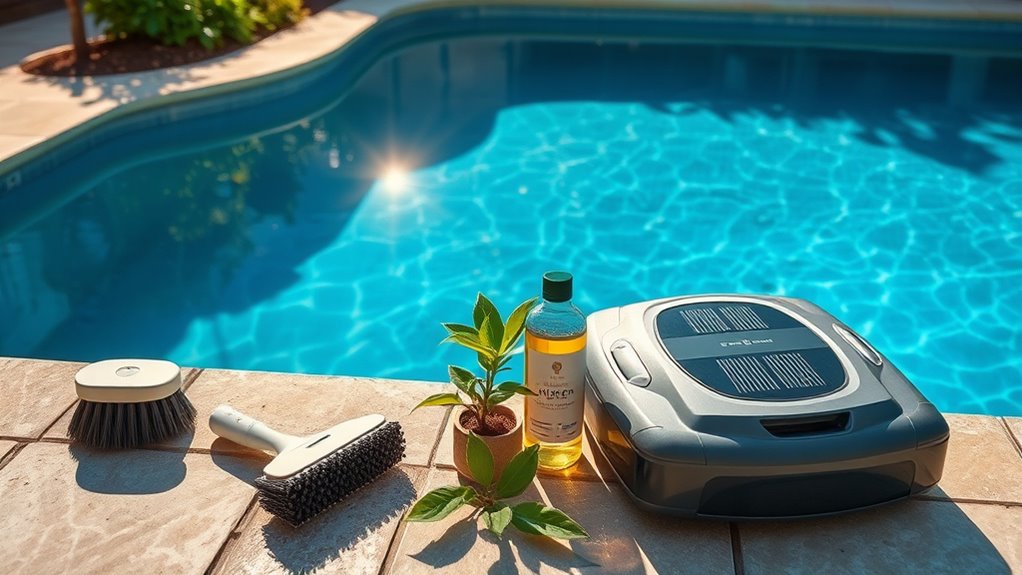
Maintaining a clean and healthy pool requires more than just regular skimming; it involves choosing the right pool cleaners and chemicals to keep your water clear and safe. If you’re aiming for a more eco-friendly approach, you’ll want to explore options that minimize environmental impact without sacrificing effectiveness. Eco-friendly options include solar-powered robotic cleaners, which operate quietly and use renewable energy, or manual skimming tools that eliminate the need for electricity or batteries. These choices not only reduce your carbon footprint but also help you save on energy costs over time.
Choose eco-friendly pool cleaners like solar robotic models or manual tools to reduce environmental impact and save energy.
When selecting low-impact pool chemicals, look for biodegradable or natural alternatives that treat algae and bacteria without introducing harsh toxins into your water. Brands now offer eco-friendly chlorine alternatives, mineral-based sanitizers, and enzyme-based clarifiers that break down organic matter naturally. These options are safer for your family, pets, and the environment, and they often require fewer applications, making your maintenance routine simpler and more sustainable.
Incorporating DIY maintenance tips can further reduce your reliance on chemical-heavy products. Regularly brushing the pool walls and vacuuming debris helps prevent algae buildup and reduces the need for chemical treatments. Using a pool cover when you’re not swimming keeps debris out and minimizes evaporation, which lowers the amount of chemicals needed to maintain balance. Testing your water frequently with simple test kits allows you to adjust pH and sanitizer levels accurately, preventing overuse of chemicals and ensuring your pool remains safe and eco-friendly.
You should also consider natural filtration systems like biological filters or plant-based setups that use beneficial bacteria to break down organic waste. These systems require minimal chemicals and can work in harmony with eco-friendly cleaners, creating a more sustainable pool environment. Additionally, choosing a rustic or farmhouse style poolside decor can contribute to a more relaxing and natural aesthetic, blending well with eco-conscious pool maintenance. When it comes to chemicals, always follow manufacturer instructions carefully, and consider combining them with natural solutions to reduce overall chemical use.
Frequently Asked Questions
Are Eco-Friendly Pool Cleaners as Effective as Traditional Ones?
Eco-friendly pool cleaners are just as effective as traditional ones, especially when they use biodegradable formulas and solar-powered devices. You’ll find that these cleaners efficiently remove dirt and algae without harsh chemicals, making your pool safer and eco-conscious. Plus, solar-powered devices reduce energy use, giving you a sustainable option. So, by choosing eco-friendly cleaners, you don’t compromise on performance while helping protect the environment.
How Often Should I Test My Pool’s Water Chemistry?
You should test your pool’s water chemistry at least twice a week to guarantee proper chemical balance. Regular water testing frequency helps you identify imbalances early, preventing algae growth and equipment damage. Focus on monitoring pH, chlorine levels, and alkalinity consistently. If your pool gets heavy use or after a storm, increase testing to three or more times weekly. Staying on top of chemical balance is key for a safe, clean, and eco-friendly swimming environment.
Can Natural Chemicals Replace Standard Pool Sanitizers?
Natural alternatives can replace standard pool sanitizers, but they might not be as reliable or effective alone. You can explore options like saltwater systems, mineral sanitizers, or UV filters, which serve as chemical replacements and reduce chemical use. However, it is crucial to test your water regularly and consider combining these natural methods with minimal chemicals to maintain proper sanitation and water quality.
What Are the Long-Term Benefits of Low-Impact Pool Chemicals?
Using low-impact pool chemicals offers long-term benefits like supporting sustainable water treatment and reducing your reliance on harsh chemicals. You’ll enjoy safer, healthier swimming environments and lessen environmental pollution. These chemical reduction methods help maintain water quality with fewer additives, which can lower maintenance costs over time. By choosing eco-friendly options, you contribute to a more sustainable aquatic ecosystem, ensuring your pool stays clean while protecting the planet for future generations.
Are There Specific Brands Known for Environmentally Safe Pool Products?
You’re in luck—brands like GreenSwim and EcoPure stand out for their eco-conscious manufacturing and organic pool solutions. These companies prioritize sustainability, ensuring their products are safer for the environment. While it’s not a silver bullet, choosing these brands helps you kill two birds with one stone: maintaining a pristine pool and protecting the planet. Keep an eye out for certifications and transparency to make the best eco-friendly choice for your pool.
Conclusion
By choosing low-impact pool cleaners and chemicals, you’re not just protecting your pool — you’re saving the entire planet from drowning in harmful toxins. Every small decision you make creates ripples, turning your backyard into a fortress of eco-friendly bliss. Think of it: your sparkling pool, a shining beacon of sustainability, standing tall against the tide of pollution. So go ahead, be a hero—because tiny choices today can save tomorrow’s world in ways you never imagined.