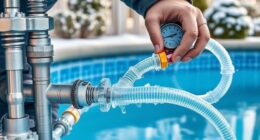
Using rainwater for pool refills is an eco-friendly and cost-effective option. You can install a gutter system to direct rain into a clean storage tank, which helps reduce reliance on municipal water and lowers utility bills. To guarantee water quality, regularly check for contaminants and maintain proper chemical balance in your pool. Proper collection and maintenance practices make this sustainable approach effective. Keep going to discover more tips for making the most of rainwater harvesting for your pool.
Key Takeaways
- Install gutter systems to direct rainwater into clean, maintained storage tanks for pool refilling.
- Ensure proper filtration and water quality checks before adding rainwater to the pool.
- Use pumps or hoses to transfer collected rainwater into the pool, minimizing contamination risks.
- Maintain chemical balance and pH levels regularly after refilling with rainwater to ensure water safety.
- Implement eco-friendly practices like pool covers and regular maintenance to optimize rainwater use and conserve resources.

Rainwater harvesting offers an eco-friendly and cost-effective way to refill your pool, especially during dry seasons or drought conditions. When you tap into rainwater, you’re reducing reliance on municipal water supplies and lowering your utility bills. However, to make the most of this natural resource, you need to consider some key steps to guarantee your pool remains clean and balanced.
Harness rainwater to refill your pool sustainably and save on water costs.
One of the first things you’ll want to focus on is how you collect and store rainwater. Installing a proper gutter system that directs water into a clean, well-maintained storage tank is essential. This helps prevent debris, dirt, and contaminants from entering your water supply. Once you’ve collected enough rainwater, you can direct it into your pool using a hose or pump. Before doing so, it’s wise to check the water quality and guarantee it’s free from pollutants or pests.
Using rainwater for your pool means you’ll need to pay special attention to maintaining the chemical balance. Rainwater is naturally soft and low in minerals, but as it mixes with your existing pool water, it can dilute chemicals and alter pH levels. Regular testing becomes vital to keep your water balanced. If the pH drops too low, you might notice it becoming more acidic, which can damage your pool liner and equipment over time. Conversely, if the pH is too high, algae and bacteria can flourish, leading to cloudy water and potential health risks.
To mitigate these issues, you should add pool chemicals carefully and in proper amounts. Using a pool cover helps maintain chemical stability by reducing evaporation and limiting debris falling into the water. A cover also keeps the water temperature consistent, which can help with chemical effectiveness. When refilling your pool with rainwater, monitor your chemical levels closely and adjust as needed. This proactive approach guarantees your pool remains sanitized and safe for swimming.
Integrating rainwater harvesting into your pool maintenance routine requires some planning, but the benefits are worth it. Not only do you save water and money, but you also contribute to environmental conservation by reducing runoff and water extraction from natural sources. Keep an eye on your chemical balance, invest in a quality pool cover, and guarantee your collection system is clean and efficient. With these practices in place, you’ll enjoy a clean, balanced pool that’s eco-friendly and cost-effective to maintain year-round.
Frequently Asked Questions
Can Rainwater Harvesting Supply Enough Water for Large Commercial Pools?
You can’t rely solely on rainwater harvesting to supply large commercial pools, as it typically doesn’t meet the high demand. Stormwater management is essential to collect sufficient water, but you’ll need ongoing water quality testing to guarantee safety and cleanliness. To keep your pool filled consistently, combine rainwater harvesting with other water sources, and regularly monitor the water for contaminants and quality issues.
What Are the Legal Regulations Regarding Rainwater Harvesting for Pool Use?
You need to check local laws first, as legal compliance varies by area. Many places require permit requirements for rainwater harvesting systems, especially for pool use, to guarantee safety and water quality standards. Some regions may have restrictions or specific guidelines to follow. Always consult your local government or water authority to confirm the regulations, obtain necessary permits, and avoid potential penalties. Staying compliant helps you responsibly harvest rainwater for your pool.
How Do I Prevent Mosquito Breeding in Rainwater Storage Tanks?
To prevent mosquito breeding in your rainwater storage tanks, you should focus on mosquito prevention by covering the tanks with tight-fitting lids or screens. Regular tank sanitation is essential; clean the tanks periodically to remove debris and prevent algae growth. Additionally, verify there’s no stagnant water around the tank area. These steps will keep mosquitoes out and maintain clean, safe water for your pool use.
What Maintenance Is Required for Rainwater Harvesting Systems?
Think of maintaining your rainwater system like tuning up a vintage radio. You’ll need to regularly check and clean your filters to keep debris out, and perform tank cleaning at least once a year to prevent sediment buildup. Inspect gutters and downspouts for clogs, and make sure all components are in good working order. These simple steps help preserve water quality, ensuring your system runs smoothly and safely for years to come.
Is Rainwater Suitable for Pool Water Chemistry and Treatment?
Rainwater can be suitable for pool water chemistry if you verify its quality first. You should test rainwater regularly for contaminants like bacteria, algae, and debris, then filter and disinfect it properly. Maintaining good rainwater quality helps balance your pool’s chemistry, reducing chemical use and keeping the water safe. With proper treatment, rainwater can be a sustainable and cost-effective option for refilling your pool.
Conclusion
Harnessing rainwater to refill your pool not only saves you money but also helps conserve precious resources. With a simple system in place, you can enjoy a revitalizing swim anytime, knowing you’re doing your part for the environment. Think of it as a modern-day alchemy, turning rain into liquid joy. So, embrace this sustainable practice—your backyard oasis and the planet will thank you. After all, even in this fast-paced world, a bit of old-world wisdom still holds true.