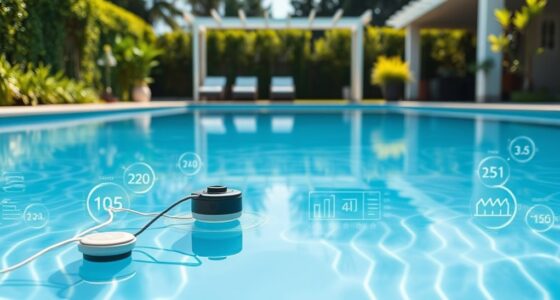
Using hyper-localized weather and climate data in pool automation helps you anticipate changes like rain, humidity, and sunlight that impact water quality and energy use. By integrating precise forecasts, your system can automatically adjust chemical dosing, filtration, heating, or shading, ensuring a comfortable and safe environment. This tailored approach reduces manual work and saves energy. To discover how this technology can transform your pool management, explore the detailed benefits that follow.
Key Takeaways
- Integrate hyper-local weather forecasts to fine-tune chemical dosing and filtration schedules proactively.
- Use localized data on rain, humidity, and sunlight to prevent water quality issues and optimize energy use.
- Automate adjustments for pool temperature, shading, and covers based on real-time microclimate conditions.
- Enhance safety and comfort by responding to specific wind speeds, evaporation rates, and temperature fluctuations.
- Leverage detailed climate data to create a dynamic, responsive pool management system with minimal manual intervention.

Integrating localized weather data into your pool automation system allows you to optimize maintenance, energy use, and comfort. By leveraging smart pool sensors combined with weather integration, you gain real-time insights that help you adjust your pool’s settings proactively. These sensors detect parameters like water temperature, pH levels, and chemical balance, providing immediate feedback. When paired with hyper-local weather data—such as forecasted rain, sunlight intensity, wind speed, and humidity—you can fine-tune your pool’s operation to match current and upcoming conditions. This integration ensures you’re not just reacting to issues but preventing them, saving you time, effort, and money.
With weather integration, your system can automatically adjust chemical dosing based on upcoming rain or humidity levels, reducing the need for manual interventions. For example, if heavy rain is forecasted, your system might dilute the chemicals or increase filtration cycles to prevent water quality issues. Conversely, during periods of intense sun, it can increase pool temperature or adjust the cover to minimize heat loss and evaporation. Smart pool sensors collect detailed data that, when combined with hyper-local weather forecasts, creates a dynamic feedback loop. This allows your automation system to make precise adjustments without your constant input, resulting in a more consistent and enjoyable swimming environment.
Moreover, weather integration helps optimize energy consumption. By knowing in advance when the weather will be warm or cool, your system can prioritize heating or cooling cycles accordingly. For instance, if the forecast predicts a cold front, your system can pre-heat the water or reduce energy expenditure during unneeded periods, saving you money on utility bills. During hot days, the system can activate shading mechanisms or increase filtration to maintain water quality without overusing energy. The synergy between smart pool sensors and weather data creates a responsive environment, reducing waste and extending equipment lifespan.
You’ll also notice increased comfort when your automation system adapts seamlessly to changing conditions. If wind speeds pick up, the system might activate dehumidifiers or adjust pool covers to prevent heat loss. When sunlight is intense, it can shade the pool or activate solar heating optimally. Additionally, understanding the importance of contrast ratio can help ensure your system’s display remains visible under various lighting conditions, enhancing user interface usability. This level of responsiveness ensures that your pool remains inviting and safe, regardless of weather fluctuations. Overall, integrating hyper-local weather data into your pool setup empowers you to maintain a pristine, energy-efficient, and comfortable pool environment with minimal effort. By embracing weather integration and smart sensors, you’re taking control of your pool’s health and your enjoyment, all while maximizing efficiency and convenience.
Frequently Asked Questions
How Accurate Is Hyper-Local Weather Data Compared to Traditional Forecasts?
Hyper-local weather data is often more accurate than traditional forecasts because weather modeling focuses on specific areas and uses precise data validation techniques. You’ll notice better predictions about rain, temperature, and wind for your location, helping you plan pool activities better. While traditional forecasts rely on broader models, hyper-local data offers real-time insights, making it a reliable tool for personalized weather updates.
Can Localized Weather Data Predict Sudden Weather Changes Affecting Pools?
Like a weather detective, localized data can spot sudden changes, helping you manage your pool better. It predicts storm events and air quality shifts more precisely than traditional forecasts, so you can prepare for unpredictable weather. While not perfect, this data can give you early warnings of quick weather shifts, ensuring your pool’s safety and comfort. Trust in hyper-local info to keep your poolside experience smooth and enjoyable.
What Sensors Are Used to Gather Hyper-Local Weather Information for Pools?
You use sensors like temperature, humidity, and wind speed sensors to gather hyper-local weather data for pools. These sensors require regular calibration to guarantee accuracy, and their data integrates seamlessly with your pool automation system. By combining calibrated sensor readings, you get real-time, precise weather info, allowing you to adjust your pool settings proactively and maintain ideal conditions, even during sudden weather changes.
How Frequently Is Hyper-Local Weather Data Updated for Pool Automation?
You’ll be glad to know that hyper-local weather data for pool automation updates every few minutes, typically around 5 to 15 minutes. This quick update cycle minimizes data latency, ensuring your system adapts swiftly to changing weather patterns. Did you know that even a 10-minute delay can cause significant temperature or humidity mismatches? Regular updates help maintain perfect pool conditions, so you enjoy ideal comfort without manual adjustments.
Is Hyper-Local Weather Data Cost-Effective for Residential Pool Owners?
Hyper-local weather data is generally cost-effective for residential pool owners when you consider the benefits of precise climate adjustments. A solid cost analysis shows that integrating this data into your pool system can save you money on energy and chemicals. Plus, seamless data integration makes managing your pool easier, ensuring you only use what’s necessary based on accurate, real-time weather updates. Overall, it’s a smart investment for better efficiency and savings.
Conclusion
So, here’s the irony: all those high-tech pool gadgets rely on just a few weather reports, yet now you can access hyper-localized data that knows your backyard better than you do. Imagine the surprise when your pool’s climate control is so precise, it practically runs itself—while you’re still manually adjusting the chemicals. Embrace this tech, and maybe, just maybe, you’ll finally get some time back instead of chasing weather updates.