Using pools for meditation and mindfulness can create a peaceful environment that helps you focus and relax. The still water offers beautiful reflections of the sky and surroundings, encouraging calmness. Gentle ripple sounds soothe your mind and drown out distractions. Touching the water heightens your senses and deepens your awareness. Incorporating water features enhances the experience and makes it easier to find a tranquil mental state. If you stay tuned, you’ll discover more ways to use pools for your practice.
Key Takeaways
- Pools offer reflective surfaces that promote focus and foster a meditative state through visual engagement.
- The calming sounds of water ripples enhance relaxation and help drown out external distractions.
- Tactile experiences like dipping fingers into water heighten sensory awareness and mindfulness.
- Pools create a peaceful environment ideal for breathing exercises and grounding practices.
- Incorporating water features in pool areas deepens relaxation and supports consistent mindfulness practice.
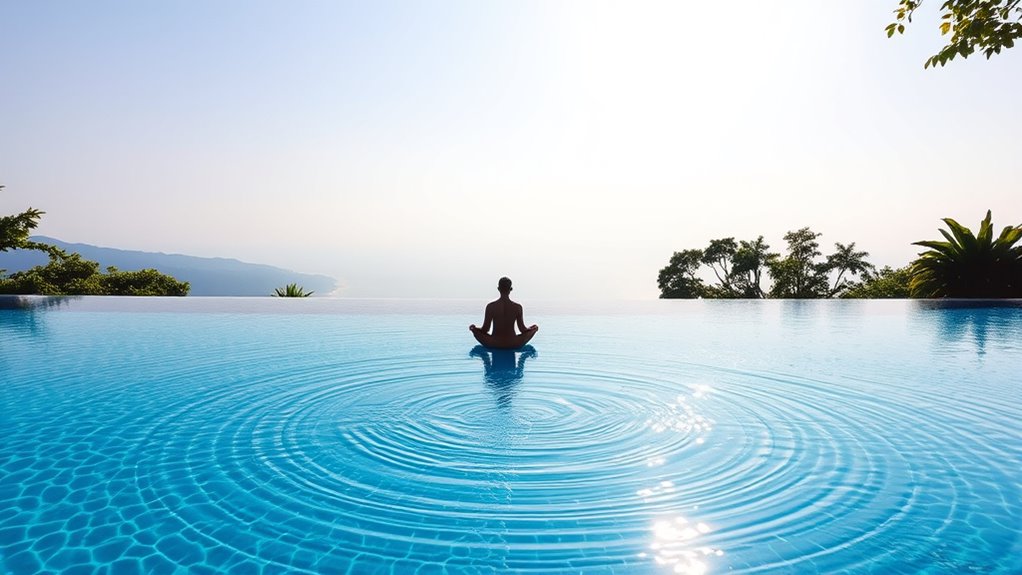
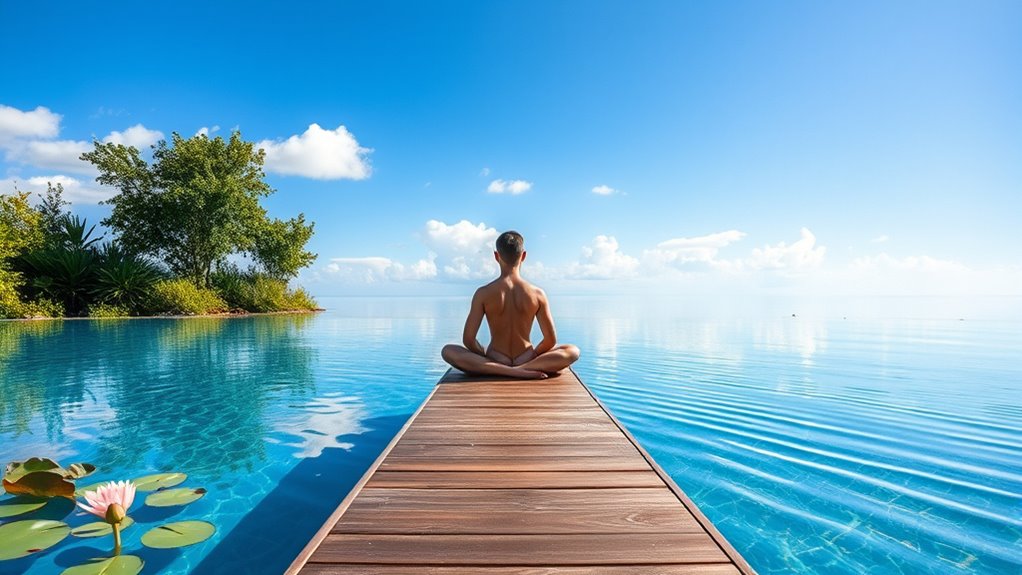
Have you ever considered how a tranquil pool can enhance your meditation practice? The stillness of the water creates beautiful reflections that invite your gaze and calm your mind. As you sit quietly beside a pool, you’ll notice how the water’s surface acts like a mirror, capturing the sky, trees, or surrounding scenery. These water reflections serve as a visual anchor, helping you focus your attention and stay present. Watching the gentle movement of the water, you can train your mind to stay rooted in the present moment instead of wandering into worries or distractions.
A peaceful pool reflects the sky and nature, helping you focus and stay present during meditation.
Beyond the visual appeal, the calming sounds of a pool are incredibly soothing. The soft ripple of water, whether caused by a gentle breeze or your own breath, creates a natural soundtrack that promotes relaxation. These calming sounds drown out the noise of everyday life, helping you to settle into a deeper state of mindfulness. The consistent, gentle noise acts like a lullaby for your mind, encouraging you to slow down and breathe more consciously. When you focus on these soothing sounds during meditation, it becomes easier to let go of tension and mental clutter, fostering a sense of peace and clarity.
Using a pool for meditation isn’t just about looking at water; it’s about immersing yourself in its sensory qualities. The tactile experience of dipping your fingers into cool water or feeling the dampness of the surrounding environment can heighten your awareness. This multi-sensory engagement anchors your attention and enhances your mindfulness practice. When you combine visual water reflections with the calming sounds of ripples and gentle splashes, you create an environment that naturally encourages a meditative state. The serenity of the water invites you to slow your thoughts, deepen your breathing, and cultivate a sense of inner calm.
Additionally, pools are versatile spaces for mindfulness exercises. You can sit quietly, focusing on the water’s reflections and sounds, or engage in mindful breathing exercises with the pool as your backdrop. The presence of water fosters a meditative atmosphere that’s both peaceful and grounding. It’s a simple yet powerful way to reconnect with yourself amid nature or a peaceful environment. By regularly incorporating pools into your meditation routine, you’ll likely find it easier to access a tranquil state of mind, reduce stress, and improve your overall mental clarity. Incorporating calming water features can further enhance the meditative environment and deepen your relaxation experience. The natural beauty and soothing qualities of water reflections and calming sounds make pools an ideal setting for deepening your mindfulness journey.
Frequently Asked Questions
Can Pools Be Used for Guided Meditation Sessions?
Yes, you can use pools for guided meditation sessions. The water buoyancy helps you feel weightless and relaxed, enhancing your mindfulness practice. Pool acoustics create a calming environment, making it easier to focus on your breath or guided prompts. You might find the gentle sound of water soothing, helping you deepen your meditation. Just guarantee the pool is quiet and comfortable for a truly immersive, peaceful experience.
What Safety Precautions Are Necessary for Pool Meditation?
A stitch in time saves nine, so prioritize safety. When doing pool meditation, guarantee pool safety by supervising yourself or others and avoiding slippery surfaces. Keep water cleanliness to prevent infections. Use life vests if you’re not a confident swimmer, and never meditate alone in deep water. Regularly check for hazards and maintain proper water quality. These precautions allow you to enjoy calming reflections safely.
How Does Water Temperature Affect Mindfulness Practice?
Water temperature considerably impacts your mindfulness practice by affecting your comfort and focus. When the water is too cold or hot, it can distract you from your meditation, making temperature regulation essential. Clear water enhances your ability to relax and concentrate, as it minimizes visual distractions. Maintaining ideal water temperature and clarity helps you stay present, deepening your mindfulness experience and allowing you to fully connect with the calming sensations of the water.
Are Indoor Pools Better Than Outdoor Pools for Meditation?
Indoor pools are generally better for meditation because they offer controlled conditions. You’ll notice better pool acoustics, which help you focus and stay present, and water clarity is easier to maintain, creating a peaceful environment. Outdoors, sounds and weather can be distracting. Inside, you can fully immerse yourself without interruptions, making it easier to achieve mindfulness and deepen your meditation practice.
Can Pool Meditation Help With Anxiety and Stress Reduction?
Imagine sinking into warm water, feeling your worries melt away—that’s how pool meditation can help with anxiety and stress reduction. You can enjoy calming effects, especially when water temperature is just right, promoting relaxation. Always prioritize pool safety, ensuring the environment is secure and suitable. With regular practice, this mindful immersion helps calm your mind and ease tension, making your stress easier to manage.
Conclusion
Imagine your mind as a calm pool, rippling gently with each breath you take. Using pools for meditation helps you dive beneath surface distractions and find stillness within. As you float in this tranquil space, you’ll discover clarity and peace, like a clear sky after a storm. Embrace the water’s embrace, and let it carry your thoughts away, leaving you refreshed and centered, ready to face anything with a renewed sense of calm.