
Using pools for prenatal exercise offers a safe, low-impact way to strengthen muscles, boost circulation, and stay active during pregnancy. The water provides gentle resistance that supports your body, reduces joint stress, and helps improve balance and flexibility. It’s easy to modify exercises as you progress, making workouts comfortable and effective. Plus, the cooling effect keeps you feeling refreshed. Keep exploring to discover how pool workouts can support your pregnancy journey.
Key Takeaways
- Water resistance provides safe, adjustable strength training, supporting muscle toning without weights.
- Buoyancy reduces joint pressure, minimizes injury risk, and allows broader, easier movement during pregnancy.
- Water-based exercises improve circulation, posture, and core stability with low-impact movements.
- The cooling effect of water helps regulate body temperature, increasing comfort and workout sustainability.
- Pool exercises are easily modifiable, offering a safe, effective, and enjoyable low-impact option throughout pregnancy.
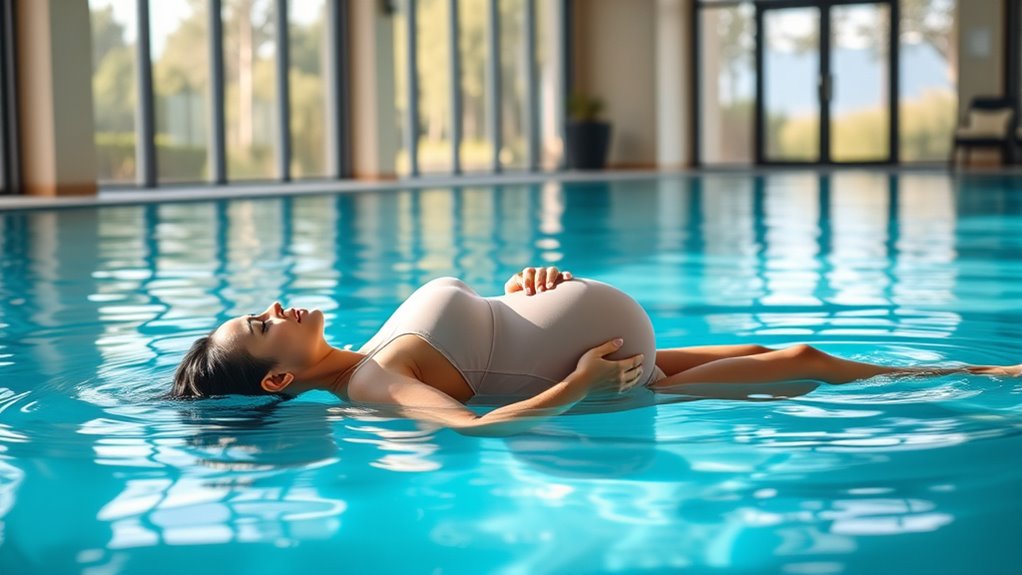
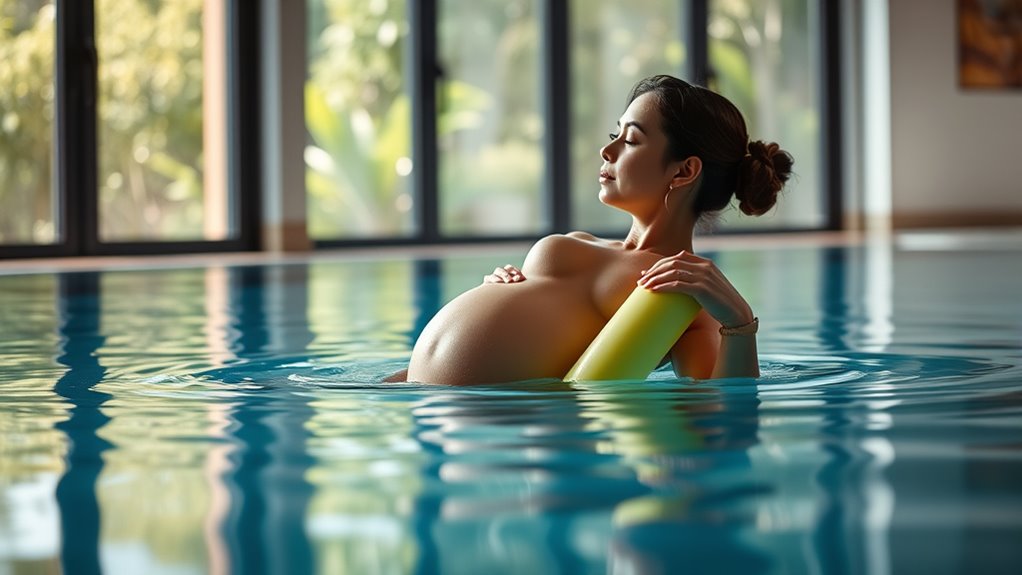
Are pools the ideal environment for prenatal exercise? Many expecting mothers find that water provides a uniquely supportive setting, making it easier to stay active without putting undue stress on your joints and muscles. The key advantages of exercising in the pool are the water resistance and buoyancy benefits. Water resistance acts as a gentle but effective form of strength training, allowing you to engage your muscles without heavy weights or high-impact movements. As you move through the water, it offers uniform resistance, which helps tone and strengthen muscles safely during pregnancy. This resistance is adjustable depending on your speed and effort, giving you control over the intensity of your workout.
Water resistance provides safe, adjustable strength training during pregnancy.
The buoyancy benefits are equally compelling. When you’re submerged in water, your body experiences a weightless feeling that alleviates the pressure on your spine, hips, and knees. This weightlessness makes it easier to perform a broader range of movements, including stretches and gentle aerobic exercises, with less discomfort. If you’re dealing with joint pain or swelling, the pool’s buoyancy can help reduce these symptoms, making exercise more comfortable and sustainable. It also minimizes the risk of falls or injuries, since water provides a low-impact environment where balance and stability are supported.
Using the water’s resistance, you can perform simple movements like walking, leg lifts, or arm circles that boost circulation and keep your muscles active. The resistance also encourages better posture and core engagement, which are vital during pregnancy. Because water exercises are low-impact, they don’t jolt your joints or cause undue strain, yet they still deliver substantial cardiovascular and muscular benefits. Plus, the cooling effect of water helps regulate your body temperature, preventing overheating during exercise, which is especially important during pregnancy. Incorporating water-based exercise can also improve your overall confidence and enjoyment during prenatal workouts.
Another advantage is that exercising in water can be more enjoyable and less intimidating than traditional land-based workouts. The soothing sensation, combined with the support of the water, can boost your motivation to stay active. It’s also easier to modify exercises as your pregnancy progresses, ensuring you maintain a safe and effective routine. Overall, utilizing pools for prenatal exercise leverages water resistance and buoyancy benefits to provide a safe, comfortable, and effective way to stay fit during pregnancy. It allows you to exercise with confidence, knowing you’re reducing impact while still working toward your health goals.
Frequently Asked Questions
Can Pregnant Women Swim in Chlorinated Pools Safely?
Yes, you can swim safely in chlorinated pools during pregnancy if you follow proper pool safety guidelines. Chlorine effectively kills germs but can cause skin or eye irritation if levels are too high. To minimize chlorine effects, shower before and after swimming, wear goggles, and avoid swallowing water. Always check pool conditions and consult your healthcare provider if you have any concerns about chlorine exposure or other health issues.
How Often Should I Exercise in the Pool During Pregnancy?
Did you know that 65% of pregnant women find swimming to be their most enjoyable exercise? You should aim to exercise in the pool about three to four times a week, ensuring water safety and that the pool is accessible and comfortable. This frequency helps maintain fitness without overexertion. Always listen to your body and consult your healthcare provider to tailor the best routine for your pregnancy journey.
Are There Specific Pool Exercises to Avoid While Pregnant?
You should avoid water exercises that involve deep water diving, jumping, or rapid movements, as they can compromise water safety. Also, steer clear of exercises that put excessive strain on your joints or cause balance issues. Always follow recommended exercise modifications, listen to your body, and consult with your healthcare provider before trying new activities. Prioritizing safety guarantees you enjoy the benefits of prenatal water exercise without risk.
What Temperature Should the Pool Be for Prenatal Workouts?
You should aim for a water temperature between 83°F and 89°F for prenatal workouts. This range helps maintain pool safety and prevents overheating, which is essential during pregnancy. Always check the water temperature before starting your exercise, and avoid pools that are too hot or too cold. Staying within this temperature range supports comfort, reduces the risk of dehydration, and promotes a safe, enjoyable prenatal workout experience.
Can Swimming Help With Pregnancy-Related Back Pain?
Swimming can be a soothing balm for pregnancy-related back pain, like a gentle hug from water itself. The water buoyancy supports your body and reduces pressure, offering joint relief and easing discomfort. Moving through the water helps strengthen back muscles and improves posture, which can alleviate pain. So, yes, incorporating swimming into your routine can be an effective, low-impact way to manage back pain during pregnancy.
Conclusion
Using pools for prenatal exercise is a smart move that lets you stay active without overexerting. The buoyancy reduces joint strain, making workouts safer and more comfortable. As you plunge into this low-impact routine, remember that slow and steady wins the race. Keep listening to your body, and don’t push too hard. With the right approach, you’ll stay on course, feeling energized and ready for the new chapter ahead.