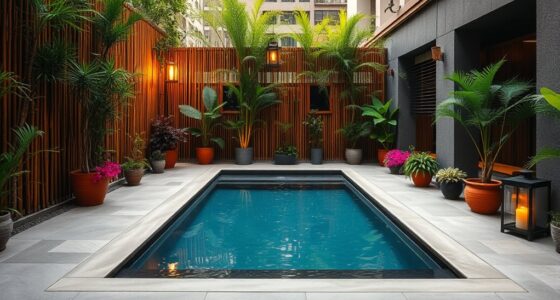

To design effective privacy in your outdoor space, combine screens, hedges, and fencing strategically. Use landscape screens made from attractive materials like wood or metal to block views instantly. Plant dense hedges such as boxwood or arborvitae for year-round seclusion, and install fences to create solid barriers. Layering these elements balances aesthetics with function, helping you control sightlines and sound. Keep exploring to discover how these choices can transform your yard into a private retreat.
Key Takeaways
- Combine landscape screens, hedges, and fences for layered privacy and effective sight and sound control.
- Select materials like wood, metal, or evergreen plants based on aesthetic preferences and maintenance needs.
- Strategically place barriers to block views from neighbors, streets, or other outdoor spaces.
- Use dense, evergreen hedges to provide year-round seclusion and natural softening of boundaries.
- Design privacy zones that balance functionality, visual appeal, and security tailored to individual outdoor needs.
In today’s digital world, designing for privacy isn’t just a feature—it’s a necessity. When you’re creating outdoor spaces, you need effective ways to establish privacy zones that keep your home secluded from neighbors and passersby. Landscape barriers like screens, hedges, and fencing aren’t just aesthetic choices; they serve as essential tools to block visual and auditory intrusion, helping you regain a sense of personal space. You want your outdoor area to be a retreat where you can relax without feeling exposed. That’s where strategic landscape barriers come into play, allowing you to craft privacy zones tailored to your needs and preferences.
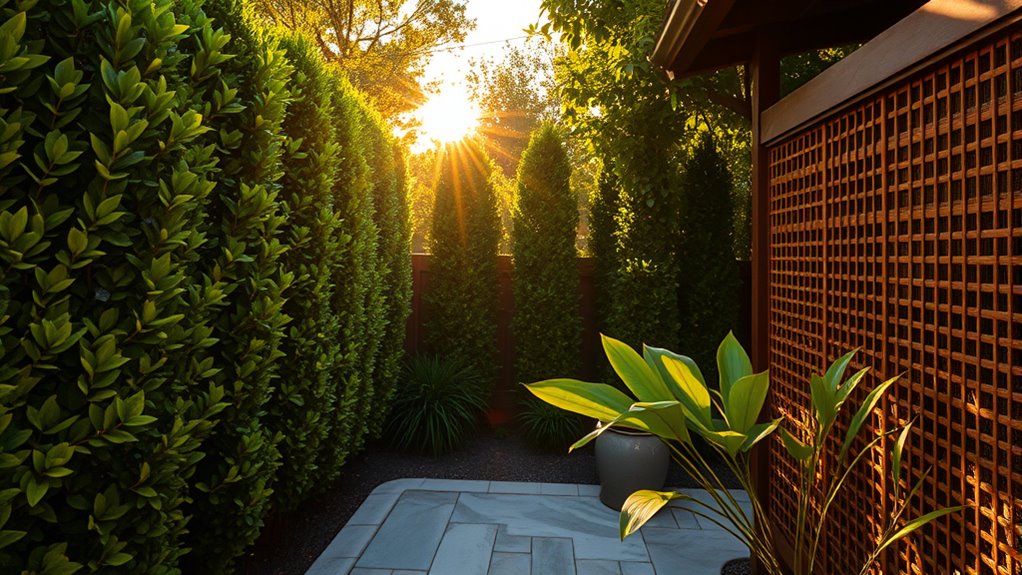
Start by considering screens—these can be made from a variety of materials like wood, metal, or composite panels. They’re easy to install and can be positioned to block views from specific angles, creating instant privacy zones. Not only do screens serve functional purposes, but they also add a modern or artistic touch to your landscape, complementing your overall design. Think about using decorative screens that double as focal points or room dividers, giving your outdoor space a sense of enclosure and intimacy.
Hedges are another effective landscape barrier that naturally enhances your privacy zones. When you select dense, evergreen varieties like boxwood, arborvitae, or privet, you create a living wall that grows thicker over time, providing year-round seclusion. Hedges also soften the boundaries of your yard, blending seamlessly with the natural environment while blocking unwanted views. Regular trimming ensures they stay dense and effective, and planting them strategically around your property’s perimeter or along specific sightlines maximizes privacy.
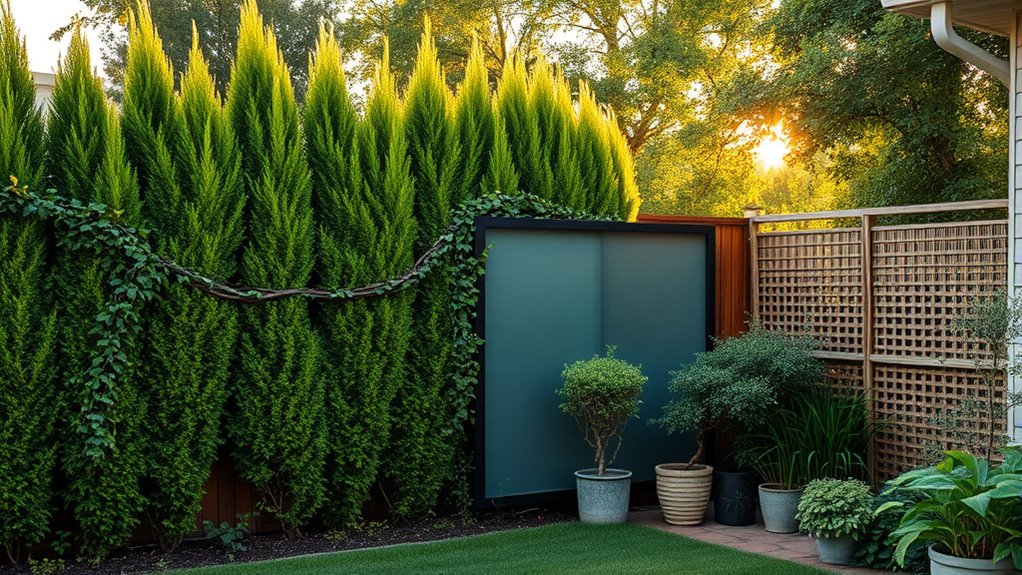
Fencing is perhaps the most traditional approach to establishing privacy zones, offering a solid physical barrier that’s both durable and customizable. You can choose from wood, vinyl, metal, or composite materials depending on your aesthetic and maintenance preferences. Tall fences are particularly useful for shielding your outdoor space from neighboring properties or busy streets. Privacy fences, in particular, eliminate gaps and ensure complete seclusion, giving you peace of mind during outdoor activities or quiet evenings. Combining fencing with landscape barriers like hedges or screens can create layered privacy, making your outdoor space feel secure and intimate.
Whether you opt for screens, hedges, or fencing—or a combination of all three—your goal is to craft clear, effective landscape barriers that define your privacy zones. Thoughtful placement and choosing the right materials allow you to control sightlines and sound, transforming your yard into a private sanctuary. By carefully designing these barriers, you ensure your outdoor space remains a safe haven where you can unwind, entertain, or simply enjoy solitude without intrusion.

5ft H x 3.2ft W (1 Panel) No Dig Enclo Concord Cedar Wood Privacy Screen, Great to Hide Trash Cans, Decorative Patio Privacy Screen, Outdoor Privacy Fence Panel, Air Conditioner Fence, EC18022
STYLISH NATURAL WOOD: This FSC certified wood screen is made with real wood meaning no two boards have…
As an affiliate, we earn on qualifying purchases.
As an affiliate, we earn on qualifying purchases.
Frequently Asked Questions
What Are the Best Materials for Privacy Screens?
You should choose materials like cedar, vinyl, or metal for privacy screens, as they offer great durability and aesthetic appeal. Cedar ages well and adds a natural look, while vinyl is low-maintenance and weather-resistant. Metal options like aluminum or wrought iron provide strength and a sleek appearance. These materials guarantee your privacy screen stays functional and attractive over time, balancing durability with visual appeal for your outdoor space.
How Do I Choose the Right Height for Fencing?
When choosing the right fencing height, consider height considerations to balance privacy and aesthetic appeal. You want enough height to block views and ensure privacy, but not so tall that it overwhelms your landscape. Think about your property’s style and surroundings; a taller fence might suit a modern home, while a shorter one maintains aesthetic balance in a garden setting. Ultimately, select a height that meets your privacy needs without compromising visual harmony.
Are There Eco-Friendly Options for Privacy Hedges?
Think of your garden as a green symphony, where eco-friendly privacy options play a crucial tune. You can choose native plants like boxwood or holly to create sustainable hedges that thrive naturally and require less water and maintenance. For fencing, opt for sustainable materials like recycled wood or bamboo, which blend seamlessly with native plants. These choices help you craft a private oasis that’s kind to the environment.
How Can I Maintain Privacy During Different Seasons?
To maintain privacy during different seasons, you should choose seasonal plant options that grow or shed at various times for continuous coverage. Incorporate adjustable privacy solutions like movable screens or fences, which you can reposition or modify as needed. Combining evergreen plants with seasonal ones ensures year-round privacy, while adjustable options give you flexibility to adapt to changing weather conditions or plant growth, keeping your space private no matter the season.
What Are Local Regulations for Installing Privacy Fences?
You need to check local zoning restrictions and HOA guidelines before installing a privacy fence. Zoning laws may specify fence height, materials, and setback distances, while HOA rules can impose aesthetic standards or restrict certain styles. Always contact your city or homeowners’ association to obtain necessary permits and verify compliance. This prevents potential fines or removal orders and guarantees your privacy project aligns with community standards.
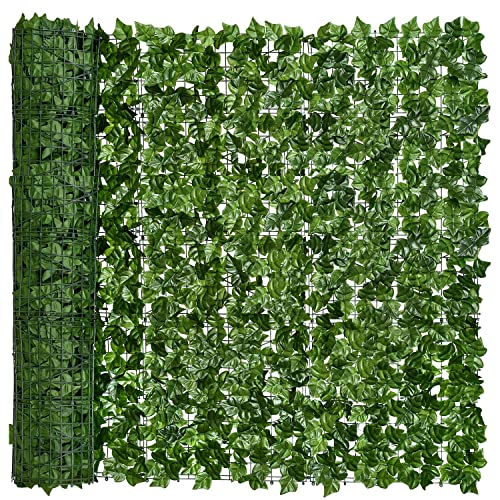
DearHouse Artificial Ivy Privacy Fence, 118x59in Artificial Hedges Fence and Faux Ivy Vine Leaf Decoration for Outdoor Garden Decor
Realistic green Ivy look: Artificial ivy leaves are natural looking to provide every indoor or outdoor space a…
As an affiliate, we earn on qualifying purchases.
As an affiliate, we earn on qualifying purchases.
Conclusion
By choosing the right screens, hedges, or fencing, you create a sanctuary so private that even the nosiest neighbors couldn’t peek in. Your outdoor space transforms into a fortress of tranquility, shielding you from prying eyes and outside chaos. Remember, the right privacy design isn’t just a feature—it’s your personal escape from the world’s chaos, making your backyard feel like a secret garden. Take control now and craft a haven that’s truly yours.

Winpull Backyard Privacy Fence Cover 6FT x 50FT for Chain Link & Wood Fence, 95% Visibility Block Outdoor Privacy Screen for Patio Balcony Yard, Breathable 170GSM HDPE Mesh with Reinforced Grommets
Neighbor Privacy, Not Blackout: Blocks direct line-of-sight while allowing airflow — designed for comfortable backyard privacy, not a…
As an affiliate, we earn on qualifying purchases.
As an affiliate, we earn on qualifying purchases.

72" Metal Privacy Screen Freestanding Outdoor Room Divider Decorative Laser Cut Fence Panel, Weatherproof Patio Privacy Fence for Garden, Balcony, Backyard Landscape
𝗣𝗿𝗲𝗺𝗶𝘂𝗺 𝗪𝗲𝗮𝘁𝗵𝗲𝗿-𝗥𝗲𝘀𝗶𝘀𝘁𝗮𝗻𝘁 & 𝗥𝘂𝘀𝘁𝗽𝗿𝗼𝗼𝗳 𝗠𝗲𝘁𝗮𝗹: Crafted from thick, high-quality metal with a durable powder-coated finish, our privacy screen…
As an affiliate, we earn on qualifying purchases.
As an affiliate, we earn on qualifying purchases.