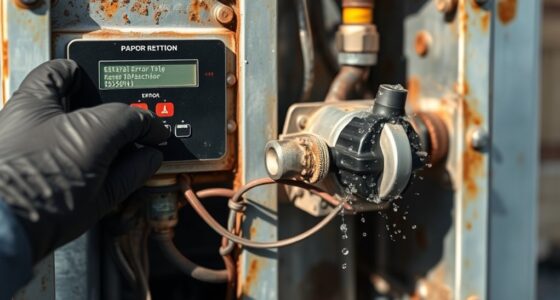

When nitrates and ammonia build up in your pool, they react quickly with chlorine, causing it to vanish overnight. Organic contaminants from swimmers, rain, or poor filtration introduce these compounds, which form chloramines and consume free chlorine. This leaves your water cloudy, smelly, and unsafe. To keep your pool clear and chlorinated, you need to monitor these levels regularly and use proper maintenance techniques. If you want detailed tips, there’s more to uncover.
Key Takeaways
- High ammonia levels react with chlorine to form chloramines, rapidly depleting free chlorine overnight.
- Organic contaminants from swimmers or debris consume chlorine, causing sudden chlorine loss.
- Nitrate buildup supports ammonia accumulation, indirectly contributing to chlorine reduction.
- Poor filtration and lack of beneficial bacteria hinder the breakdown of ammonia, leading to chlorine disappearance.
- Heavy rainfall or water source issues can introduce contaminants, accelerating chlorine consumption overnight.
Understanding the Role of Chlorine in Pool Chemistry
Chlorine plays a essential role in maintaining a safe and clean swimming pool. It acts as a disinfectant, killing bacteria, viruses, and algae that can cause health issues or make your pool look unappealing. When you add chlorine to your pool, it forms hypochlorous acid, which effectively destroys contaminants. As swimmers use the pool, organic matter like sweat, oils, and dirt introduce new impurities, which consume chlorine. To keep the water safe, you need to monitor chlorine levels regularly and add more when they drop. Chlorine also helps oxidize ammonia and nitrates, breaking them down into less harmful compounds. Without proper chlorine levels, your pool becomes a breeding ground for bacteria and algae, making it unsafe and unpleasant for swimmers. Maintaining proper color accuracy in your pool’s water chemistry ensures accurate testing and effective treatment.
How Nitrates and Ammonia Enter Your Pool
Nitrates and ammonia can enter your pool through various sources, often unknowingly. Heavy rainfall can wash in contaminants from the surrounding environment, bringing organic matter that contains ammonia and nitrates. Swimmers introduce these compounds via sweat, urine, and skin oils, which break down into ammonia and nitrates over time. Plants, grass, and debris from nearby landscaping can also carry nitrates into your pool if they wash in during storms or when debris accumulates. Additionally, using low-quality or unbuffered water to fill or top off your pool can introduce nitrates and ammonia. Even poor filtration and inadequate sanitation allow these compounds to build up, making it easier for them to enter your water and affect its chemistry.
The Chemical Interaction Between Chlorine, Nitrates, and Ammonia
When nitrates and ammonia enter your pool, they can react with the chlorine you use to keep the water safe. This interaction forms chloramines, which reduce chlorine’s effectiveness and cause cloudy water or odors. Nitrates and ammonia act as contaminants, consuming free chlorine during chemical reactions. Here’s how the process works:
| Substance | Reaction Effect |
|---|---|
| Chlorine (Cl₂) | Combines with ammonia, forming chloramines |
| Ammonia (NH₃) | Reacts with chlorine, producing chloramines |
| Nitrates (NO₃⁻) | Do not react directly but support ammonia buildup |
| Chloramines | Reduce disinfectant power, cause odor |
| Free Chlorine | Gets consumed, leaving water vulnerable |
These reactions weaken your chlorine, making it harder to disinfect effectively. Understanding these chemical interactions is crucial for maintaining a healthy pool environment.
Signs That Nitrates and Ammonia Are Affecting Your Pool
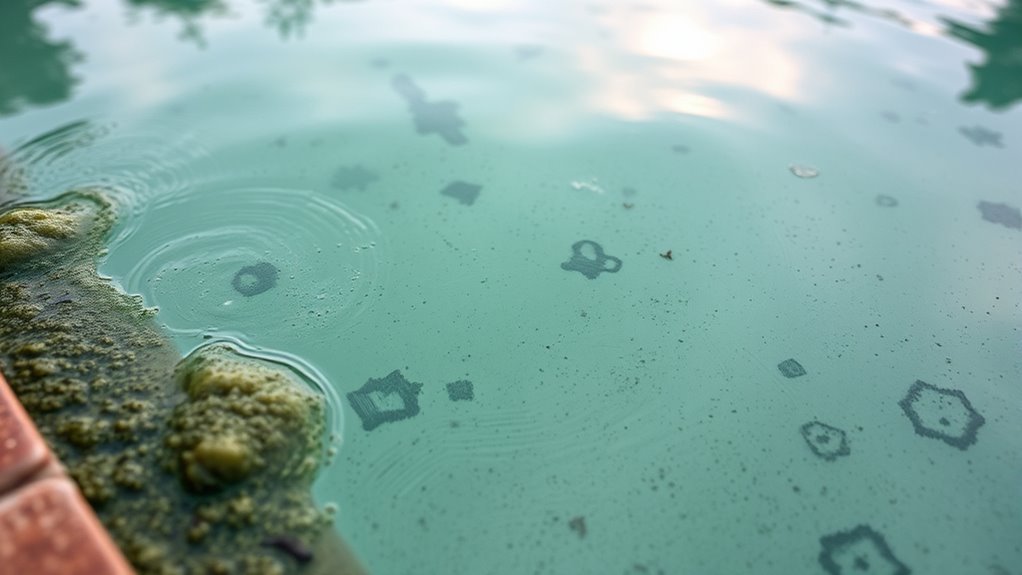
If you notice your pool water turning cloudy or developing a murky appearance, nitrates and ammonia might be to blame. Persistent chemical odors that don’t go away could also signal a problem with these substances. Recognizing these signs early helps you take action before water quality worsens.
Unusual Water Cloudiness
Unusual water cloudiness in your pool can be a clear sign that nitrates and ammonia levels are rising to problematic levels. When these compounds increase, they encourage microbial growth and disrupt the water’s clarity. You might notice a hazy or murky appearance that doesn’t clear with usual filtration. This cloudiness often results from organic waste, algae, or bacteria fueled by high nitrates and ammonia. As these substances accumulate, they consume chlorine rapidly, making it difficult to maintain proper sanitation. If your water looks cloudy despite filtering and shocking, it’s a strong indication that your nitrates and ammonia are affecting water quality. Addressing the root cause involves testing your water, reducing nutrient levels, and improving filtration to restore clarity and prevent further issues.
Persistent Chemical Odors
Persistent chemical odors in your pool are a clear warning that nitrates and ammonia levels are rising, disrupting the water’s balance. You might notice a strong, pungent smell similar to sewage or ammonia fumes lingering around the pool area. This odor isn’t normal and indicates your chlorine isn’t effectively neutralizing contaminants. As nitrates and ammonia build up, they consume chlorine rapidly, making it hard to maintain proper sanitation. If you ignore this smell, your water quality will worsen, increasing the risk of algae growth, bacteria, and cloudy water. Addressing the issue promptly involves testing your water for nitrates and ammonia and adjusting your chemical levels accordingly. Don’t wait—persistent odors are your cue to take action before more severe problems develop. AI-driven solutions are increasingly being used to detect and manage water quality issues efficiently.
Testing and Monitoring Nitrate and Ammonia Levels
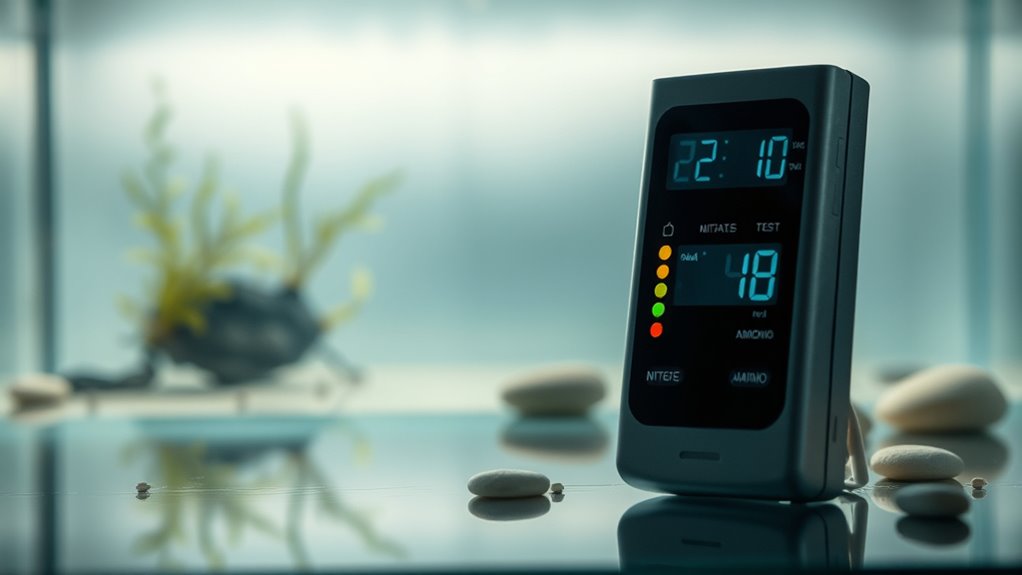
To keep your pool safe and balanced, you need to regularly test your nitrate and ammonia levels. Learning how to perform these tests correctly helps you interpret the results accurately. This way, you can take timely actions to prevent any issues before they become serious. Incorporating accurate testing techniques ensures reliable results and better pool maintenance.
Regular Testing Procedures
Regular testing and monitoring of nitrate and ammonia levels are essential for maintaining a healthy aquatic environment. You should test your water regularly, ideally weekly, to catch any issues early. Use reliable test kits designed for freshwater or saltwater tanks, following the instructions carefully. Collect water samples from different parts of the tank to ensure accurate readings. Keep a log of your results to track trends over time. Make sure your test kits are within their expiration date for accurate measurements. Always handle tests in a well-lit area and avoid contamination by keeping equipment clean. Consistent testing helps you identify any fluctuations before they cause harm. Properly understanding your water chemistry can help prevent sudden changes that might threaten your aquatic life. Staying proactive guarantees your aquatic life remains healthy and balanced.
Interpreting Test Results
Interpreting your test results accurately allows you to make informed decisions about maintaining a healthy aquatic environment. When you check nitrate and ammonia levels, compare them to safe ranges—usually, ammonia should be below 0.25 ppm, and nitrates under 20 ppm. Elevated ammonia indicates your biological filter isn’t processing waste efficiently, which can harm fish. High nitrates suggest overfeeding or insufficient water changes. If results are off, act quickly: perform water changes, reduce feeding, or check your filtration system. Keep a log of your readings to identify trends over time. Remember, consistent monitoring helps you catch problems early and maintain a stable, healthy tank. Proper interpretation empowers you to take targeted actions, preventing crises and ensuring your aquatic life thrives. Incorporating regular filter maintenance and understanding the different filtration technologies can further enhance your tank’s health.
Effective Strategies to Reduce Nitrates and Ammonia

Implementing effective strategies to reduce nitrates and ammonia involves a combination of best management practices and technological solutions. Regularly testing your water helps you identify problem levels early, allowing you to take swift action. You should optimize filtration systems by choosing biological filters that promote beneficial bacteria, which naturally break down ammonia and nitrates. Reducing organic waste, such as excess fish food and decaying plants, minimizes nutrient buildup. Consider performing partial water changes to dilute high concentrations, especially after heavy feeding or fish additions. Using nitrate and ammonia removers can provide immediate relief, but they shouldn’t replace proper maintenance. Maintaining a balanced feeding schedule and avoiding overstocking your tank also plays a vital role. Understanding the biological processes behind nitrogen cycling is crucial for effective tank management. These combined efforts help keep nutrient levels in check, supporting a healthier aquatic environment.
Preventative Measures to Maintain Water Clarity and Safety

Maintaining water clarity and safety begins with proactive prevention measures that minimize nutrient buildup and prevent issues before they arise. Regularly test your water to catch spikes in nitrates and ammonia early. Keep your filtration system clean and functioning properly to remove organic waste and prevent nutrient accumulation. Avoid overfeeding fish or adding too many plants at once, as excess nutrients feed algae and bacteria. Perform routine partial water changes to dilute harmful substances and maintain stable parameters. Incorporate live plants that absorb nitrates naturally, reducing nutrient levels. Ensure proper circulation to prevent dead zones where waste can settle. Establishing a consistent maintenance schedule not only helps monitor water quality but also promotes a healthy aquatic environment by reducing nutrient buildup and preventing problems from escalating, keeping your aquarium safe and visually clear.
Frequently Asked Questions
Can Nitrates and Ammonia Cause Health Issues Besides Cloudiness?
Yes, nitrates and ammonia can cause health issues beyond cloudiness. High nitrate levels can lead to blue baby syndrome, which affects oxygen transport in infants. Ammonia exposure may irritate your eyes, skin, and respiratory system, especially at elevated levels. Long-term exposure to these chemicals can also strain your kidneys and liver. It’s important to regularly test your water and keep nitrate and ammonia levels within safe limits to protect your health.
How Quickly Do Nitrates and Ammonia Levels Typically Rise?
As the saying goes, timing is everything. Nitrates and ammonia can spike in your water within a matter of days if conditions favor their growth, especially in a poorly maintained system. Ammonia levels can rise rapidly, sometimes in just 24 hours, while nitrates tend to build up more gradually over weeks. Regular testing helps catch these changes early, preventing potential health issues and keeping your water safe.
Are There Natural Ways to Reduce Nitrates and Ammonia in Pools?
Yes, you can naturally reduce nitrates and ammonia in your pool by adding beneficial bacteria that break down these compounds. Regularly filtering and backwashing your pool helps remove organic debris that feeds nitrates and ammonia. Additionally, maintaining proper pH levels and avoiding overfeeding pool plants or adding excess organic matter can prevent their buildup. Using natural enzymes designed for pools also promotes a healthier balance without harsh chemicals.
Do Certain Pool Cover Types Influence Nitrate and Ammonia Buildup?
Yes, certain pool cover types can influence nitrate and ammonia buildup. Solid covers, like winter or safety covers, limit sunlight and reduce algae growth, which can lower nutrient levels. Mesh covers allow some light and debris in, potentially promoting algae and bacteria, increasing nitrates and ammonia. Regularly removing debris and maintaining proper filtration are essential regardless of cover type. Choosing the right cover helps manage nutrient buildup and keeps your pool cleaner.
How Do Outdoor Environmental Factors Impact Nitrate and Ammonia Levels?
Outdoor environmental factors like rain, debris, and sunlight directly influence nitrate and ammonia levels in your pool. Rain introduces contaminants, increasing ammonia and nitrates, while debris adds organic matter that bacteria break down into these compounds. Sunlight encourages algae growth, which produces ammonia as it decays. To keep nitrate and ammonia levels low, monitor weather conditions, remove debris promptly, and guarantee proper circulation and filtration.
Conclusion
To keep your pool sparkling and safe, think of nitrates and ammonia as sneaky villains stealing your chlorine’s power. Regular testing and proper maintenance are your shield, preventing these villains from taking over. Remember, staying vigilant isn’t just about clear water; it’s about safeguarding your enjoyment and peace of mind. So, stay proactive—because in the battle for perfect pool water, knowledge is your greatest weapon, turning potential chaos into crystal-clear calm.