To understand your pool filter pressure, check the gauge regularly; normal levels typically sit between 10-20 PSI. Keep an eye out for sudden jumps or drops, which signal problems like clogged filters or leaks. If pressure is too high, you’ll need to clean or backwash the filter; if it’s too low, check for leaks or air in the system. Staying on top of these signs helps keep your pool clean and equipment running smoothly—you’ll discover more tips ahead.
Key Takeaways
- Regularly monitor the pressure gauge to ensure it stays within the normal range of 10-20 PSI.
- Steady readings indicate proper filter function; sudden jumps or drops signal potential issues.
- High pressure suggests a clogged filter; low pressure may indicate leaks or air in the system.
- Turn off the pump before cleaning or adjusting the filter to avoid damage and ensure safety.
- Seek professional help if pressure remains abnormal after maintenance or if leaks and unusual noises occur.
Understanding Your Pool Filter Pressure Gauge
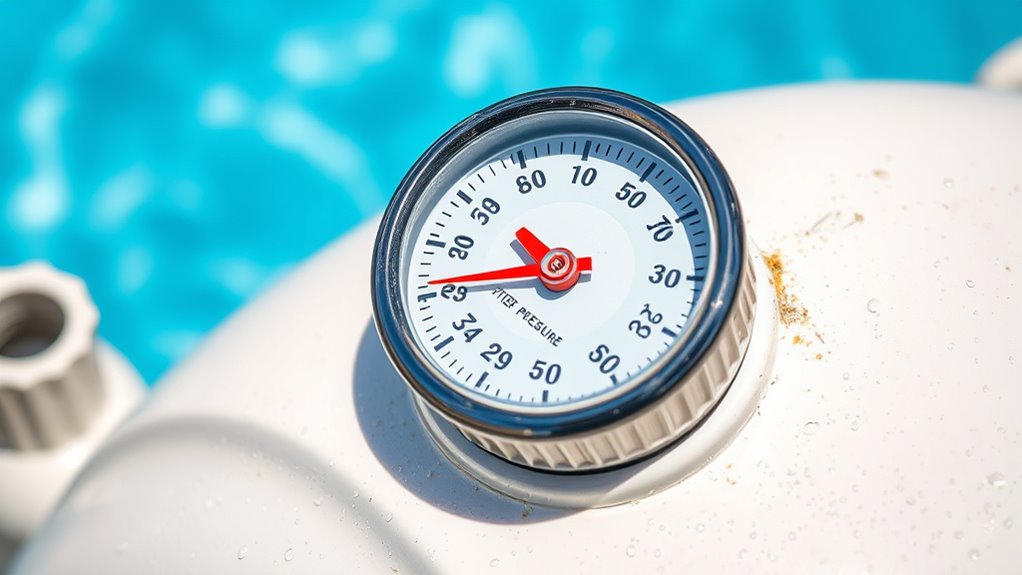
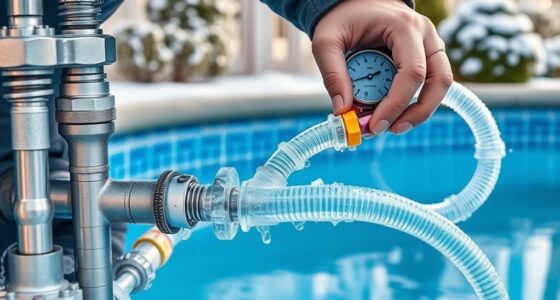
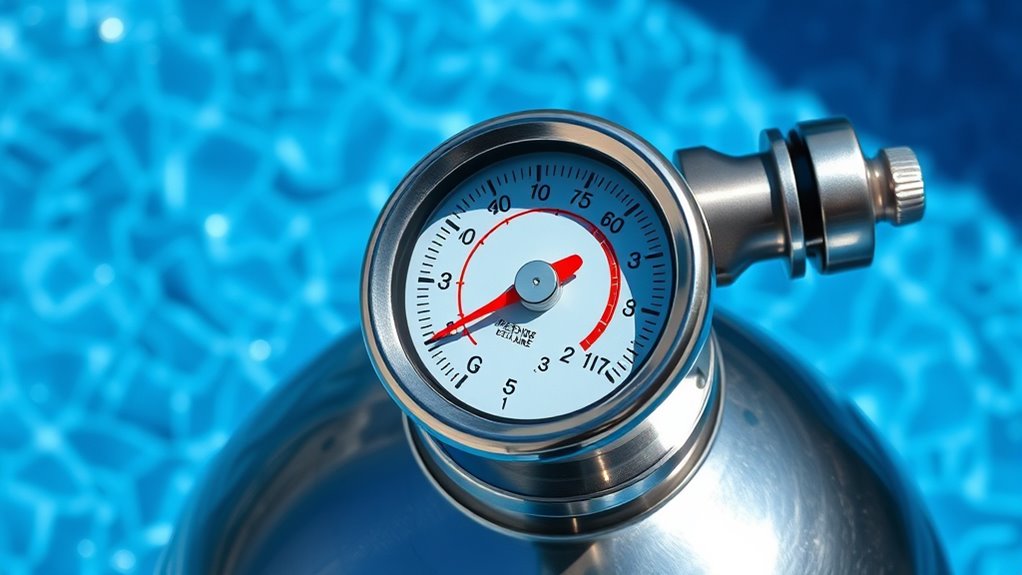
Your pool filter pressure gauge provides essential information about the health of your filtration system. It’s usually located on or near your filter and displays pressure in pounds per square inch (PSI). When you check the gauge, you’re reading how hard your pump is working to push water through the filter. A steady reading indicates your system is functioning properly. If the needle moves higher, it means there’s increased resistance, often due to dirt and debris clogging the filter media. Conversely, a low reading can suggest a problem like a leak or insufficient water flow. Regularly monitoring this gauge helps you catch issues early, ensuring your pool stays clean and your equipment runs efficiently. Knowing what the gauge tells you keeps your pool in top shape. Incorporating goal setting techniques can help you develop a routine for regular pool maintenance and monitoring.
What Do Normal Pressure Levels Look Like?
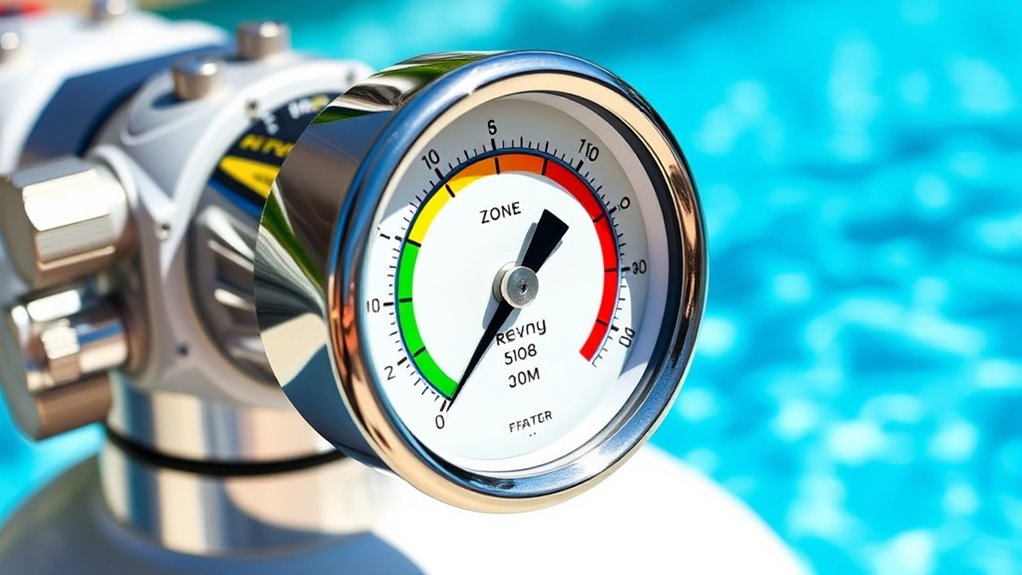
What do normal pressure levels look like? Typically, your pool filter pressure should stay between 10 and 20 psi, depending on your system. Knowing this range helps you spot issues early. Here are some key indicators of normal pressure:
- Steady readings within the 10-20 psi range during normal operation
- Slight fluctuations when adding or removing water or cleaning the filter
- No sudden jumps or drops in pressure
- Consistent readings over several days
- Using a professional-grade gauge ensures more accurate readings for better pool maintenance.
If your gauge stays within this range, your filter is likely functioning properly. Remember, every pool and filter system is unique, so check your manufacturer’s recommendations for specific normal levels. Staying aware of these numbers keeps your pool clean and your equipment running smoothly.
Recognizing Signs of High Filter Pressure
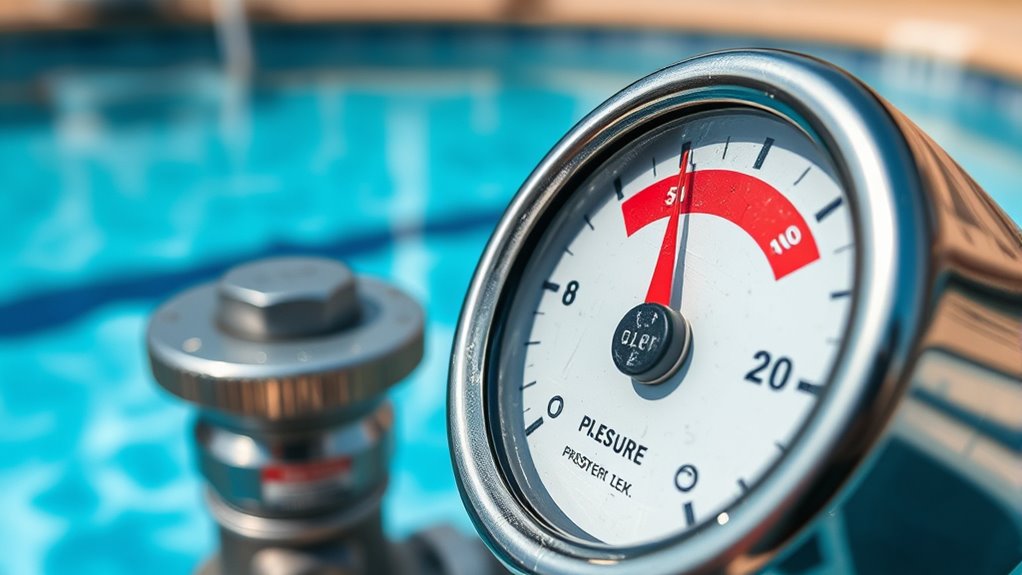
You’ll notice when your filter pressure gets too high if you see unusual pressure spikes or a sudden increase in readings. Reduced water flow is another clear sign that something’s off. Recognizing these signs early helps prevent equipment damage and keeps your system running smoothly.
Unusual Pressure Spikes
Have you noticed sudden, sharp increases in your filter pressure readings? These unusual pressure spikes can signal a problem before it worsens. Here are four common causes to watch for:
- Clogged or Dirty Filter Media – Debris buildup restricts water flow, causing pressure to rise quickly.
- Blocked Skimmer or Return Lines – Obstructions in plumbing increase resistance, resulting in sudden pressure jumps.
- Leaks or Air Leaks in the System – Air in the system can cause erratic pressure fluctuations.
- Valve Malfunctions – Faulty valves can create unexpected pressure changes during operation.
- Clutter or Debris Around Equipment – Nearby objects can interfere with proper system operation, leading to pressure irregularities. Maximize space and organization helps maintain clear areas around your pool equipment, reducing the risk of interference.
Monitoring these signs helps you catch issues early, preventing damage to your pump and ensuring your pool stays clean and clear.
Reduced Water Flow
When filter pressure is high, a noticeable reduction in water flow often follows, signaling that your system is working harder than it should. You’ll likely notice your pool’s jets weakening or the skimmer struggling to pull in debris. This drop in flow indicates the filter is clogged or blocked, causing water to circulate less efficiently. Reduced flow not only diminishes your pool’s cleanliness but also stresses your pump, risking damage. If you notice sluggish water movement, check your pressure gauge first. A high reading confirms your filter needs attention. Addressing the issue promptly by cleaning or backwashing your filter restores proper flow, improves water clarity, and keeps your pool equipment running smoothly. Regular maintenance can prevent filter clogging and ensure optimal performance. Recognizing reduced flow early saves you time and potential costly repairs.
Identifying Indicators of Low Filter Pressure
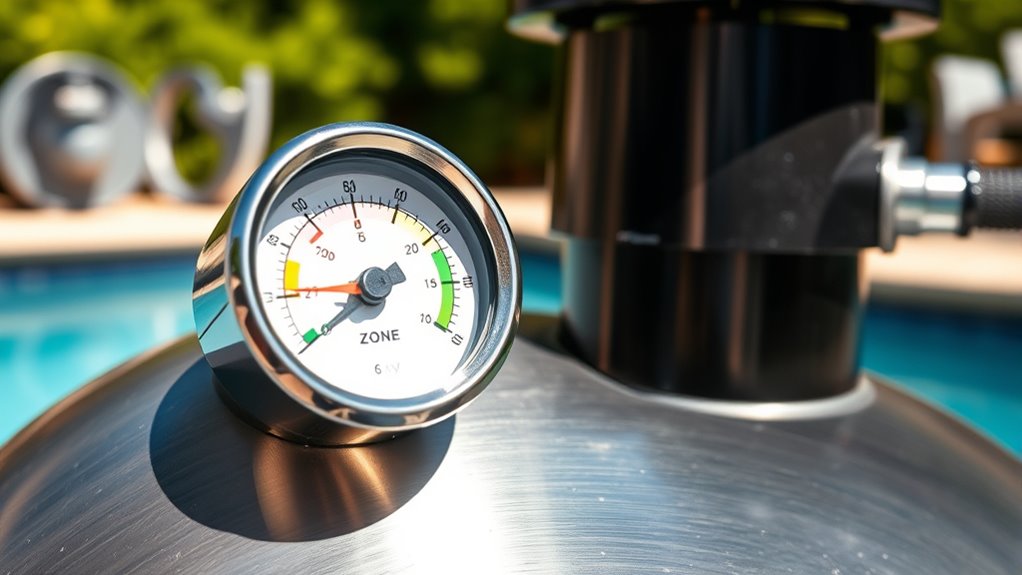
You’ll notice low filter pressure when you see sudden drops in the gauge or inconsistent readings. These fluctuations can signal that the filter isn’t working properly or is clogged. Paying close attention to these signs helps you catch issues early and keep your system running smoothly. Additionally, understanding fandom’s past, present, and future can help you identify patterns and anticipate potential problems in fan engagement.
Sudden Pressure Drops
A sudden drop in filter pressure often signals that the filter is becoming clogged or there’s a leak somewhere in the system. Recognizing this is essential to maintaining proper pool circulation. Here are four signs to watch for:
- Unexpectedly low gauge readings: If your pressure drops markedly without any obvious cause, it’s a red flag.
- Poor water flow: Reduced flow from jets or skimmers indicates decreased filter efficiency.
- Increased debris in the pool: More dirt or leaves in the water, despite a functioning skimmer, suggests pressure issues.
- Unusual noise or vibrations: Changes in pump sounds can hint at pressure problems caused by leaks or blockages.
- Inadequate legal documentation: Ensuring proper legal paperwork is in place can prevent costly disputes related to system repairs or modifications.
Stay alert to these indicators to prevent system damage and keep your pool clean.
Unusual Gauge Fluctuations
Unusual fluctuations in your filter gauge can be early signs of low filter pressure or system issues. These irregular readings might indicate air leaks, debris, or partial blockages affecting your system’s performance. When the gauge swings unexpectedly, it’s vital to investigate promptly. Regularly monitoring water quality helps identify problems before they cause damage or inefficiency.
| Fluctuation Type | Possible Cause |
|---|---|
| Sudden Spikes | Air leaks, high flow rates |
| Rapid Drops | Clogged filter, debris buildup |
| Irregular Swings | Air bubbles, valve issues |
| Persistent Drop | Filter medium needs cleaning |
| Fluctuations with Noise | Pump cavitation |
Monitoring these signs helps prevent damage and maintain ideal filtration. Address fluctuations early to keep your pool clean and your system running smoothly.
How to Adjust or Clean Your Pool Filter
Regularly adjusting and cleaning your pool filter is essential for maintaining ideal water clarity and circulation. Proper maintenance ensures your system runs efficiently and extends the filter’s lifespan. Here are four key steps:
- Turn off the pump before adjusting or cleaning to prevent damage.
- Check the pressure gauge—if it’s high, it’s time for a cleaning or adjustment.
- Backwash or clean the filter media according to your filter type—sand, cartridge, or DE.
- Reset the filter pressure by turning the pump back on and monitoring the gauge for normal readings. Sustainable practices can help reduce energy consumption and environmental impact during pool maintenance.
Troubleshooting Common Filter Pressure Issues
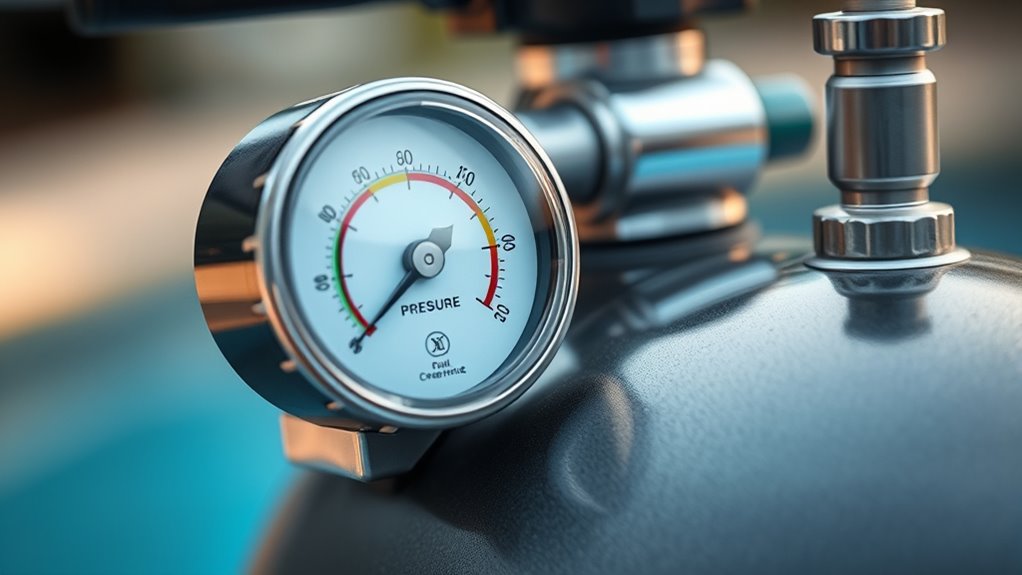
If you notice persistent high or low pressure on your pool filter gauge even after cleaning, it can indicate underlying issues that need attention. High pressure often means your filter is clogged or your pump is obstructed, reducing water flow. Check for debris in the skimmer, pump basket, or filter itself, and backwash or clean as needed. Low pressure might suggest a leak, air in the system, or an improperly installed filter. Inspect hoses, fittings, and the valve positions for leaks or misalignments. Also, ensure your pump is functioning correctly and that the filter is correctly assembled. Addressing these issues promptly can restore proper flow and keep your pool clean. Regularly monitoring and maintaining your filter will prevent pressure problems and extend its lifespan. Recognizing signs of narcissistic traits in your pool system, such as inconsistent pressure readings, can help you identify and address issues before they escalate.
When to Call in a Professional
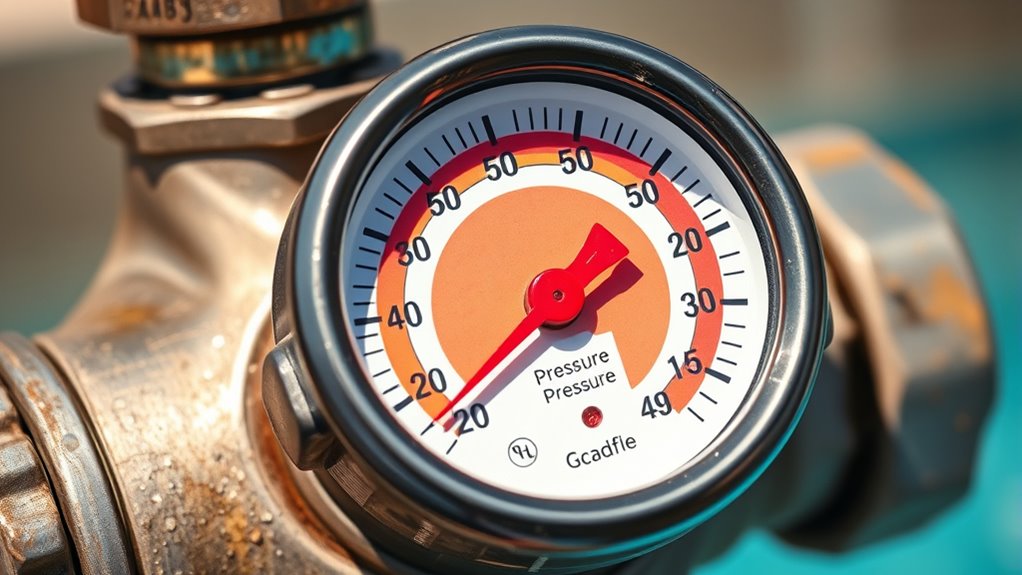
Even with your best efforts, there are times when pool filter issues require professional expertise. Recognizing these moments guarantees your pool stays clean and safe. Consider calling a pro if:
Some pool filter problems need expert help to keep your pool safe and clean.
- Your pressure gauge spikes suddenly and remains high despite cleaning the filter.
- You notice persistent leaks or unusual noises during operation.
- The filter won’t turn back on or respond after troubleshooting.
- Regular maintenance doesn’t improve water clarity or flow issues.
- The problem involves complex equipment components like electrical systems or internal mechanisms, which are best assessed by a professional with specialized tools.
These signs often indicate complex problems beyond DIY fixes, such as electrical issues, damaged components, or internal system failures. Attempting to fix these yourself might lead to further damage or safety hazards. When in doubt, consulting a professional guarantees proper diagnosis and repair, saving you time and potential headaches.
Frequently Asked Questions
How Often Should I Check My Pool Filter Pressure?
You should check your pool filter pressure daily, especially during peak swimming season or hot weather. Regular checks help you spot any pressure increases early, indicating the filter needs cleaning or backwashing. If you notice the pressure rising more than 8-10 psi above the normal operating range, it’s time to clean or backwash your filter. Staying on top of this guarantees your pool stays clean and your equipment runs efficiently.
Can Weather Changes Affect Filter Pressure Readings?
Did you know that weather changes can impact your pool filter pressure? Yes, they definitely can. Cooler temperatures cause water to become denser, which can increase pressure readings. Conversely, hot weather can lower pressure by reducing water viscosity. Wind and debris can also clog the filter, causing pressure spikes. So, it’s smart to regularly monitor your gauge, especially during weather shifts, to keep your pool clean and running smoothly.
What Are the Risks of Ignoring Abnormal Filter Pressure?
Ignoring abnormal filter pressure can lead to serious issues, such as equipment damage or reduced filtration efficiency. You might experience cloudy water, algae growth, or increased energy costs. If you don’t address high or low readings promptly, the filter can overwork or clog, shortening its lifespan. Regularly monitoring and responding to pressure changes helps keep your pool clean, saves you money, and prevents costly repairs down the line.
How Does Filter Type Influence Pressure Readings?
Different filter types influence pressure readings by their design and filtering capacity. For example, sand filters typically have higher pressure readings when dirty, while cartridge filters might show pressure increases more quickly. You should always check the manufacturer’s guidelines for normal operating ranges. When you notice abnormal pressure, it’s vital to clean or replace the filter promptly to prevent damage and maintain essential pool circulation.
Are There Safety Precautions When Cleaning the Filter?
Be cautious and clear when cleaning your filter. Always turn off the pump before starting to prevent sudden pressure surges. Wear protective gloves and eye protection to guard against debris or chemical splashes. Keep the area dry and free of clutter to avoid slips and trips. Follow manufacturer instructions precisely to avoid damage. Prioritizing safety ensures you stay secure and the system stays in top shape, preventing problems before they start.
Conclusion
By keeping an eye on your pool filter pressure gauge, you stay ahead of problems before they snowball. Regularly checking and maintaining proper pressure levels guarantees your pool stays clean and running smoothly. Remember, a stitch in time saves nine, so don’t wait until small issues become big headaches. Stay proactive, read your gauge, and enjoy crystal-clear waters all season long. Your pool will thank you for it!