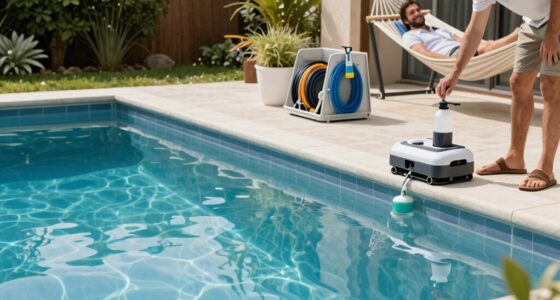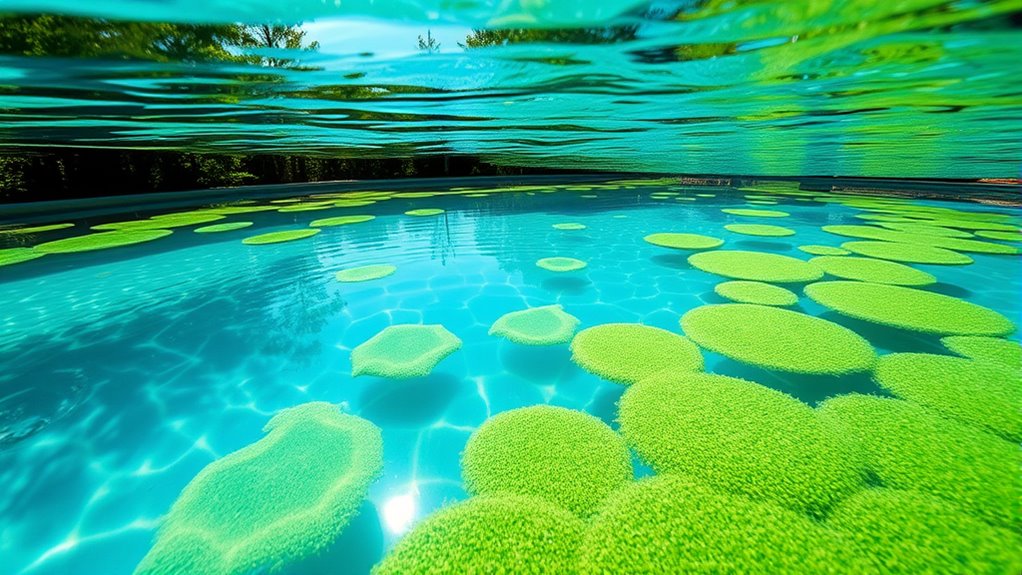

To prevent algae blooms in your pool, keep your water’s chemical balance in check by maintaining proper pH levels (7.2–7.6), alkalinity, and stabilizer levels. Regularly test and adjust chemicals, run your filter 8–12 hours daily, and skim or brush surfaces to remove spores. Use chlorine consistently at 1–3 ppm and consider algaecides for added protection. If you want to learn more about effective strategies, continue exploring how to keep your pool crystal clear.

Get pool and patio gear delivered free — and shop member deals
- Fast, free delivery on millions of items
- Access to Prime Big Deal Days deals on October 6–7
- Prime Video, Amazon Music and more included
Key Takeaways
- Maintain proper chemical balance, especially pH between 7.2 and 7.6, to optimize chlorine effectiveness and prevent algae growth.
- Regularly test and adjust water chemistry, including alkalinity and stabilizer levels, to create a stable environment discouraging algae.
- Use physical cleaning methods like skimming and brushing to remove algae spores and prevent their settlement.
- Run the pool filter 8–12 hours daily to ensure good circulation and effective removal of algae and debris.
- Utilize algaecides and perform shock treatments promptly to eliminate existing algae and inhibit new growth.

Algae blooms can quickly turn your sparkling pool into a murky, uninviting mess if you’re not careful. The key to keeping your pool crystal clear is understanding how to maintain proper pool chemical balance and implementing effective algae prevention techniques. When the chemicals in your pool are out of balance, it creates an environment where algae can thrive. For instance, low chlorine levels or improper pH balance can weaken the disinfectant’s ability to control algae growth. To prevent this, you need to regularly test your water and adjust chemicals accordingly. Keeping your pH between 7.2 and 7.6 is essential, as it optimizes chlorine efficiency and discourages algae development. If the pH drifts outside this range, algae spores can settle and multiply more easily. Maintaining proper alkalinity and stabilizer levels also plays a role in promoting a stable chemical environment that resists algae.
Beyond chemical balance, algae prevention techniques are vital to avoid blooms altogether. Regularly skimming the surface and brushing the pool walls helps remove algae spores before they settle and grow. Using a brush on the pool’s surfaces dislodges potential breeding grounds for algae, especially in hard-to-reach corners. Additionally, maintaining a consistent chlorine level—typically between 1 and 3 ppm—keeps the water disinfected enough to prevent algae from taking hold. Shock treatments, especially after heavy use or storms, can give your pool an extra boost of sanitizer to eradicate any lurking spores. It’s equally important to keep the pool’s filtration system running efficiently. Running the filter for at least 8 to 12 hours daily ensures proper circulation and filtration, which helps remove algae spores and debris.
Another effective algae prevention technique is adding algaecide to your routine maintenance plan. Algaecides help kill existing algae and prevent new growth when used as directed. However, they should complement, not replace, regular chlorination and proper water chemistry. Additionally, maintaining consistent water levels and ensuring good circulation prevents stagnation, creating a less hospitable environment for algae. Regularly checking and maintaining your pool equipment ensures optimal performance and reduces the risk of algae blooms. Remember, the moment you notice a slight cloudiness or discoloration, it’s best to act quickly. Ignoring early signs can lead to a full-blown algae bloom that’s more difficult and costly to eliminate. By staying vigilant about your pool’s chemical balance and employing preventative strategies, you considerably reduce the risk of algae blooms, keeping your pool inviting, clean, and ready for swimming whenever you are.
Frequently Asked Questions
Can Algae Blooms Occur in Saltwater Pools?
Yes, algae blooms can occur in saltwater pools. Although saltwater pools typically have better algae resistance compared to freshwater pools, they still aren’t completely immune. Factors like inadequate chlorine levels, poor filtration, or warm temperatures can promote algae growth. Regular maintenance, proper chemical balance, and consistent sanitizer use help prevent algae blooms, keeping your pool clean and clear regardless of whether it’s saltwater or freshwater.
How Do Weather Changes Influence Algae Growth?
Weather changes greatly influence algae growth in your pool. Temperature fluctuations can create ideal conditions for algae to thrive, especially when it gets warm. Rainfall impacts your pool by introducing nutrients and contaminants that fuel algae growth. After heavy rain, you might notice increased algae, so it’s essential to adjust your chemical balance and run your filter more frequently. Staying vigilant with maintenance helps prevent algae blooms caused by changing weather.
Are There Natural Remedies for Algae Prevention?
Imagine a gentle touch from nature—there are natural remedies for algae prevention you can try. Using things like barley straw, beneficial bacteria, or natural enzymes can help keep algae at bay without harsh chemicals. These methods act as a subtle shield, promoting a balanced pool environment. Incorporate natural remedies into your routine, and you’ll foster a healthier, clearer pool while respecting the aquatic harmony.
How Often Should I Test Pool Water for Algae?
You should test your pool water for algae at least twice a week during peak swimming season. Regular testing frequency helps you catch early signs of algae growth through algae monitoring, allowing you to act quickly. If your pool has been treated or is less used, you can decrease testing to once a week. Consistent testing ensures your water stays clear, balanced, and free from algae blooms.
Can Algae Blooms Be Harmful to Swimmers?
Like a hidden villain lurking in the depths, algae blooms can be harmful to swimmers. They may produce algae toxin, which causes skin irritation and other health issues. When you swim in an algae-contaminated pool, you risk exposure to these toxins, leading to discomfort or more serious health problems. Always keep your pool properly maintained and cleaned to prevent algae from flourishing and protect yourself from potential harm.
Conclusion
By understanding algae blooms, maintaining proper sanitizer levels, and regularly cleaning your pool, you create a barrier against algae growth. By monitoring water chemistry, adjusting treatments, and practicing good hygiene, you prevent future blooms. By staying vigilant, performing routine maintenance, and acting quickly, you keep your pool sparkling, healthy, and inviting. With consistent effort, you guarantee your swimming experience remains enjoyable, safe, and algae-free—today, tomorrow, and always.
Fall Picks
fall essentials
As an affiliate, we earn on qualifying purchases.