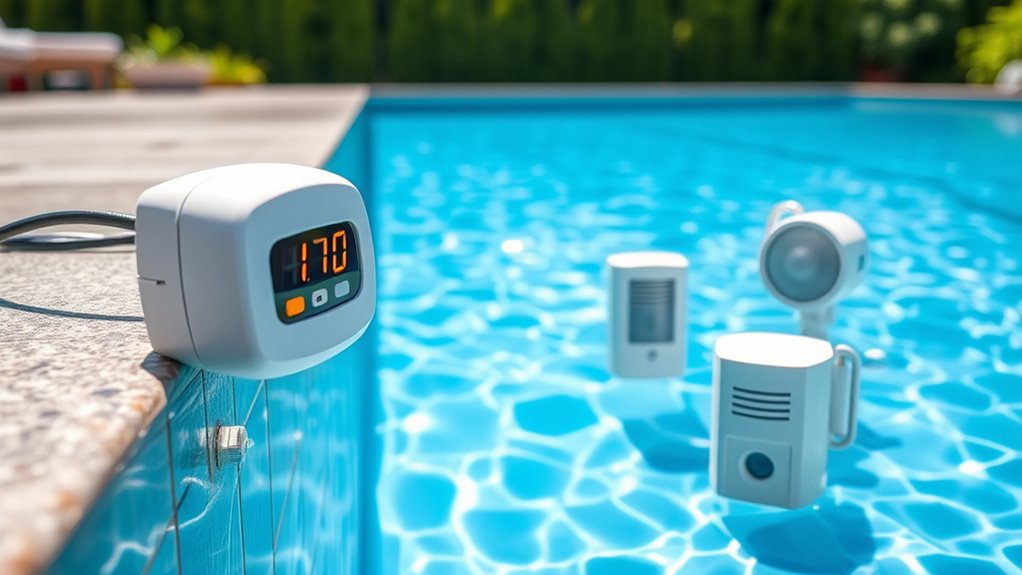

When choosing the right pool alarms and detection devices, focus on complete coverage by combining perimeter, gate, and sub-surface alarms suited to your pool’s environment. Prioritize reliable, easy-to-maintain solutions with features like tamper alerts and quick response times. Proper placement and securing sensors help prevent false alarms and blind spots. Selecting a layered security system ensures better safety. Keep exploring to discover how to customize your setup for maximum protection and peace of mind.
Key Takeaways
- Assess your pool environment and identify high-risk areas for targeted sensor placement.
- Choose layered alarm systems, combining perimeter, gate, and sub-surface alarms for comprehensive safety.
- Ensure sensors are securely mounted at appropriate heights to prevent tampering and false triggers.
- Opt for user-friendly, reliable systems with features like tamper alerts and low battery notifications.
- Consider compatibility with existing safety measures and ease of installation, including wireless options.
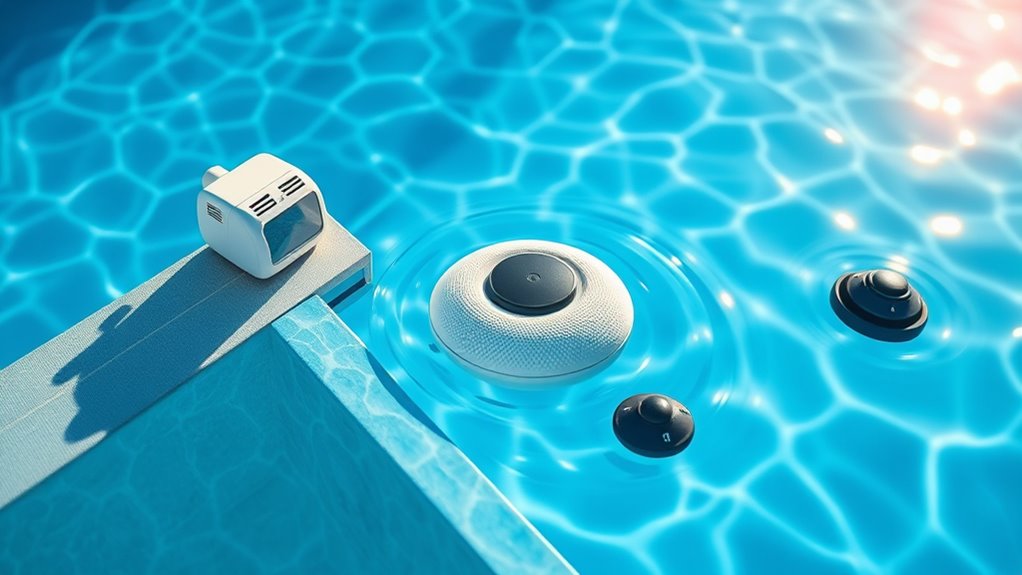
Choosing the right pool alarm is essential for guaranteeing safety around your pool area. One of the most important factors to consider is sensor placement. You want sensors positioned in key locations where they can detect potential intrusions or accidental falls into the water. For example, installing sensors on gates, doors leading to the pool area, and along the perimeter ensures all-encompassing coverage. Proper sensor placement minimizes blind spots and guarantees that any unauthorized access triggers the alarm immediately. Keep in mind that sensors should be mounted at appropriate heights and securely attached to prevent tampering or false alarms caused by wind or debris. When planning sensor placement, think about the typical flow of movement around your pool and focus on high-traffic areas for maximum safety.
Another critical aspect is understanding the different alarm types available. Pool alarms come in various forms, each suited for different needs. Some alarms are perimeter-based, using motion sensors or pressure-sensitive mats around the pool to detect movement or weight changes. These are especially useful if you want to monitor the entire pool area continuously. Other alarms are door or gate alarms, which activate when someone opens a door or gate leading to the pool, alerting you before anyone gets close to the water. There are also sub-surface alarms, which are placed in the water itself and trigger if someone falls in. Your choice depends on your specific environment, pool size, and safety concerns. Combining multiple alarm types can provide layered security, giving you peace of mind that if one system misses something, another will catch it.
Additionally, opting for Vetted security solutions that are specifically designed for pool safety can ensure more reliable detection and quicker response times. When selecting alarm types, consider ease of installation and maintenance. Some alarms are wireless, making them easier to set up without extensive wiring, while others might require professional installation. Make sure that alarms are compatible with your existing safety measures and that they have features like low battery alerts or tamper warnings. The goal is to have a reliable system that responds immediately to any safety breach, whether it’s a child wandering near the pool, an intruder, or an accidental fall. Remember, no single alarm is foolproof, but choosing the right combination tailored to your pool area greatly boosts safety. By paying close attention to sensor placement and understanding the various alarm types, you can create an all-encompassing safety system that helps prevent accidents and provides you with greater peace of mind when enjoying your pool.
Frequently Asked Questions
How Do Pool Alarms Alert You During Power Outages?
During power outages, your pool alarm can still alert you if it has a battery backup, ensuring continuous protection. The alarm sensitivity setting is essential—it helps prevent false alarms while detecting actual pool entry. When the power’s out, the battery backup activates automatically, notifying you of any unauthorized access or safety concerns. Make sure your alarm has a reliable battery backup and proper sensitivity to stay informed, no matter the power situation.
Are There Specific Alarms for Different Pool Sizes?
You bet there are alarms tailored to your pool’s size! Larger pools might need advanced water pressure monitors or pool cover sensors that can handle the enormous volume of water. Smaller pools benefit from compact, sensitive alarms that detect even tiny disturbances. These devices are designed to scale perfectly, ensuring safety no matter how big or small your pool is. So, you get peace of mind, whether your pool’s a kiddie pond or a backyard ocean!
Can Alarms Distinguish Between Pets and Children?
Most pool alarms with pet detection features can distinguish between pets and children, helping prevent false alarms. These alarms use advanced sensors to identify weight and movement patterns, reducing unnecessary alerts. You’ll appreciate how they enhance false alarm prevention, giving you peace of mind knowing the system is smart enough to differentiate your pet from a potential child accident. Always check that the alarm specifically includes pet detection to guarantee reliable safety.
What Maintenance Is Required for Long-Term Alarm Effectiveness?
Your pool alarm, like a vigilant guardian, needs regular care to stay effective. You should perform monthly battery checks to make sure it never runs out of juice, and sensor calibration every few months keeps it detecting accurately. Clean the sensor area from debris and dust, and replace batteries annually. Consistent maintenance guarantees your alarm remains a reliable protector, safeguarding loved ones without fail.
Are Wireless Alarms More Reliable Than Wired Systems?
Wireless alarms can be just as reliable as wired systems when installed correctly, but wired alarms generally offer more consistent wireless reliability due to their direct connections. Wired systems are less prone to interference and signal loss, making them a more dependable choice for long-term security. However, wireless alarms provide easier installation and flexibility, which can be advantageous. Consider your environment and maintenance needs when choosing between wired vs wireless options.
Conclusion
Don’t let the cost or false alarms discourage you from prioritizing safety. Investing in the right pool alarms and detection devices provides peace of mind and helps prevent accidents. Remember, a small upfront expense is worth protecting loved ones and avoiding tragedy. With the right system in place, you can enjoy your pool confidently, knowing you’re taking every possible step to keep everyone safe. Safety isn’t optional—it’s essential.