
To guarantee pool drain safety, you need to follow anti-entrapment standards like using compliant drain covers that can withstand strong suction and regularly inspecting them for damage. Installing safety vacuum release systems (SVRS) and incorporating multiple drains can markedly reduce risks. Proper maintenance and educating swimmers about drain safety are critical steps. Staying vigilant and following these safety measures helps prevent dangerous entrapment incidents, and if you keep going, you’ll discover more ways to keep your pool safe.
Key Takeaways
- Pool drain safety standards require anti-entrapment covers that can withstand strong suction forces.
- Regular inspection and maintenance of drain covers prevent damage and ensure safety compliance.
- Systems should include multiple drains and Safety Vacuum Release Systems (SVRS) to reduce entrapment risks.
- Anti-entrapment covers feature small openings or grid patterns to prevent body parts from being trapped.
- Adhering to established standards minimizes suction hazards and protects swimmers from entrapment and injury.

Pool drain safety is a critical concern for anyone with a swimming pool, especially since powerful drain systems can pose serious risks to swimmers. One of the most substantial dangers involves entrapment, which can occur if a swimmer becomes stuck to a drain or suction outlet. To prevent such incidents, understanding vacuum hazards and adhering to cover requirements is essential. Vacuum hazards happen when the suction force from the drain is strong enough to trap a person’s body part or even entire limb, creating a dangerous situation. These hazards are especially concerning for children and inexperienced swimmers who may not recognize the risk or know how to react.
Pool drain safety is vital to prevent entrapment and protect swimmers from dangerous suction hazards.
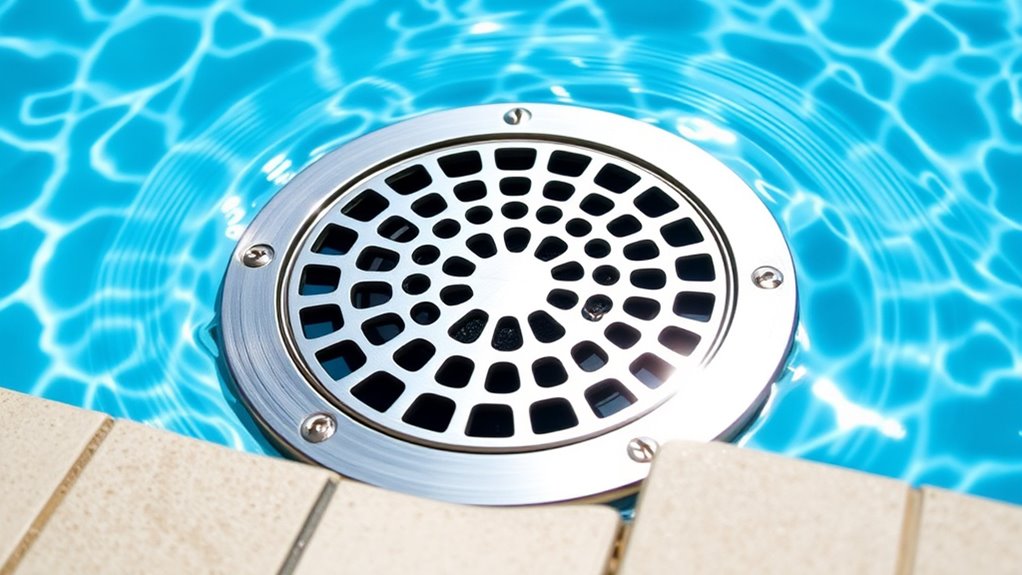
To mitigate vacuum hazards, pool owners must ensure that all drain covers meet the required safety standards. Cover requirements are designed to minimize the risk of entrapment by providing a secure barrier over the drain opening. Anti-entrapment covers are engineered to withstand considerable suction forces without breaking or detaching, markedly reducing the chances of a swimmer becoming trapped. These covers typically feature multiple small openings or a grid pattern that allows water to flow freely while blocking large objects or body parts from being sucked into the drain. Installing compliant covers is not just a recommendation; it’s a legal requirement in many jurisdictions to ensure swimmer safety.
You should regularly inspect your pool’s drain covers to confirm they’re intact, properly secured, and meet the latest safety standards. Over time, covers can become brittle or damaged, increasing the risk of failure. Damaged covers should be replaced immediately with ones that conform to current anti-entrapment regulations. It’s also wise to educate everyone who uses the pool about the importance of not tampering with or removing drain covers, since doing so can expose the system to unnecessary hazards. Additionally, understanding system safety features such as safety vacuum release systems (SVRS) can greatly enhance overall pool safety by automatically reducing suction power during emergencies.
In addition to cover requirements, consider the entire drain system’s design. Many pools now incorporate multiple drains or safety vacuum release systems (SVRS) that automatically shut off suction if a blockage or entrapment risk is detected. These systems work in tandem with properly rated covers to create a safer environment. Remember, the goal is to eliminate vacuum hazards wherever possible and reinforce safety measures through proper equipment and maintenance. By staying vigilant about cover integrity and understanding the risks posed by strong suction forces, you protect yourself, your family, and your guests from avoidable accidents related to pool drain entrapment.
Frequently Asked Questions
Are There Specific Safety Standards for Above-Ground Pools?
Yes, there are safety standards for above-ground pools. You should regularly perform pool maintenance to keep water safe and prevent accidents. Upgrading equipment, like installing anti-entrapment drain covers, is essential for safety. Make sure your pool’s filters and pumps meet safety guidelines, and check for any recalls or updates. Staying proactive with these safety standards helps protect everyone and keeps your above-ground pool a fun, secure space.
How Often Should Pool Drain Safety Devices Be Inspected?
You should inspect your pool drain safety devices at least once a month. Regular visual inspections help identify any wear, damage, or debris that could pose a risk—did you know that over 80% of entrapment incidents occur due to faulty or blocked drain covers? Stick to a consistent maintenance schedule, and always promptly address issues to keep swimmers safe. This simple step can prevent accidents and guarantee your pool stays secure.
What Are the Latest Technological Advancements in Drain Safety?
You should know that the latest technological advancements in drain safety include improved anti-entrapment devices and innovative drain cover designs. These innovations feature stronger, more durable materials and designs that minimize entrapment risks. Modern drain covers often use advanced anti-vortex technology and non-stick surfaces, ensuring better safety and easier maintenance. Staying updated on these advancements helps you maintain a safer swimming environment and comply with current safety standards effectively.
Can DIY Modifications Improve Pool Drain Safety?
You can’t just wing it when it comes to pool drain safety; DIY solutions might seem like a quick fix, but they often aren’t enough for true safety enhancements. While some minor modifications, such as adding covers or ensuring proper venting, can help, they don’t replace certified anti-entrapment devices. It’s best to follow established standards and consult professionals to keep your pool safe and avoid putting yourself in hot water.
Are There Legal Requirements for Pool Drain Safety Signage?
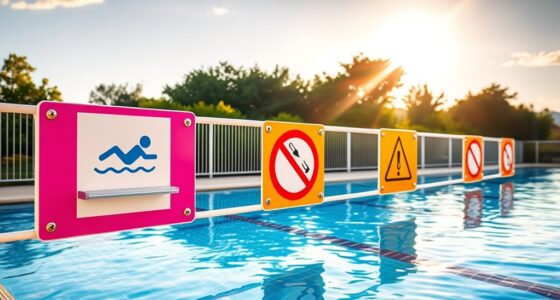
Yes, there are legal requirements for pool drain safety signage to guarantee regulatory compliance and protect swimmers. You must display clear, visible signs indicating the presence of drain covers and warnings about potential hazards. These signs help prevent accidents and ensure safety standards are met. Check local laws and regulations, as requirements can vary by jurisdiction, and always ensure your signage is up-to-date and properly positioned around your pool.
Conclusion
By following these safety standards, you’re building a fortress against danger, turning your pool into a sanctuary rather than a trap. Think of anti-entrapment measures as the guardians at the gate, protecting loved ones from unseen hazards beneath the surface. When you prioritize pool drain safety, you’re not just complying with rules—you’re weaving a safety net that catches risks before they reach your family, ensuring every swim is a splash of joy, not peril.