
In coastal pools, salt air speeds up corrosion on many materials, especially metals. To resist this, you should choose stainless steel grades like 316 or duplex 2205, which contain molybdenum and nitrogen for better saltwater resistance. Proper maintenance, such as rinsing with fresh water and regular inspections, also helps extend their lifespan. If you want to discover more about selecting the best materials and keeping your pool in top shape, keep exploring these options.
Key Takeaways
- Marine-grade stainless steels like 316 and 2205 offer superior resistance to salt air corrosion in coastal pool environments.
- Salt air accelerates rust and deterioration on non-resistant metals, compromising pool safety and longevity.
- Regular rinsing with fresh water and protective coatings extend stainless steel components’ lifespan in salt-exposed areas.
- Modern alloys with higher molybdenum and nitrogen content enhance durability against seawater and salt spray.
- Choosing high-quality, marine-grade stainless steel reduces maintenance costs and ensures long-term structural integrity.
Understanding Salt Air Corrosion and Its Impact on Pool Materials
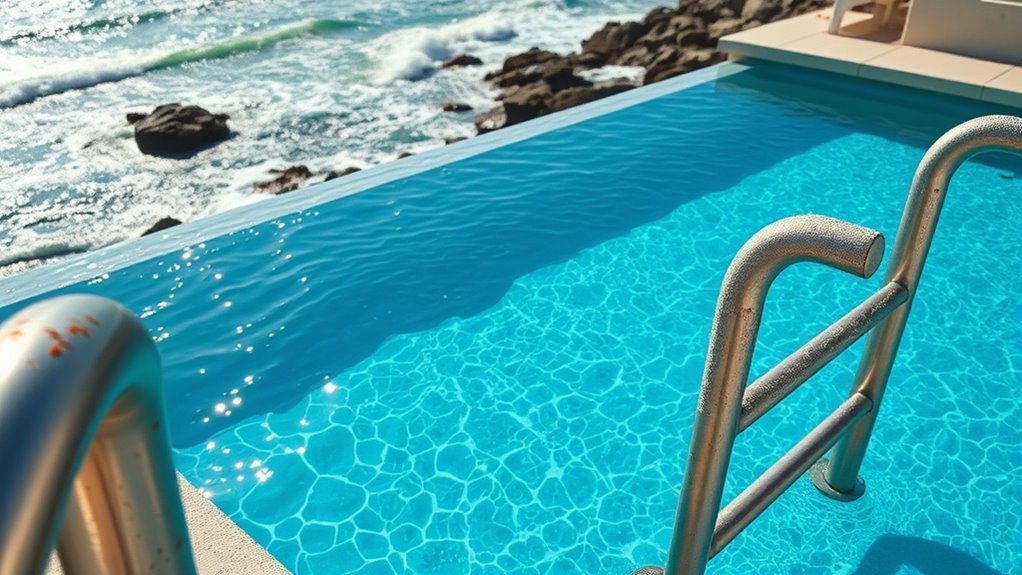
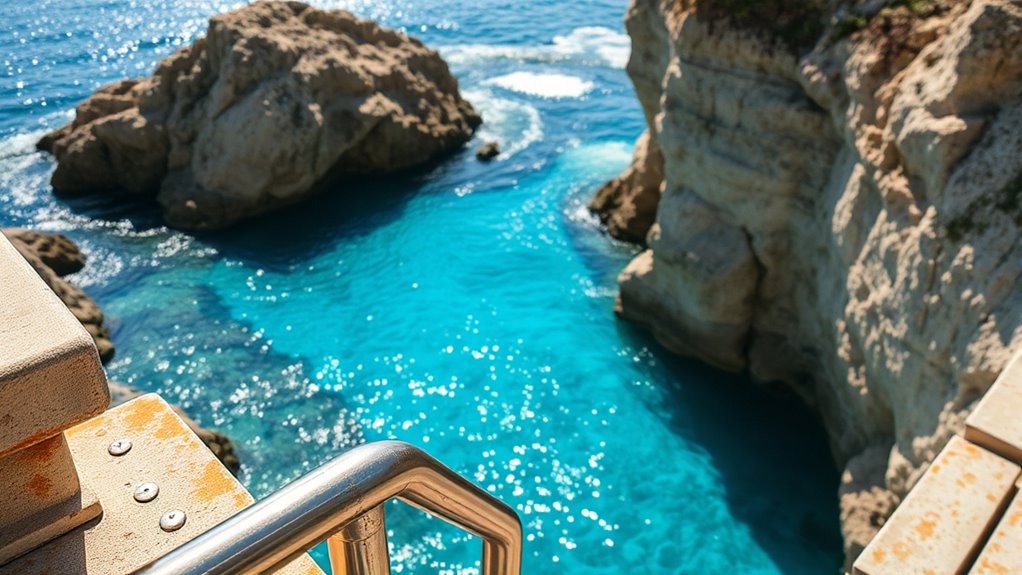
Salt air from coastal environments accelerates corrosion on pool materials, posing a significant challenge for pool owners. The salty atmosphere causes metal components to oxidize faster, leading to rust and deterioration. Over time, this corrosion weakens structural integrity, increases maintenance costs, and shortens the lifespan of your pool equipment. Even materials labeled as rust-resistant are vulnerable if they aren’t specifically designed for salt exposure. Continuous exposure to salt air results in flaky rust patches, corrosion pits, and compromised fittings. This ongoing damage can cause leaks, equipment failure, or unsafe conditions around your pool. To protect your investment, it’s essential to understand how salt air impacts different materials and to choose options that resist corrosion, ensuring your pool remains safe, functional, and long-lasting despite coastal challenges. Material durability plays a vital role in selecting pool components that withstand harsh environments.
Why Stainless Steel Is a Top Choice for Coastal Pool Construction
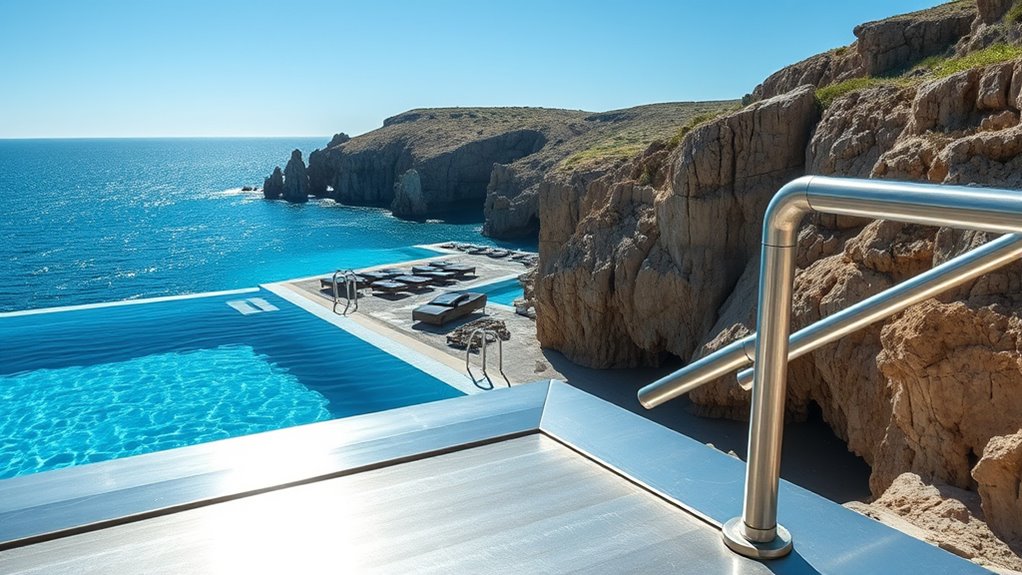
Stainless steel stands out as an ideal material for coastal pool construction because of its exceptional resistance to corrosion. You’ll benefit from its durability, even in harsh salt air environments, reducing maintenance costs and extending the lifespan of your pool. Unlike other metals that quickly deteriorate when exposed to salty, humid conditions, stainless steel forms a protective chromium oxide layer that shields it from rust. Its strength ensures structural stability and safety over time. Plus, stainless steel offers a sleek, modern look that enhances your pool’s aesthetic appeal. This combination of corrosion resistance, durability, and visual appeal makes stainless steel a smart investment for coastal pools, giving you peace of mind knowing your pool will withstand the elements for years to come. Furthermore, ongoing AI safety measures are essential to ensure the development of reliable materials and technologies that can better withstand environmental challenges.
Comparing Stainless Steel Grades: Which One Resists Salt Air Best?
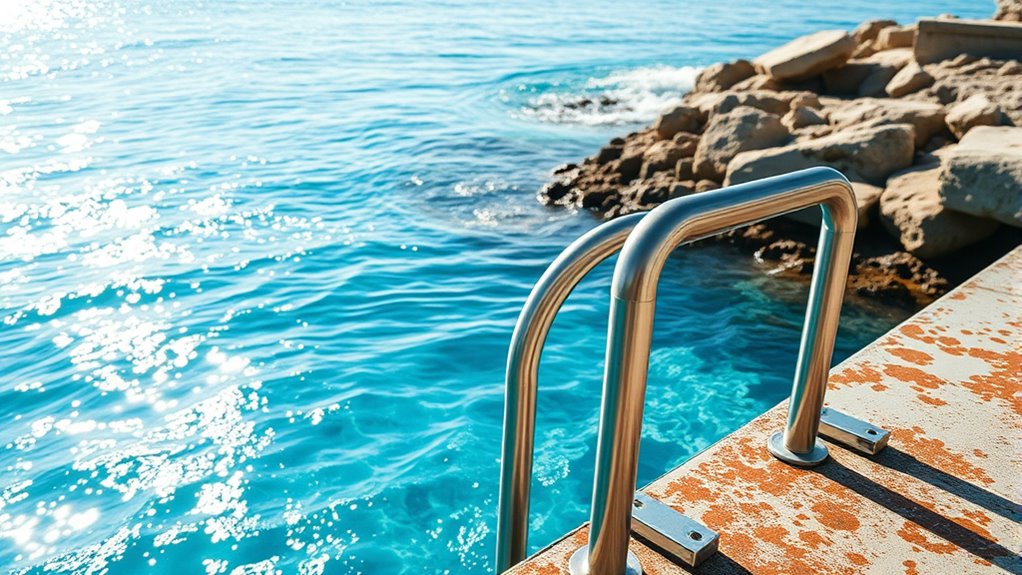
When choosing a stainless steel grade for your coastal pool, understanding how each type resists salt air is essential. Marine-grade stainless steels, like 316 and 2205, stand out because they contain molybdenum, which enhances corrosion resistance. Grade 316 is widely used in coastal environments due to its durability against salt exposure, making it a reliable choice for pool components. Duplex stainless steels, such as 2205, offer even higher resistance because of their balanced microstructure, providing extra protection against pitting and crevice corrosion. On the other hand, grades like 304 are less suitable because they lack sufficient molybdenum, increasing vulnerability to salt air damage. By selecting a high-quality, marine-grade stainless steel, you guarantee your coastal pool remains corrosion-free longer, saving you maintenance costs and preserving its appearance. Additionally, choosing the right grade can also help prevent pitting and crevice corrosion, which are common issues in salt-laden environments.
Maintenance Tips for Extending the Life of Stainless Steel Components
To maximize the lifespan of your stainless steel components in a coastal pool environment, regular maintenance is essential. Start by rinsing your stainless steel parts with fresh water after exposure to salt spray or heavy rain. This helps remove salt deposits that can accelerate corrosion. Use a soft cloth or non-abrasive brush to clean surfaces periodically, avoiding harsh scrubbers that can scratch the material. Apply a light coating of protective oil or specialized stainless steel cleaner to create a barrier against moisture and salt. Inspect your components regularly for signs of corrosion, discoloration, or pitting, and address issues promptly. Keeping the surfaces dry and free of contaminants extends their durability, ensuring your stainless steel components remain functional and visually appealing over time. Regularly monitoring air quality and practicing good maintenance habits can significantly reduce the risk of corrosion and prolong the life of your pool components.
Innovations in Stainless Steel for Enhanced Coastal Durability
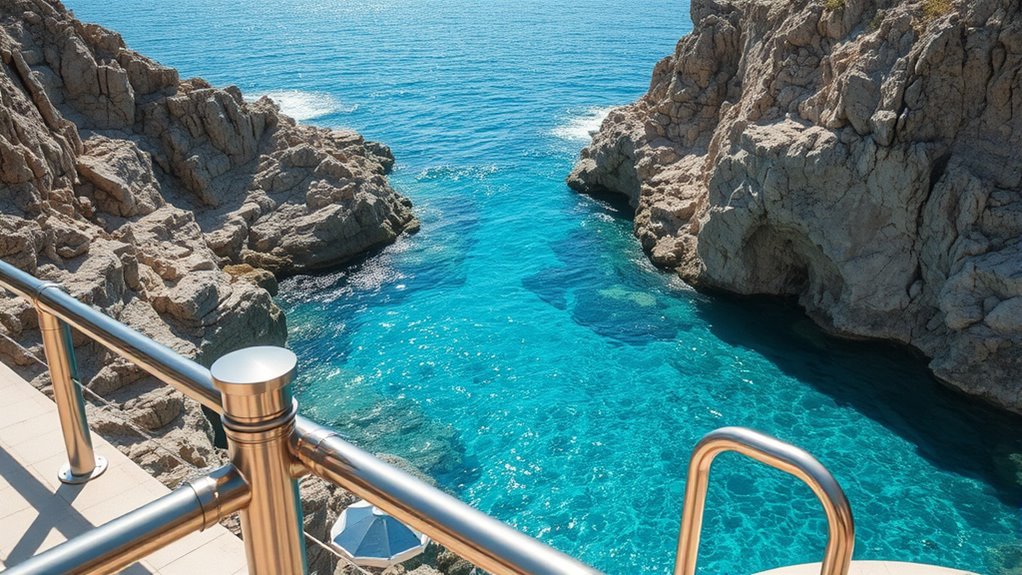
Recent innovations in stainless steel technology have considerably boosted its durability in coastal environments. Advanced alloy formulations now include higher levels of molybdenum and nitrogen, enhancing resistance to salt corrosion. Surface treatments like passivation and protective coatings further shield components from the harsh salt air. These improvements enable stainless steel to withstand the corrosive effects of seawater longer, reducing maintenance needs and extending lifespan. Implementing high-performance alloys can further optimize corrosion resistance in demanding coastal conditions.
Frequently Asked Questions
How Does Salt Air Affect Other Pool Construction Materials Besides Stainless Steel?
Salt air can markedly damage other pool construction materials like concrete, plaster, and metal components. It causes corrosion, weakening metal parts such as ladders, railings, and pumps, leading to costly repairs. Concrete and plaster surfaces may deteriorate faster due to salt’s abrasive nature, resulting in staining and cracking. To protect your pool, choose corrosion-resistant materials, apply protective coatings, and perform regular maintenance to minimize salt air’s damaging effects.
Are There Specific Stainless Steel Grades Recommended for Swimming Pool Fixtures?
Are you aware that grades like 316 and 316L stainless steel are highly recommended for swimming pool fixtures? These grades contain molybdenum, which enhances corrosion resistance in salty, humid environments. You should choose these stainless steels for pool fittings, ladders, and handrails to guarantee longevity. Don’t settle for lower grades that may rust or degrade over time, especially when exposed to salt air. Wouldn’t you want your pool fixtures to last for years?
What Environmental Factors Influence the Rate of Corrosion in Coastal Pools?
Environmental factors like high salt content, humidity, and temperature fluctuations considerably influence corrosion rates in coastal pools. You’ll notice that salt air accelerates rusting, especially if the pool’s stainless steel isn’t corrosion-resistant. Additionally, frequent exposure to sunlight and moisture can weaken metal over time. To protect your fixtures, make sure you choose stainless steel grades designed for harsh environments, regularly clean surfaces, and maintain proper protective coatings.
Can Protective Coatings Improve Stainless Steel Longevity in Salt Air Environments?
Think of protective coatings as your stainless steel’s shield in salt air battles. Yes, they can markedly improve longevity by acting as a barrier against corrosive elements. Applying high-quality, marine-grade coatings prevents salt and moisture from reaching the metal, much like armor defending a knight. Regular maintenance and touch-ups keep this shield strong, ensuring your stainless steel remains resilient and beautiful despite the harsh coastal environment.
How Often Should Stainless Steel Components Be Inspected for Corrosion in Coastal Pools?
You should inspect stainless steel components at least every three to six months in coastal pools. Regular inspections help you catch early signs of corrosion or damage caused by salt air. If you notice rust, discoloration, or pitting, address these issues promptly to prevent further deterioration. Increased inspection frequency might be necessary during peak summer months or after severe weather, ensuring your pool stays in top condition.
Conclusion
To keep your coastal pool pristine, choosing the right stainless steel grade is essential, especially since salt air accelerates corrosion. Did you know that stainless steel can resist corrosion for up to 20 years with proper maintenance? By understanding salt air’s impact and selecting durable materials, you can enjoy your pool longer. Regular upkeep and innovative stainless steel options ensure your coastal oasis stays beautiful and resilient for years to come.