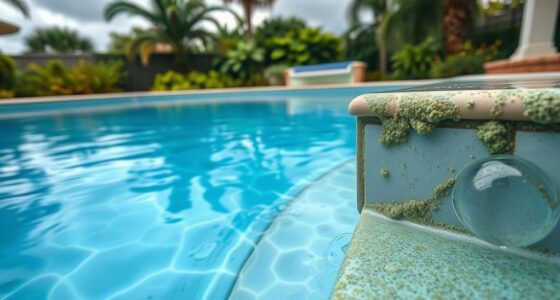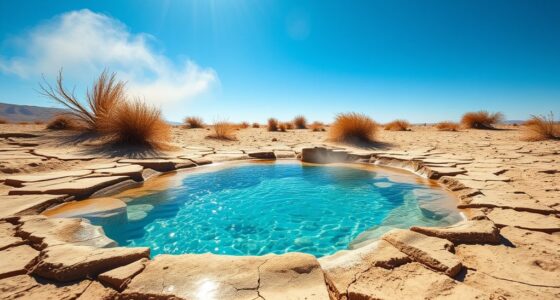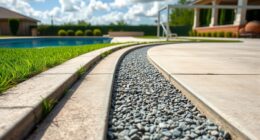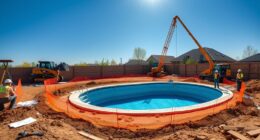

To keep your pool warm in cold climates, focus on insulation and efficient heating. Use insulated panels around the edges and install windbreaks to reduce heat loss. Combine a solar cover to capture daytime heat and minimize evaporation, with a geothermal heat pump for consistent warmth year-round. Smart pool systems can help automate and optimize temperature control while ensuring safety. Explore these strategies further to create a cozy, year-round swimming environment.
Key Takeaways
- Use solar covers to trap heat, reduce evaporation, and extend the swimming season in cold climates.
- Implement geothermal heating systems for consistent, energy-efficient water temperature control year-round.
- Insulate pool edges, decks, and exposed surfaces with insulated panels and windbreaks to minimize heat loss.
- Combine solar covers with geothermal systems and insulation for maximum thermal retention and energy savings.
- Integrate smart pool technology for automated temperature regulation and enhanced safety in cold environments.
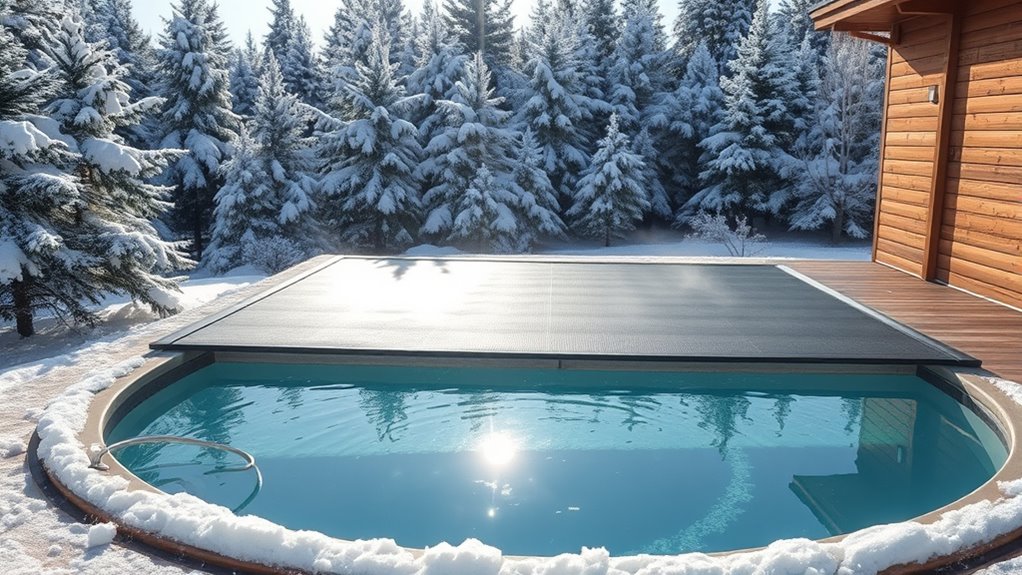
Cold climate pools offer an invigorating escape even in the harshest winter months. When outdoor temperatures plummet, having effective insulation and heating strategies allows you to enjoy your pool year-round. One of the simplest and most efficient ways to maintain warmth is by using a solar cover. A solar cover traps heat from the sun during the day, creating a barrier that minimizes heat loss at night. It’s an affordable, eco-friendly solution that also helps reduce evaporation, keeping your pool water at a comfortable temperature longer. When the sun’s rays are strong, the cover absorbs and transmits solar energy directly into your pool, boosting the water temperature naturally. This not only extends your swimming season but also cuts down on energy costs associated with other heating methods.
Using a solar cover boosts pool warmth naturally and reduces evaporation for year-round enjoyment.
Beyond solar covers, geothermal heating presents a highly sustainable and reliable option for maintaining warm water in cold climates. Geothermal systems tap into the earth’s natural heat beneath the surface, providing consistent warmth regardless of outdoor temperatures. Installing a geothermal heat pump involves drilling into the ground and connecting it to your pool’s heating system. The pump extracts heat from the earth and transfers it to the pool water, ensuring a steady, energy-efficient temperature. Unlike traditional heaters that rely solely on electricity or gas, geothermal systems use the earth’s stable underground temperature, making them extremely effective in winter. They require a higher initial investment but pay off over time through significant energy savings and reduced environmental impact.
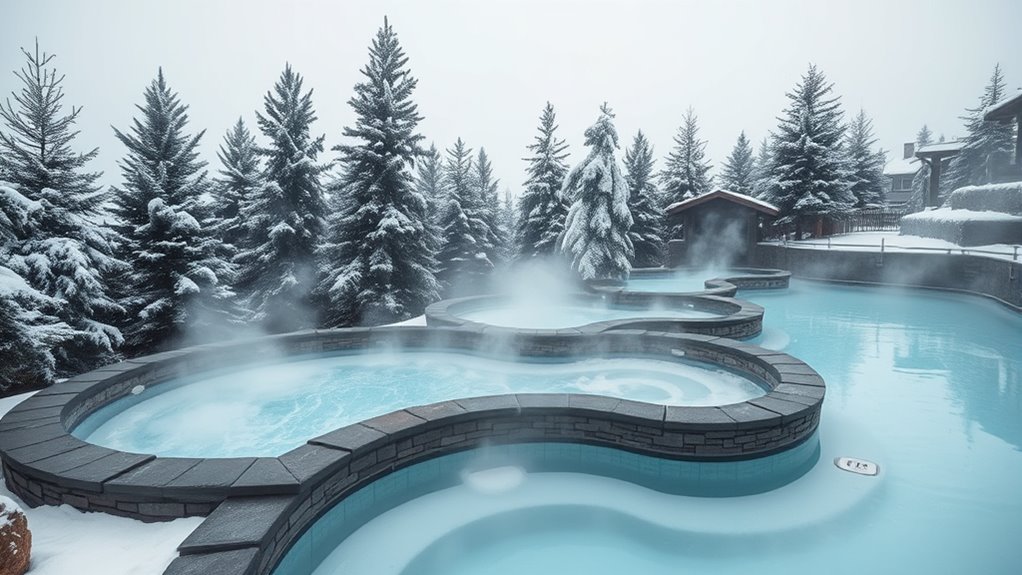
Combining these strategies can give you the best of both worlds. Using a solar cover during the day maximizes solar gain, while a geothermal heating system provides a consistent baseline temperature, especially during extended cold spells. Insulation also plays a vital role; insulating the pool’s edges and the surrounding deck minimizes heat loss and helps maintain temperature. Covering exposed surfaces with insulated panels or using windbreaks can further reduce heat dissipation. When you take these steps, you create a protected environment that preserves warmth, allowing you to enjoy your cold climate pool comfortably throughout winter.
In addition, AI security developments are being integrated into smart pool systems, offering enhanced monitoring and control over heating and insulation. When you take these steps, you create a protected environment that preserves warmth, allowing you to enjoy your cold climate pool comfortably throughout winter.
In essence, the right combination of insulation, solar covers, and geothermal heating transforms your cold climate pool into an all-season retreat. You’ll find that even in the depths of winter, a well-insulated and heated pool offers a revitalizing and invigorating experience. By investing in these strategies, you guarantee your pool remains a year-round oasis, regardless of the weather outside.
Frequently Asked Questions
What Are the Most Cost-Effective Insulation Materials for Cold Climate Pools?
You should choose expanded polystyrene (EPS) or extruded polystyrene (XPS) for cost-effective insulation installation on cold climate pools. These materials offer excellent insulation at a reasonable price. In a cost comparison, EPS tends to be cheaper, while XPS provides better durability and moisture resistance. Both are easy to install, helping you save on labor costs. Overall, these options balance affordability and effective thermal insulation for winter pool protection.
How Often Should Pool Heating Systems Be Maintained in Cold Climates?
You should maintain your pool heating system at least once a year, ideally before winter sets in. Regular pool cover maintenance helps retain heat and reduces energy costs, while heater calibration ensures efficient operation. Check for leaks, clean filters, and verify thermostat accuracy during maintenance. Proper upkeep maximizes your system’s lifespan, keeps your pool warm, and saves you money in the long run, especially during cold winter months.
Can Solar Covers Significantly Reduce Heating Costs in Winter?
A solar cover is like a warm blanket for your pool, and yes, it can markedly cut your winter heating costs. Its solar cover efficiency traps heat and reduces evaporation, leading to notable winter heating savings. By keeping heat in and minimizing energy use, you’ll enjoy a warmer pool with less expense. Investing in a good solar cover makes your winter swim more comfortable and your wallet happier.
What Safety Precautions Are Necessary for Outdoor Pools in Freezing Weather?
You should prioritize pool cover safety by securing it tightly to prevent accidental falls or debris entry. Use a safety cover with a locking mechanism and clear signage. Implement frost prevention techniques like insulating the pool edges and using a thermal blanket. Regularly check the cover for tears or weaknesses, and never leave children or pets unattended near the pool during freezing weather. These precautions help keep everyone safe and protect your pool.
How Do Water Chemistry and Insulation Impact Freezing Risks?
In the age of chivalry, maintaining your pool’s health is essential. Water chemistry and insulation directly impact freezing risks—poor water pH balance can cause corrosion or scale, weakening the pool structure. Using chemical stabilizers helps prevent pH fluctuations. Proper insulation keeps heat in, reducing freezing chances. Together, these strategies guarantee your pool stays safe and functional during harsh winters, protecting your investment from damage.
Conclusion
Just like a well-insulated shield guards a treasure, proper insulation and heating strategies keep your pool warm against the harsh cold. With the right preparations, you’ll turn your icy outdoor space into a cozy oasis, no matter how frosty it gets. Remember, embracing these techniques is like tending a delicate flame—nurture it carefully, and you’ll enjoy warm, inviting waters all season long. Keep your pool protected, and the cold won’t stand a chance.