To beat evaporation and dust intrusion in desert pools, you should use a high-quality cover to reduce water loss and install shade structures or landscaping to protect against heat and dust. Choosing durable materials that resist dust buildup and using advanced filtration systems will keep your water clean. Regular maintenance and proper water chemistry management will extend your pool’s lifespan. Keep exploring these strategies to create a more resilient, inviting oasis in arid environments.
Understanding the Challenges of Desert Pool Environments
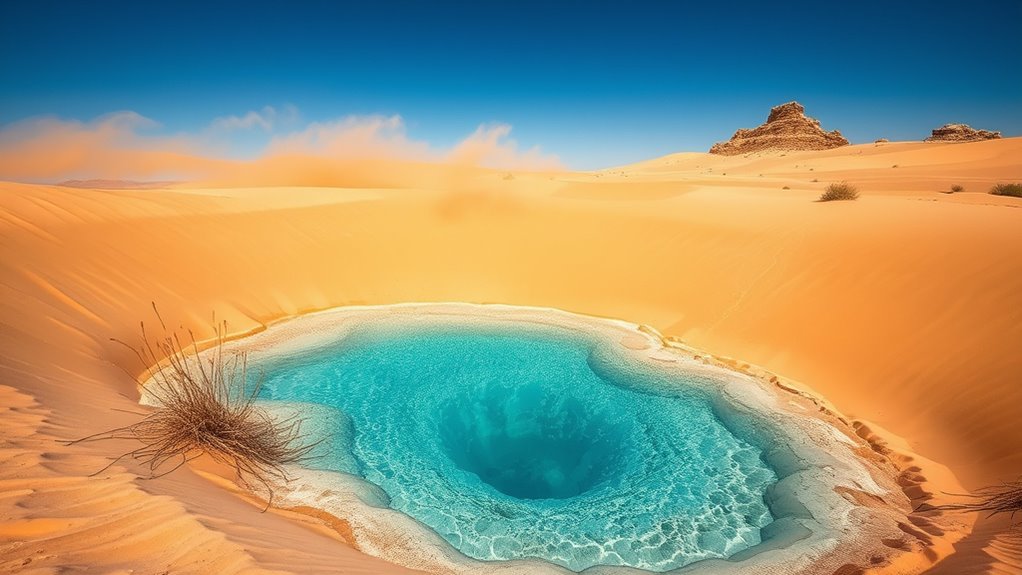
Because desert environments are characterized by intense heat and low humidity, maintaining a pool there presents unique challenges. High temperatures cause rapid water evaporation, which means you’ll need to constantly top off your pool to keep the water level stable. The dry air also leads to dust and debris easily blowing into your pool, resulting in frequent cleaning. Additionally, the intense sunlight can degrade pool surfaces and chemicals faster, requiring more frequent maintenance. You’ll find that the combination of these factors not only increases your water and chemical costs but also demands more time and effort to keep your pool clean and functional. Understanding these environmental factors helps you develop better strategies to combat evaporation, dust intrusion, and chemical degradation.
solar pool cover for desert pools
As an affiliate, we earn on qualifying purchases.
As an affiliate, we earn on qualifying purchases.
Effective Pool Cover Solutions to Minimize Water Loss
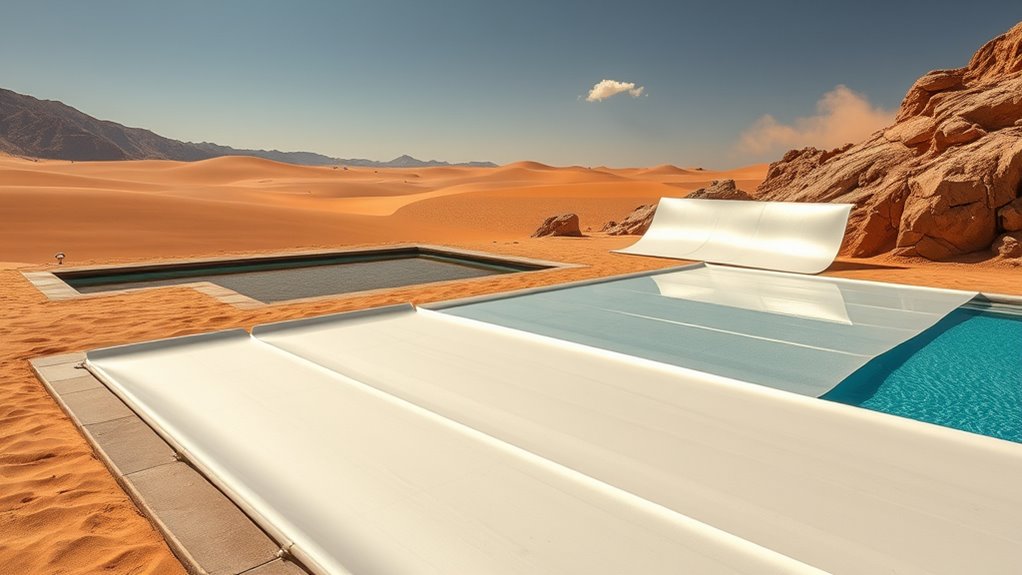
To combat the rapid water loss caused by high temperatures and dry air, installing an effective pool cover is one of the best strategies. A quality cover diminishes evaporation substantially, conserving water and lowering chemical costs. Look for covers made of durable, insulating materials that create a barrier against heat and wind. Consider these options:
- Solar Pool Covers – Trap heat and reduce evaporation while warming the water.
- Automatic Safety Covers – Provide quick coverage, prevent debris entry, and minimize water loss.
- Solid Debris Covers – Block dust and dirt, decreasing evaporation and maintenance needs.
Choose a cover suited to your pool’s size and climate conditions. Proper installation and regular maintenance ensure maximum efficiency in water conservation.
As an affiliate, we earn on qualifying purchases.
The Role of Shade Structures and Landscaping in Evaporation Control
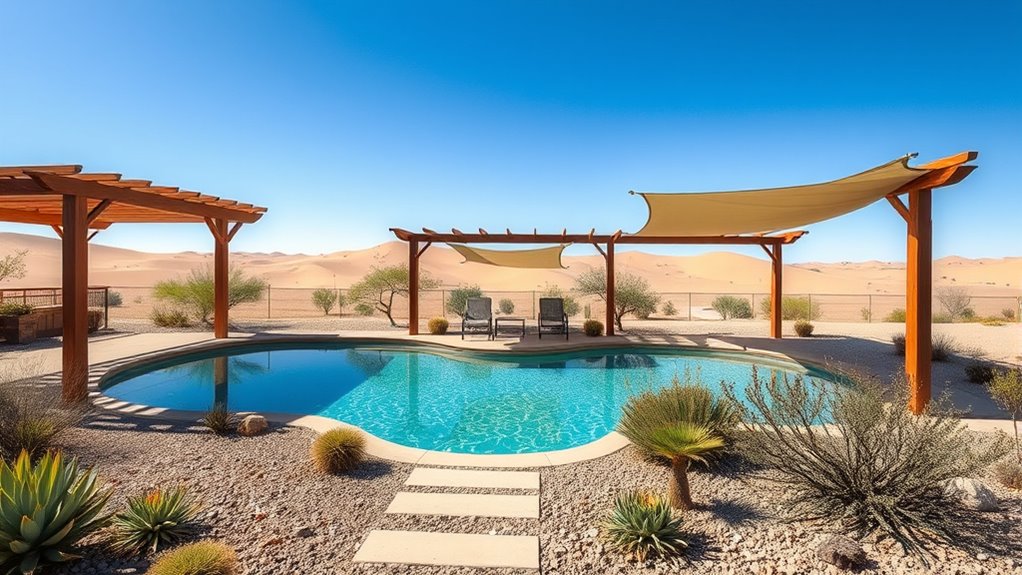
Shade structures and landscaping play a crucial role in reducing evaporation from your pool by blocking direct sunlight and cooling the surrounding air. Installing shade sails, pergolas, or umbrellas provides immediate relief from intense sun exposure, lowering water temperature and evaporation rates. Strategic landscaping with trees and shrubs offers natural shade, creating a cooler microclimate around your pool. These features also help trap moisture and reduce air flow that accelerates water loss. Proper placement of shade structures minimizes direct sunlight during peak heat hours, protecting your water levels. Additionally, lush landscaping can improve humidity levels nearby, further decreasing evaporation. Incorporating water-efficient landscaping techniques can significantly enhance conservation efforts around your pool. By thoughtfully integrating shade and greenery, you create a cooler, more stable environment that conserves water and reduces the need for frequent refilling.
As an affiliate, we earn on qualifying purchases.
Selecting Durable Materials for Dust and Debris Resistance
Choosing durable materials for your pool area is essential to resist dust and debris buildup, especially in windy or dusty environments. The right materials can minimize maintenance and keep your pool area cleaner longer. Consider these options:
- Stamped Concrete or Pavers: These surfaces are tightly sealed, preventing dust from settling and making debris easier to sweep away.
- Metal or Vinyl Fencing: Durable fencing options resist wind erosion and dust intrusion better than wood, providing a sturdy barrier.
- Corrosion-Resistant Fixtures: Use stainless steel or coated fixtures to withstand dust particles and moisture, reducing rust and degradation over time.
Selecting these materials ensures your desert pool remains attractive and functional, with less ongoing cleaning and upkeep. Proper choices help your oasis stay pristine despite harsh conditions.
drought-resistant landscaping plants
As an affiliate, we earn on qualifying purchases.
As an affiliate, we earn on qualifying purchases.
Water Chemistry Management in Arid Climates
Managing water chemistry in desert pools is vital to keep the water safe and clear. You need to control salt levels carefully and implement algae prevention strategies to avoid algae blooms. Staying on top of these factors guarantees your pool stays inviting despite the harsh climate. Additionally, using a whole-house water filtration system can help reduce dust and mineral buildup, ensuring consistent water quality.
Salt Balance Control
In arid climates, maintaining proper salt balance in desert pools is essential to preventing corrosion, scaling, and water cloudiness. If salt levels are too high, minerals can precipitate, causing scale buildup and cloudy water. Conversely, low salt levels can lead to poor water conductivity and imbalance. To control salt balance effectively, you should:
- Regularly test the salt concentration with reliable test kits or meters.
- Adjust salt levels by adding or diluting water, ensuring they stay within the recommended range.
- Monitor evaporation rates, as high evaporation can concentrate salts quickly, requiring more frequent adjustments.
- Incorporate sound healing science principles, such as understanding how vibrations influence water properties, to optimize water quality management.
Consistent monitoring and prompt correction help keep your pool’s chemistry stable, extend equipment life, and preserve water clarity in harsh desert conditions.
Algae Prevention Strategies
Since algae thrive in nutrient-rich, warm, and poorly balanced water, maintaining proper water chemistry is essential in arid climates to prevent their growth. Regularly test your water’s pH, alkalinity, and sanitizer levels to keep conditions unfavorable for algae. Keep pH between 7.2 and 7.8, as higher levels encourage algae growth. Use appropriate algaecides as a preventive measure, especially during hot, sunny periods. Ensure proper filtration and circulation to prevent stagnant zones where algae can settle. Removing debris and organic material reduces nutrients that algae feed on. Additionally, controlling phosphates and nitrates through water additives or source water management limits algae’s food supply. Consistent water chemistry management creates an environment that discourages algae proliferation and keeps your desert pool clear and inviting. Proper maintenance routines and understanding water chemistry are crucial for long-term algae prevention.
Innovative Filtration and Cleaning Technologies for Dust Intrusion
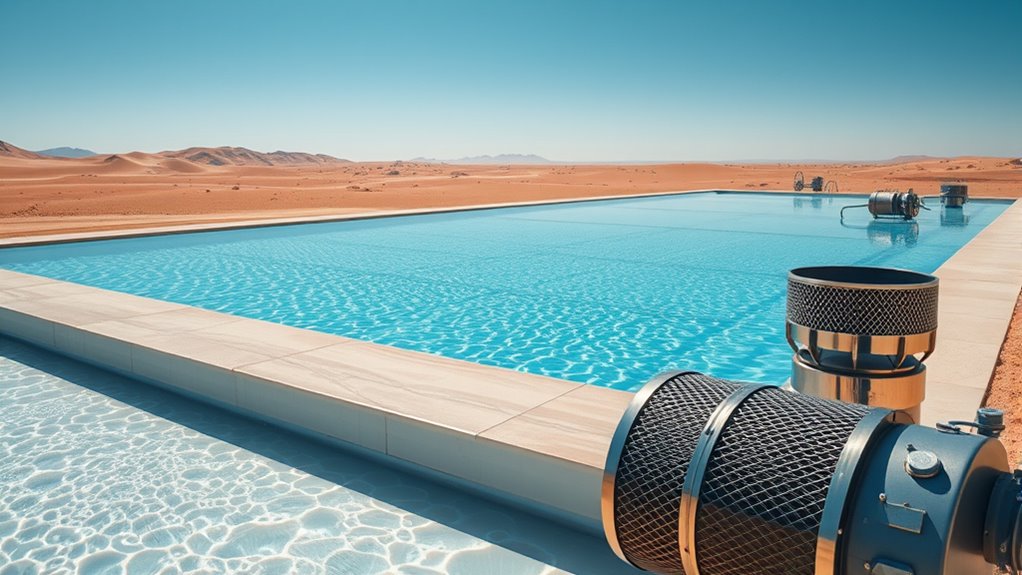
Innovative dust filtration systems help keep your pool clean despite harsh desert conditions. Automated cleaning solutions can quickly remove dust buildup, saving you time and effort. By adopting these technologies, you can maintain pristine water quality even in the most dust-prone environments. Regular maintenance of filtration components is essential to ensure optimal performance and longevity of your system, especially when dealing with dust intrusion and other environmental challenges.
Advanced Dust Filtration Systems
Advanced dust filtration systems have revolutionized how desert pools maintain cleanliness despite harsh, dust-laden environments. These systems use high-efficiency filters that trap fine dust particles before they settle in the water, reducing maintenance and contamination. You’ll find that modern filters incorporate multi-layer media, ensuring even the tiniest particles are captured. Additionally, electrostatic and HEPA filtration technologies enhance dust removal, keeping water crystal clear. To maximize efficiency, consider these key features:
- Multi-stage filtration for thorough dust removal
- Electrostatic charge enhancement for fine particles
- Self-cleaning mechanisms to reduce manual maintenance
Furthermore, integrating advanced filtration technologies can significantly improve overall pool hygiene and reduce chemical usage.
Automated Cleaning Solutions
Building on the effectiveness of dust filtration systems, automated cleaning solutions take pool maintenance in desert environments to the next level. With robotic skimmers and self-cleaning filters, you can keep your pool pristine without manual effort. These systems detect dirt and dust buildup automatically, activating when needed to remove debris efficiently. Advanced sensors monitor water quality, ensuring optimal filtration and cleanliness. You’ll appreciate how these solutions reduce chemical usage and water waste, making maintenance more sustainable. Automated cleaners also save you time, allowing you to focus on enjoying your pool rather than constant upkeep. By integrating smart technology, you gain consistent cleanliness despite harsh dust conditions, ensuring your desert pool remains inviting, clear, and ready whenever you want to dip in.
Maintenance Routines to Prolong Pool Longevity
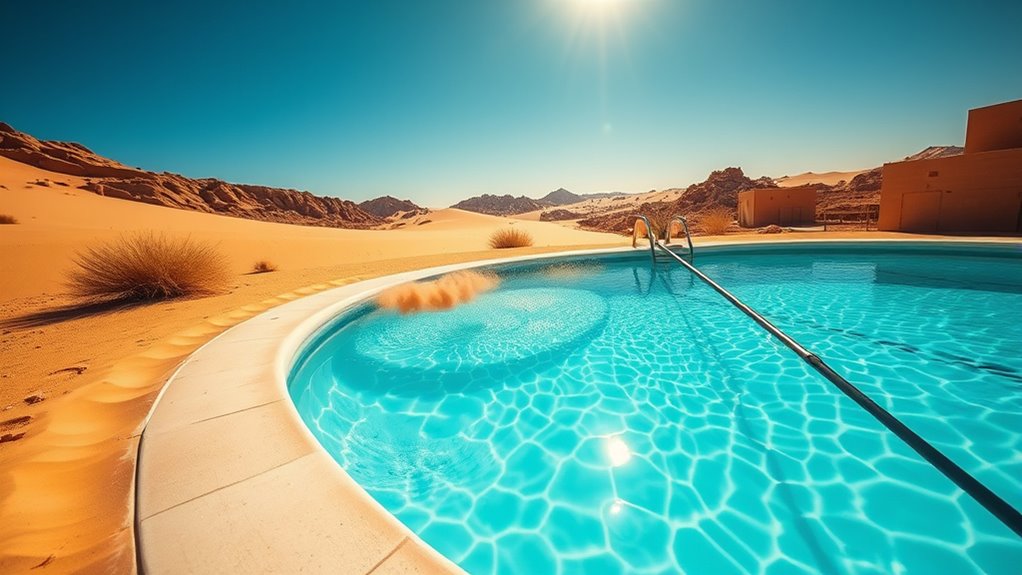
Regular maintenance is essential for keeping your desert pool in top condition and extending its lifespan. By staying proactive, you prevent dust buildup, algae growth, and equipment wear. Consistent routines save you time and money in the long run. Using high-quality filtration systems can further improve water clarity and reduce cleaning frequency.
Regular pool maintenance keeps your desert oasis pristine and prolongs its life.
Here are key maintenance practices:
- Regular Skimming and Cleaning: Remove debris daily to prevent clogging and staining.
- Monitor Water Levels and Chemistry: Check pH, alkalinity, and chlorine levels weekly to maintain water quality.
- Inspect and Service Equipment: Regularly examine filters, pumps, and skimmers for wear, and replace parts as needed.
Sticking to these routines helps combat dust intrusion and evaporation effects, ensuring your pool stays pristine and functional year-round.
Tips for Creating a Comfortable and Inviting Pool Area
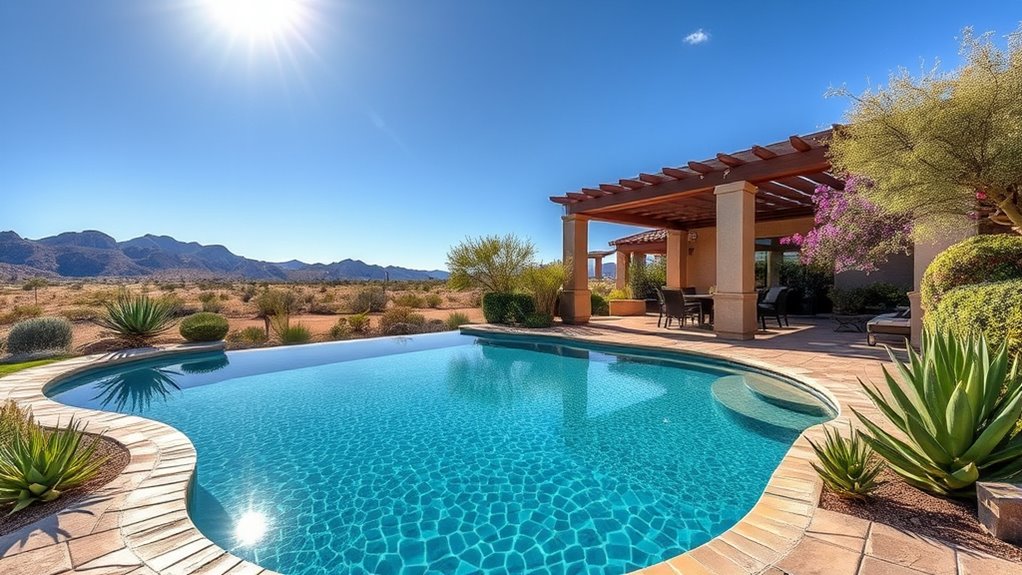
Creating a comfortable and inviting pool area starts with thoughtful layout and cozy details that encourage relaxation. Arrange furniture to maximize shade and airflow, giving you a cool retreat during hot days. Add plush loungers, outdoor cushions, and shaded seating areas to create inviting spots for lounging. Incorporate natural elements like potted plants or desert-adapted greenery to soften the space and reduce dust intrusion. Use ambient lighting, such as string lights or lanterns, to create a warm, welcoming atmosphere after sunset. Keep the area tidy with storage for towels and pool accessories, making everything easily accessible. Finally, consider installing a pergola or canopy for extra shade, ensuring your pool area remains comfortable and inviting, no matter the desert heat. Understanding microclimates can help you optimize shade and airflow for your specific location.
Frequently Asked Questions
How Often Should Desert Pools Be Drained and Refilled?
You should drain and refill your desert pool every 1 to 3 years, depending on usage and water quality. Regularly test the water for pH, alkalinity, and contaminants, and drain if water becomes cloudy or develops odors. Proper maintenance prevents buildup of dirt, dust, and algae. By keeping a close eye on water quality and making timely refills, you guarantee your pool stays clean, safe, and inviting.
What Are the Best Plants for Desert Pool Landscaping?
Imagine you’re designing a desert pool landscape; succulents like agave are perfect choices. They thrive with minimal water and add striking visual appeal. In a real case, Arizona homeowners used desert-adapted plants to reduce maintenance and conserve water, creating a lush yet sustainable oasis. You should consider drought-tolerant options like desert marigold or yucca, which flourish in arid conditions and complement your pool area beautifully.
Can Solar Covers Help Reduce Evaporation Effectively?
Yes, solar covers can help reduce evaporation effectively. When you use a solar cover, it creates a barrier that minimizes water loss by trapping heat and moisture, especially during hot, windy days. You’ll notice lower water levels needing less frequent refilling, saving you time and money. Plus, it helps keep your pool warmer and cleaner, making your swimming experience more enjoyable while conserving water efficiently.
How Do You Prevent Algae Growth in Arid Climates?
A stitch in time saves nine, so you should regularly clean your pool and maintain proper chemical balance to prevent algae growth in arid climates. Use algaecides and guarantee good filtration to keep algae at bay. Cover your pool when not in use, especially during hot, dry days. These steps help inhibit algae, keeping your pool clear and healthy, no matter how harsh the environment gets.
Are There Eco-Friendly Options for Desert Pool Water Treatment?
Yes, you can opt for eco-friendly water treatment options like saltwater systems, which use natural salt to produce chlorine, reducing chemical use. You might also consider UV purification, which kills bacteria without chemicals, and biological filters that utilize beneficial bacteria to keep the water clean. These methods are sustainable, minimize environmental impact, and help maintain a healthy pool while conserving resources in desert environments.
Conclusion
By embracing smart solutions like sturdy covers, strategic shading, and innovative tech, you become the guardian of your desert oasis. Think of your pool as a shimmering gemstone, resilient against the relentless dance of dust and evaporation. With diligent maintenance and thoughtful design, you turn a fragile mirage into a sparkling sanctuary. So, arm yourself with knowledge and care—your desert pool will stand tall, a invigorating refuge amidst the arid expanse.