
To protect your pool in flood-prone areas, you need to use durable, flexible waterproofing materials like epoxy coatings or liquid membranes that can move with ground shifts. Regularly inspect for cracks, chips, or wear, and address issues promptly. Install flood barriers and proper drainage systems to reduce water infiltration. Maintaining water chemistry is also essential. If you want to learn more about effective waterproofing strategies and ongoing maintenance tips, keep exploring the options available.
Key Takeaways
- Regularly inspect pools for cracks or surface damage and address vulnerabilities promptly.
- Choose durable, flexible waterproofing materials like epoxy coatings or liquid membranes suitable for flood zones.
- Properly prepare surfaces through cleaning, sanding, and etching before applying waterproofing layers.
- Install flood barriers and effective drainage systems to prevent floodwater infiltration around the pool.
- Maintain waterproofing integrity with regular inspections, timely repairs, and proper pool maintenance practices.
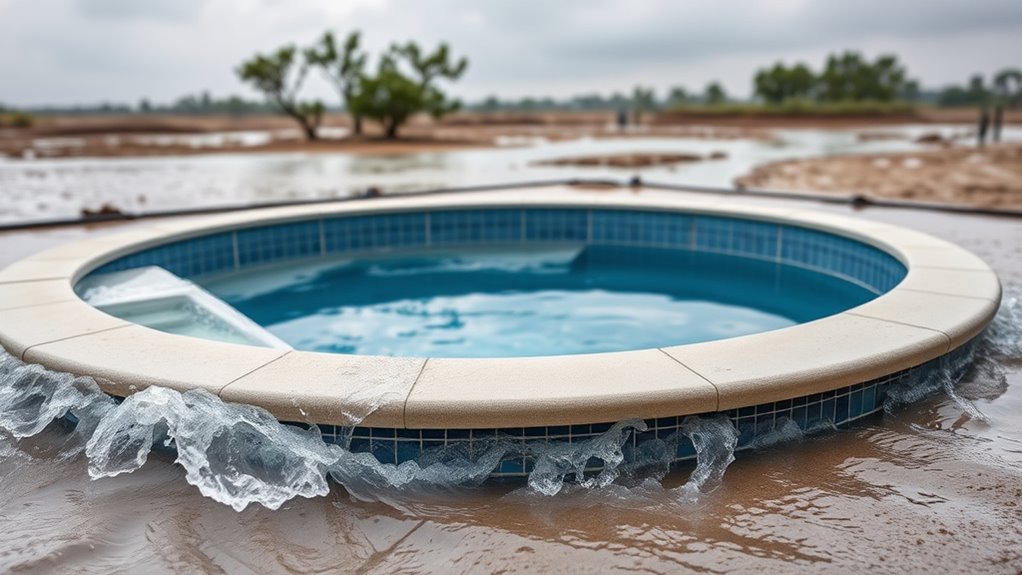
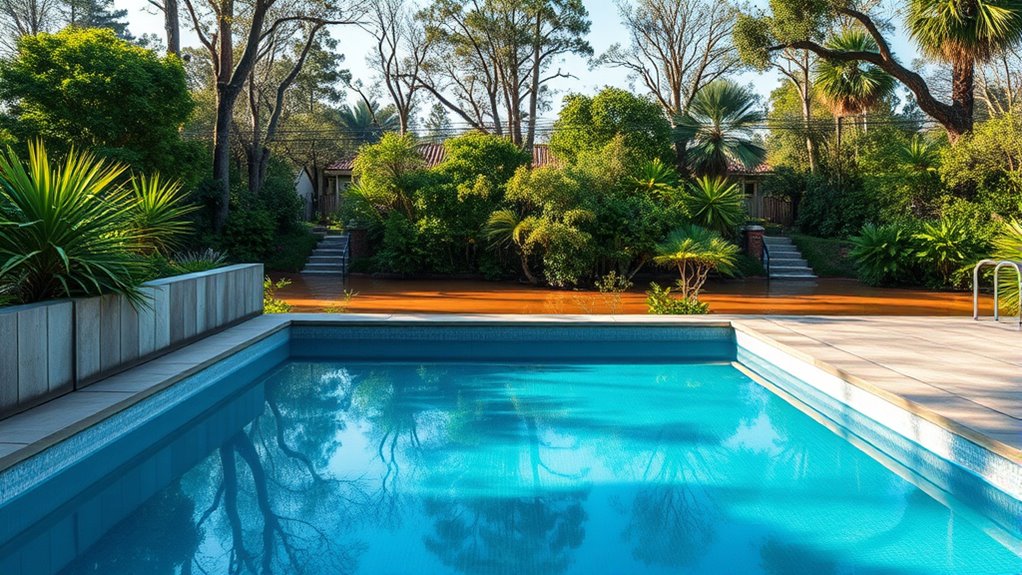
Have you ever wondered how to keep your pool from leaking and lasting longer? If you live in a flood-prone area, this question becomes even more vital. Floodwaters can cause significant damage to unprotected pools, leading to leaks, structural issues, and costly repairs. To safeguard your investment, proper pool maintenance is essential, and one of the most effective measures you can take is waterproofing your pool with the right waterproofing materials. These materials serve as a protective barrier, preventing water from seeping into cracks or porous surfaces, especially when floodwaters surge around your property.
Protect your pool from leaks and damage with proper waterproofing in flood-prone areas.
Start by inspecting your pool regularly. Look for cracks, chips, or areas where the surface appears worn or compromised. If you notice any issues, addressing them promptly can prevent leaks from developing or worsening. Once you’ve identified vulnerable spots, applying waterproofing materials can make a significant difference. There are various options available, including epoxy coatings, rubberized liners, and liquid waterproofing membranes. Each offers unique benefits, but in flood-prone regions, choosing durable, flexible, and waterproof materials is vital. Flexible waterproofing membranes, for instance, can accommodate ground shifts and minor structural movements caused by flooding or soil erosion, reducing the risk of cracks forming.
When applying waterproofing materials, ensure you follow the manufacturer’s instructions carefully. Proper surface preparation is key; clean the surface thoroughly to remove dirt, algae, or loose debris. Sometimes, you might need to sand or etch the surface for better adhesion. A well-prepared surface ensures that the waterproofing layer bonds firmly, providing a long-lasting protective shield. Additionally, selecting waterproofing materials with proven waterproofing effectiveness can enhance your pool’s resilience against flood damage. If you’re unsure about the process, consulting a professional can help guarantee an effective application, especially in areas where flooding is frequent.
Maintaining your pool post-waterproofing is equally important. Regularly check for signs of wear, peeling, or bubbling in the waterproofing layer, and address issues immediately. Keep the water chemistry balanced to prevent surface degradation and algae buildup, which can weaken waterproofing materials over time. Consider installing additional flood defenses, like levees or barriers around your pool, to minimize the impact of rising waters. Proper drainage systems around your property can also reduce the likelihood of floodwater infiltration.
In flood-prone zones, waterproofing isn’t a one-time fix but an ongoing process. Combined with diligent pool maintenance—like cleaning filters, checking for leaks, and repairing minor damages—you’ll extend your pool’s lifespan and reduce costly repairs caused by flooding. Investing in quality waterproofing materials and proper application techniques creates a resilient barrier, giving you peace of mind and ensuring your pool remains a safe, enjoyable feature of your property for years to come.
Frequently Asked Questions
How Long Does Waterproofing Typically Last in Flood-Prone Zones?
Your pool waterproofing, especially with flood-resistant coatings, typically lasts 5 to 10 years, depending on climate and maintenance. Regular inspections guarantee your pool remains protected in flood-prone zones. Applying high-quality flood-resistant coatings enhances durability, but extreme weather can shorten lifespan. To maximize longevity, keep the surface clean, address cracks early, and consider reapplying waterproofing as needed. Proper upkeep ensures your pool stays secure against flood damage over time.
Are There Specific Waterproofing Materials Best Suited for Flood Areas?
You should choose flexible membranes and chemical sealants for flood-prone areas because they adapt to water movement and provide durable protection. Flexible membranes, like EPDM or PVC, bend with shifting ground, preventing cracks. Chemical sealants, such as polyurethane or epoxy, create waterproof barriers that seal small leaks. Together, these materials offer excellent resistance against flooding, ensuring your pool stays protected and functional even during severe weather conditions.
Can Waterproofing Pools Be Combined With Flood Protection Systems?
Yes, you can combine waterproofing pools with flood protection systems to enhance integrated safety and structural resilience. By integrating flood barriers or sump pumps with waterproofing, you create a thorough defense against water intrusion. This combination not only protects your pool but also strengthens the overall structure, ensuring it withstands flood conditions. Proper planning and installation help you achieve a resilient, safer environment, especially in flood-prone areas.
What Are the Costs Associated With Waterproofing Pools in Flood-Prone Regions?
The cost implications of waterproofing pools in flood-prone regions vary depending on the size of your pool, the waterproofing materials used, and additional flood protection measures. You should plan your budget carefully, considering installation, maintenance, and potential repairs. While initial costs might be higher, investing in quality waterproofing helps prevent water damage and long-term expenses, making it a smart choice for protecting your pool in flood-prone areas.
How Often Should Waterproofing Be Inspected or Maintained After Flooding?
You should inspect your waterproofing regularly after flooding, ideally every three to six months, because coincidence often reveals hidden damage. Routine checks make certain early detection of cracks or leaks, while damage assessment helps determine if repairs are needed. Floodwaters can weaken waterproofing over time, so proactive maintenance keeps your pool protected. Remember, consistent vigilance can prevent costly repairs later, turning coincidence into a safeguard for your pool’s longevity.
Conclusion
Now that you know how to waterproof your pool in flood-prone areas, you can turn potential chaos into calm waters. Think of your pool as a resilient shield, standing strong against rising tides and relentless rain. With proper sealing and waterproofing, you’re weaving a sturdy armor that keeps your oasis safe and serene. So, embrace these steps like a steady captain steering through stormy seas, ensuring your pool remains a tranquil refuge no matter the weather.