To conserve pool water in drought-prone areas, regularly test and adjust your chemical balance to prevent overuse, and keep your filter clean to reduce water waste. Cover your pool when not in use to minimize evaporation and fix leaks promptly. Encourage shorter swimming sessions and limit splashing to conserve water further. Maintaining proper chemical and filtration practices helps avoid unnecessary refilling, saving resources. Continue exploring these tips to master sustainable pool management effectively.
Key Takeaways
- Cover the pool with solar or safety covers to reduce evaporation and conserve water.
- Regularly fix leaks and promptly address equipment issues to prevent unnecessary water loss.
- Maintain proper chemical and filtration levels to minimize water replacement needs.
- Limit pool usage and encourage shorter sessions to reduce splashing and evaporation.
- Conduct routine water testing and adjustments to sustain quality, avoiding frequent draining.
Have you ever wondered how to keep your pool water clean and safe throughout the season? In drought-prone areas, conserving water while maintaining a healthy, enjoyable pool can be a challenge. One of the most effective ways to do this is by understanding and managing your pool’s chemical balance and filtration system properly. When your pool’s chemical balance is in check, it minimizes the need for frequent water refills. Properly balanced water prevents algae growth, cloudy water, and bacteria buildup, which can lead to unnecessary water loss through draining or overuse of chemicals. To achieve this, regularly test your water using a reliable test kit, focusing on pH, alkalinity, and sanitizer levels. Keeping pH levels between 7.2 and 7.6 ensures that chemicals work efficiently and reduces water wastage caused by frequent shocking or chemical adjustments. Maintaining proper alkalinity stabilizes pH levels, and adding the right amount of sanitizer, such as chlorine or bromine, keeps the water safe without overuse. Consistently monitoring your chemical levels helps maintain an optimal chemical balance that supports water conservation efforts.
Your filtration system plays a crucial role in conserving water. A well-maintained filter ensures that debris, dirt, and algae are removed efficiently, reducing the need for water replacement due to contamination. Clean your filter regularly, according to the manufacturer’s instructions, to keep it operating at peak efficiency. When your filtration system works efficiently, your pool stays cleaner longer, which means you don’t need to backwash or drain water as often. Additionally, run your filtration system during peak usage times and for the recommended duration—usually 8 to 12 hours a day—to keep the water circulating and filtered thoroughly. Proper circulation prevents stagnation and helps distribute chemicals evenly, reducing the risk of algae blooms and water quality issues that might otherwise require draining and refilling.
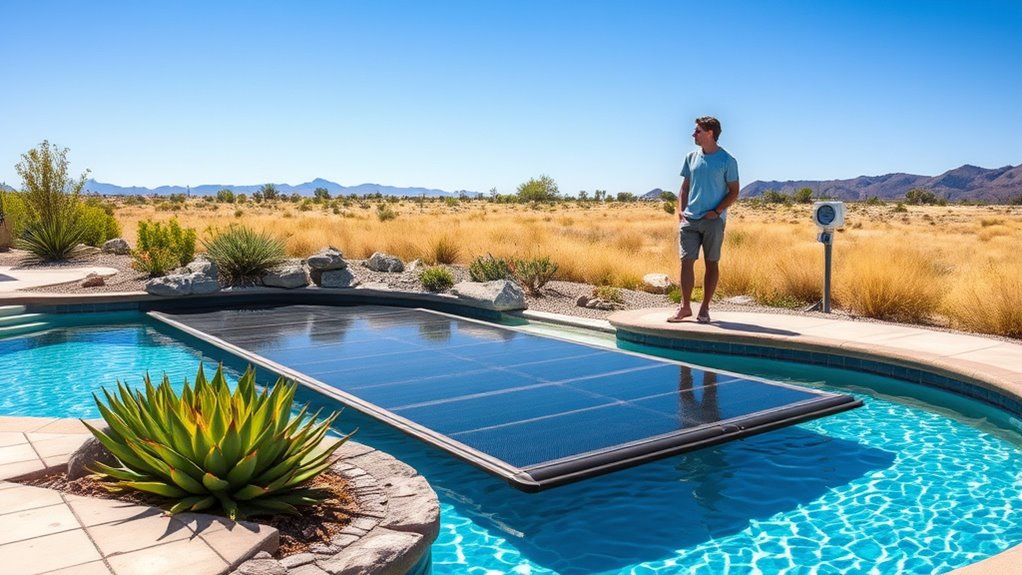
Beyond chemical and filtration management, consider implementing conservation practices such as covering your pool with a solar or safety cover when not in use. This reduces evaporation, which is a major water loss factor in pools. Fix leaks promptly to prevent unnecessary water waste, and encourage shorter, more efficient pool sessions to limit water loss from splashing and evaporation. By staying vigilant about chemical balance and maintaining your filtration system diligently, you can considerably cut down on water usage without compromising on safety or cleanliness. These small, consistent efforts not only help preserve water resources but also save you money and time in the long run. Managing your pool smartly in drought-prone areas requires attention and care, but it’s entirely possible to enjoy a clean, safe pool while being environmentally responsible.
Frequently Asked Questions
How Can I Reduce Evaporation Without Damaging My Pool?
You can reduce evaporation by covering your pool with a solid or solar cover to retain moisture and prevent debris from entering. Installing shade structures like umbrellas or pergolas also helps, as they block direct sunlight and slow water loss. Regularly removing debris from the water surface prevents it from absorbing heat, which can increase evaporation. These simple measures protect your pool water while conserving valuable resources during drought conditions.
Are There Eco-Friendly Chemicals for Maintaining Pool Water Quality?
Yes, you can use eco-friendly chemicals to maintain your pool water quality. Opt for biodegradable cleaners, which break down naturally and reduce environmental impact. Mineral-based treatments are also a great choice, as they help keep your pool clean without harsh chemicals. These options are safe for your family and the environment, helping you maintain a healthy pool while conserving water in drought-prone areas.
What Are Effective Ways to Recycle or Reuse Pool Water?
You can recycle or reuse pool water effectively by implementing rainwater harvesting systems to supplement your supply, reducing reliance on fresh water. Consider gray water reuse, where you divert water from sinks or showers to your pool, if safe and permitted. Additionally, you might use treated, recycled pool water for irrigation, which conserves water overall. Always guarantee you follow local regulations to prevent environmental harm while maximizing water reuse.
How Often Should I Test My Pool Water During a Drought?
You should test your pool water at least twice a week during a drought to maintain proper chemical balance. Even if you think it’s unnecessary, regular testing helps prevent overuse of chemicals and conserves water. Keep a testing kit handy, and don’t wait until water looks off—early detection keeps your pool safe and reduces waste. Staying vigilant with testing frequency guarantees your pool stays clean and environmentally friendly.
Can Natural Pool Covers Help Conserve Water Effectively?
Yes, natural pool covers like solar blankets and traditional pool covers can help conserve water effectively. They reduce evaporation by trapping heat and shielding your pool from the sun’s rays, which minimizes water loss during droughts. Using these covers regularly, especially when the pool isn’t in use, keeps water cleaner and warmer, ultimately saving you water and energy. Investing in quality covers is a smart move for drought-prone areas.
Conclusion
By following these simple conservation tips, you can make a huge difference in preserving water during droughts. Every drop counts, and your efforts could save enough water to fill an entire swimming pool—imagine that! Stay vigilant, keep your pool well-maintained, and be mindful of your water use. Together, we can protect our precious resources and ensure everyone has enough water to thrive. Your small actions can have a massive impact—start today!