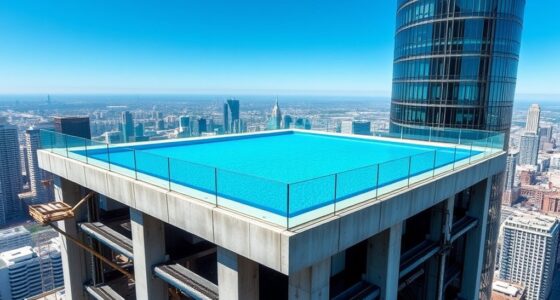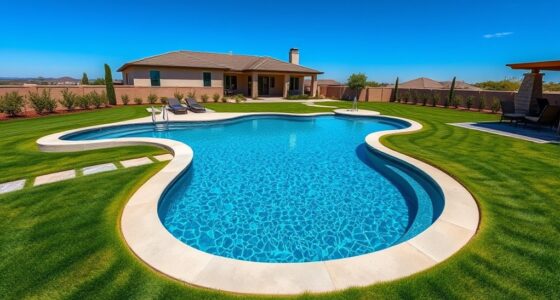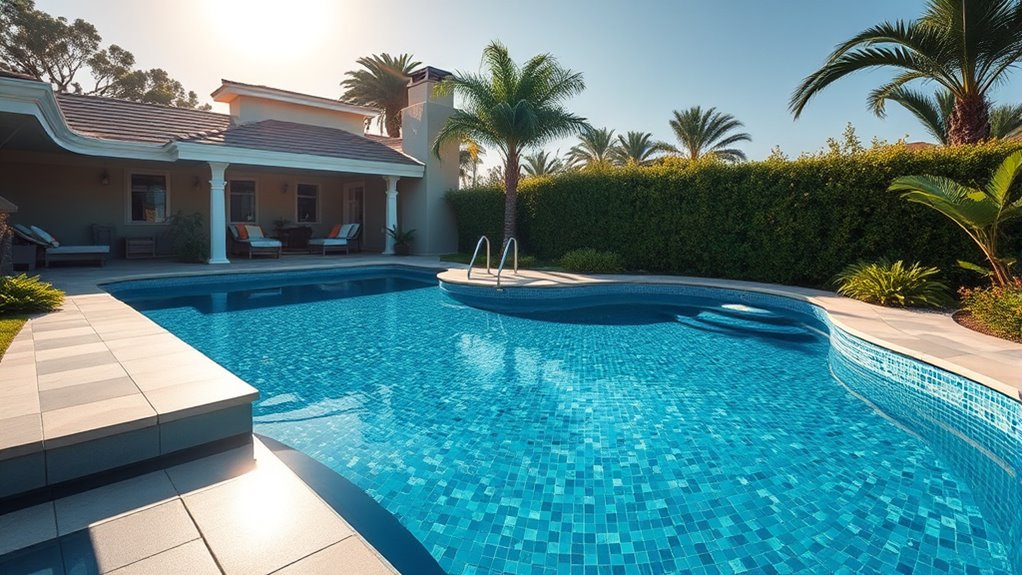

When choosing between geometric and freeform pool shapes, consider your aesthetic preferences and yard layout. Geometric pools offer clean lines and a modern look, with easier installation and lower initial costs, while freeform pools create a natural, relaxed vibe with curved edges and organic contours. Think about your maintenance priorities and long-term investment, as material choices impact durability and upkeep. Exploring these options further helps you find the style that best fits your space and lifestyle.
Key Takeaways
- Geometric pools offer a sleek, modern look with sharp angles, ideal for contemporary landscapes and easier installation.
- Freeform pools mimic natural shapes with curves, blending seamlessly into organic outdoor settings but often involve higher construction costs.
- Material choice impacts durability and maintenance; concrete or fiberglass are common options for both styles, influencing longevity and upkeep.
- Geometric pools are generally more cost-effective and quicker to install, while freeform designs may require more time and expense.
- Consider your aesthetic preference, landscape integration, and budget to select the pool shape that best suits your outdoor space and lifestyle.
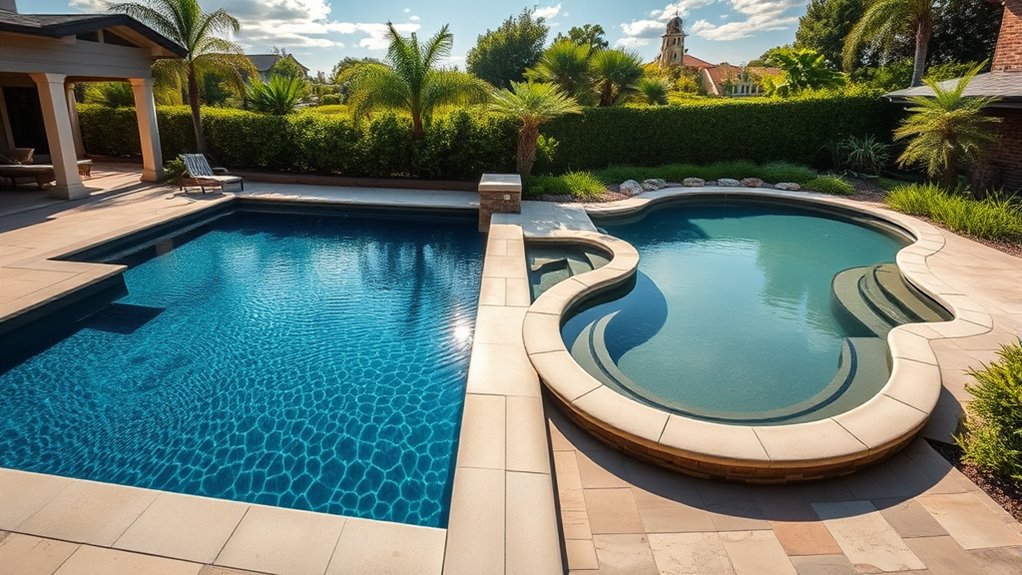
Choosing the right pool shape can transform your backyard into a stunning and functional oasis. When deciding between geometric and freeform pool shapes, one of the key factors to factor in is material durability and maintenance requirements. Different shapes often require different construction techniques, which can influence the longevity of your pool’s materials and the amount of upkeep needed over time.
Geometric pools, characterized by clean lines and precise angles, tend to be constructed with materials that offer high durability. Their straight edges and uniform design make installation easier, often resulting in fewer joints and seams that could potentially weaken over time. Concrete or gunite pools, for example, are popular choices for geometric shapes because they provide a sturdy, long-lasting structure. These materials are resistant to shifting and cracking if properly maintained, which makes them ideal for sharp corners and defined edges. However, keep in mind that geometric pools generally demand regular maintenance, especially with regard to cleaning the grout lines and ensuring that the sharp angles stay intact. The smooth, predictable surfaces are easier to scrub and keep free of debris, but they still require routine upkeep to prevent algae buildup and staining.
Geometric pools with durable materials like concrete or gunite require regular maintenance to keep sharp angles and surfaces pristine.
In addition, selecting durable materials that can withstand weathering and natural elements can extend the lifespan of your pool and reduce long-term repair costs. Freeform pools, on the other hand, mimic natural shapes like lakes or ponds, offering a more organic aesthetic that blends seamlessly into your landscape. These pools often feature curved edges and irregular contours, which can be more forgiving when it comes to material flexibility. They’re frequently built with gunite or fiberglass shells, both of which have proven durability. Fiberglass pools, in particular, are low maintenance due to their smooth surface that resists algae growth. However, because freeform pools tend to have more complex shapes, the construction process can be more involved, sometimes leading to increased costs or longer installation times. Maintenance-wise, their irregular surfaces may trap debris in crevices, making cleaning a bit more challenging. The materials used need to be resilient enough to withstand natural elements and avoid cracking or warping, especially since the curves may put stress on certain sections.
Ultimately, your choice between geometric and freeform shapes hinges on your aesthetic preferences and your willingness to invest time and effort into maintenance. Geometric pools offer a sleek, modern look with materials that promise long-term durability but require consistent upkeep. Freeform pools provide a more natural, relaxed vibe, with materials suited for organic shapes and easier repairs, though they may demand more frequent cleaning due to their intricate contours. Carefully considering your material selection and maintenance capacity can help ensure your backyard oasis remains beautiful and functional for years to come.
Frequently Asked Questions
Can a Freeform Pool Be Built in a Small Yard?
Yes, you can build a freeform pool in a small yard. It’s a great option for yard landscaping because it adds organic flow and visual interest. To maximize space, consider strategic pool lighting to highlight features and create an illusion of openness. A skilled designer can help shape the pool to fit your yard’s layout, making it feel bigger while adding a unique, natural look that suits your outdoor space.
Are Geometric Pools More Cost-Effective Than Freeform Pools?
Geometric pools are generally more cost-effective than freeform pools because their straight lines and simple shapes simplify construction, reducing labor and material costs. If you prioritize design flexibility, a freeform pool offers more customization options, but it may come with a higher price tag due to complex shapes and details. Consider your budget and desired aesthetic to choose the best option for your yard and financial plan.
How Long Does It Take to Install Each Pool Type?
You’ll typically see geometric pools installed in about 2 to 3 weeks, while freeform pools often take 3 to 4 weeks. This difference stems from the construction duration, as freeform designs usually require more custom work and shaping. An interesting statistic shows that planning and permits can add up to a week to your timeline, so expect some variability. Overall, your chosen shape impacts how long the installation process will take.
Which Pool Shape Is Easier to Maintain?
You’ll find that a geometric pool shape is easier to maintain because its simple lines and symmetry reduce shape complexity, making pool maintenance more straightforward. Freeform pools, with their irregular curves and intricate designs, often require more attention to cleaning and repairs due to their shape complexity. So, if low maintenance is your priority, a geometric shape is the better choice, saving you time and effort.
Can Custom Shapes Be Created Within Geometric or Freeform Styles?
Yes, you can create custom shapes within both geometric and freeform styles, offering great design flexibility. In geometric pools, custom shapes often involve precise angles and symmetrical designs, while freeform pools allow for more organic, flowing shapes tailored to your landscape. With professional help, you can blend both styles to achieve a unique look that fits your space and personal preferences. This flexibility guarantees your pool reflects your vision perfectly.
Conclusion
Choosing between geometric and freeform pool shapes depends on your style and space. Did you know that 60% of homeowners prefer freeform pools for their natural look and versatility? Whether you want sharp lines or flowing curves, selecting the right shape transforms your backyard into a personalized oasis. Remember, your pool should reflect your taste and lifestyle—so take your time to choose the style that feels right for you.