
Saltwater pools use an electrolysis process to generate chlorine from added salt, making swimming safer and more natural. The saltwater system dissolves salt into your pool water and produces a steady level of chlorine internally, reducing the need for manual chemical addition. This eco-friendly approach is gentler on your skin and eyes, requires less maintenance, and lowers chemical costs over time. Want to discover how to keep your pool in perfect shape? Keep exploring!
Key Takeaways
- Saltwater pools generate chlorine automatically through electrolysis, reducing manual chemical addition and maintaining consistent sanitation.
- They use a salt chlorine generator that dissolves salt into water, creating a natural, gentle swimming environment.
- Maintenance involves monitoring salt levels, pH, and alkalinity, along with cleaning the generator cell for optimal performance.
- Saltwater pools offer environmental benefits by lowering chemical runoff and using abundant, eco-friendly salt.
- They provide a softer, more natural swimming experience with fewer chemical adjustments and long-term cost savings.
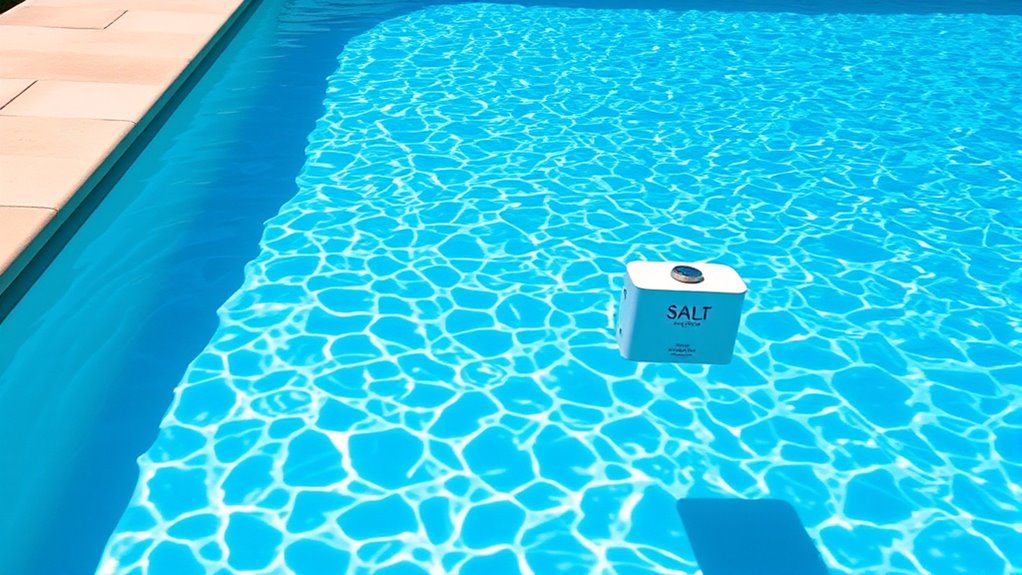
Saltwater pools have become a popular alternative to traditional chlorine pools, offering a gentler and more natural swimming experience. Unlike standard pools that rely solely on adding chlorine manually or through chemical tablets, saltwater pools generate their own chlorine through a process called electrolysis. When you set up a saltwater system, a salt chlorine generator dissolves salt added to the water, producing a steady, low level of chlorine that keeps the water clean and sanitized. This method reduces the need for frequent chemical additions, making maintenance routines simpler and less stressful for you. With proper care, your saltwater pool can remain clear and safe while requiring fewer chemical adjustments, saving you time and effort in the long run.
One of the key advantages of saltwater pools is their lower environmental impact compared to traditional chlorine pools. Since they produce their own sanitizer, you use fewer chemical products, which means less chemical runoff into the environment and fewer concerns about chemical disposal. This eco-friendliness appeals to homeowners seeking sustainable options, especially considering the reduction in chemical manufacturing and transportation associated with saltwater systems. Additionally, salt is abundant and easy to source, making it a more sustainable choice than some of the chemical alternatives used in conventional pools. The overall environmental footprint tends to be smaller because you’re relying on a natural process rather than heavy chemical dependence. Proper maintenance of the saltwater system can further enhance its environmental benefits and extend its operational life.
However, maintaining a saltwater pool involves specific routines that are slightly different from traditional pools. You’ll need to regularly check salt levels, ensuring the salt concentration remains within the ideal range for your generator to work efficiently. Maintaining proper pH and alkalinity levels is vital because imbalances can affect the generator’s performance and the water quality. While the saltwater system reduces the amount of chlorine you handle directly, you still need to monitor chlorine levels to prevent issues like algae growth or bacteria buildup. Routine testing, cleaning the generator cell, and occasionally replacing parts are essential parts of your maintenance routines. These tasks keep the system functioning smoothly and extend its lifespan.
Frequently Asked Questions
Are Saltwater Pools More Cost-Effective Than Traditional Pools?
Yes, saltwater pools can be more cost-effective over time. Their initial investment might be higher due to the salt chlorination system, but you save on ongoing expenses like purchasing chlorine. The cost comparison favors saltwater pools because they require less maintenance and fewer chemical purchases. Over the years, you’ll likely spend less on chemicals and upkeep, making them a smart financial choice for you.
How Often Do Saltwater Pools Require Maintenance?
You might be surprised, but saltwater pools typically need maintenance every 2-4 weeks. When you check the chlorine generation and equipment maintenance, you keep the water crystal clear and safe. Regularly testing the water, cleaning the salt cell, and inspecting the equipment guarantee smooth operation. Coincidentally, this routine maintenance can be easier and less frequent than traditional pools, making your swimming experience more enjoyable and hassle-free.
Can Saltwater Pools Be Installed Indoors?
Yes, you can install a saltwater pool indoors, but you need to take into account space carefully. Indoor installation requires ample room for the pool and proper ventilation to manage humidity and prevent mold. You’ll also need to think about space considerations like ceiling height, access for maintenance, and proximity to electrical and plumbing systems. With proper planning, a saltwater pool indoors can be a luxurious addition to your home.
Do Saltwater Pools Have Any Health Risks?
Saltwater pools can pose some health risks, like increased chlorine exposure which may cause respiratory issues, and skin irritation for sensitive individuals. You might notice dryness or redness after swimming. To minimize these risks, you should regularly check chlorine levels and maintain proper pH balance. Using skin moisturizers and showering after swimming can also help reduce irritation, ensuring a safer and more comfortable experience in your saltwater pool.
Are Saltwater Pools Suitable for All Types of Swimming Pools?
Saltwater pools are like versatile tools, suitable for many pool types, but not all. Your pool size and installation costs play a big role; larger pools might need more maintenance and higher startup expenses. While saltwater systems work well in in-ground and some above-ground pools, they may not suit every shape or material. Always assess your pool’s design and budget to determine if a saltwater setup fits your needs.
Conclusion
Saltwater pools offer a gentler, more natural swimming experience, with about 80% of swimmers reporting less skin irritation compared to traditional chlorine pools. They require less maintenance and use salt to generate your own disinfectant, saving you money and time. If you’re looking for a invigorating, low-maintenance alternative, a saltwater pool could be just what you need. Immerse yourself and enjoy the benefits of cleaner, softer water—your skin will thank you!