To prevent fire and electrical hazards around your pool, make certain all wiring and equipment are installed by qualified professionals and regularly inspected for damage or corrosion. Use GFCIs on outdoor outlets, keep electrical devices unplugged when not in use, and avoid extension cords. Store chemicals safely away from electrical sources, and maintain clear pathways free of clutter and combustibles. Want to learn more about safeguarding your pool area from these dangers? Keep exploring for essential safety tips.
Key Takeaways
- Ensure all electrical wiring and components around pools are installed and inspected by qualified professionals.
- Use GFCIs on outdoor outlets to prevent electrical shocks and reduce fire risks.
- Keep electrical devices unplugged when not in use and avoid extension cords for pool equipment.
- Store pool chemicals safely away from electrical outlets and wiring to prevent fires.
- Regularly inspect and maintain electrical equipment to identify and address corrosion, damage, or malfunctions.
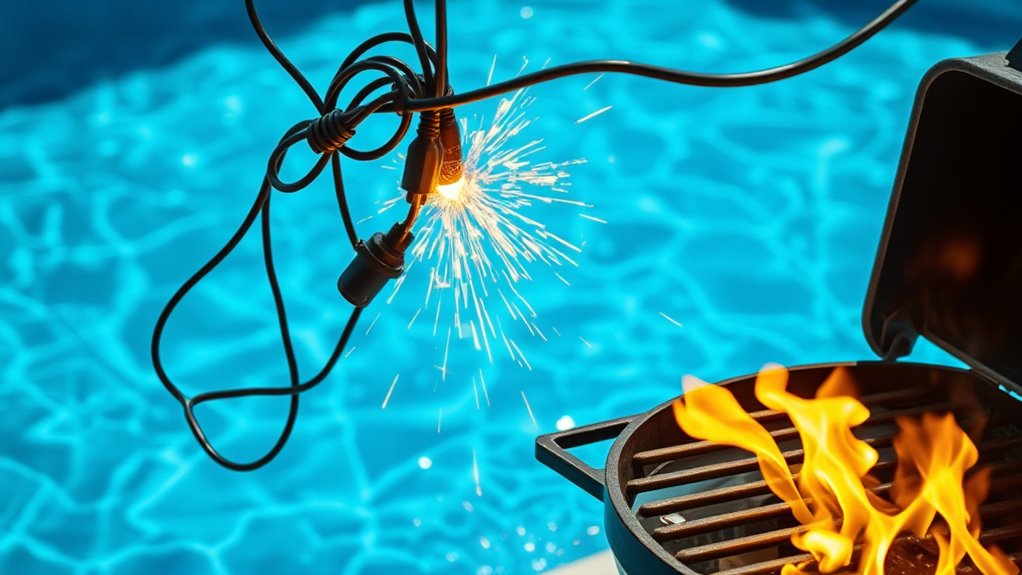
Pools can be a great way to relax and enjoy the outdoors, but they also pose serious fire and electrical hazards if safety precautions aren’t followed. One of the most important aspects of pool safety is understanding how electrical wiring around your pool area can become a danger. Improperly installed or damaged electrical wiring can lead to electric shocks, short circuits, or even fires. To prevent this, you need to verify all electrical components—such as pool lights, pumps, and filters—are properly grounded and installed by qualified professionals. Regular inspections are essential because corrosion or wear over time can expose wiring, increasing the risk of electrical faults. Keeping electrical wiring away from the water and wet surfaces is critical; any exposure can turn an electrical malfunction into a life-threatening situation. Utilizing vertical storage solutions for pool equipment can help keep the area organized and reduce trip hazards that could lead to accidents.
Fire prevention around pools hinges considerably on controlling electrical hazards. For example, outdoor outlets should be equipped with Ground Fault Circuit Interrupters (GFCIs), which cut off power instantly if they detect a leakage current. GFCIs act as a safeguard against electrocution and reduce the risk of electrical fires caused by faulty wiring or equipment. Additionally, never use extension cords for pool equipment—they’re a common cause of electrical fires and shocks. Instead, verify that all electrical devices are plugged into properly grounded outlets designed for outdoor use. When not in use, unplug and disconnect any electrical equipment to prevent accidental contact with water, which can cause sparks or short circuits. Regularly assessing and rotating pool accessories and tools can help prevent clutter buildup that might interfere with safety measures.
Beyond electrical wiring, fire prevention also involves keeping the pool area clear of combustible materials. Store pool chemicals, like chlorine and other cleaning agents, in a safe, dry place away from electrical outlets and devices. Be cautious with any outdoor lighting—use fixtures rated for wet conditions and avoid overloading circuits, which can overheat wiring and ignite fires. Regular maintenance of pool equipment is crucial; damaged cords, exposed wiring, or malfunctioning pumps can be fire hazards if left unchecked. Always follow manufacturer instructions for installation and maintenance, and consider scheduling professional inspections at least once a year.
Ultimately, safety around pools isn’t just about enjoying the water—it’s about proactive measures to prevent fire and electrical hazards. Proper electrical wiring, routine inspections, and fire prevention strategies can dramatically reduce risks, making your pool a safe spot for family and friends. Staying vigilant and following safety guidelines ensures you can relax and have fun without worry, knowing that you’ve taken steps to protect everyone from potential dangers.
Frequently Asked Questions
How Often Should Pool Electrical Systems Be Inspected?
You should have your pool’s electrical systems inspected at least once a year. During these inspections, verify electrical grounding is intact and circuit protection devices are functioning properly. Regular checks help prevent hazards caused by faulty wiring or inadequate grounding. If you notice any issues, get a professional to evaluate and repair them promptly. Consistent inspections keep your pool safe, compliant, and free from electrical dangers.
Are Solar-Powered Pool Heaters a Fire Risk?
Solar-powered pool heaters can pose a fire risk if not properly maintained, but with proper electrical risk mitigation, the chances of solar heater fires are minimal. Regularly inspecting the system, ensuring proper installation, and using certified equipment help prevent electrical hazards. If you follow safety guidelines and address any issues promptly, you can enjoy the energy-efficient benefits of solar heaters without worrying about fire risks.
What Safety Measures Prevent Electrical Shock During Storms?
Imagine your pool as a calm lake, and storms as brewing tempests. To stay safe, you follow grounding protocols that channel excess electricity away from you. Always guarantee circuit interrupters are in place—they act like vigilant guardians, instantly shutting off power when storms threaten. Disconnect electrical devices, avoid contact with water during lightning, and stay inside until the storm passes. These steps create a shield, keeping you safe from electrical shocks.
Can Pool Lighting Be Safely Installed Underwater?
Yes, pool lighting can be safely installed underwater if you use proper underwater wiring and approved lighting fixtures. Make sure the wiring is waterproof and rated for submersion to prevent electrical hazards. Always hire a licensed electrician to install the fixtures, ensuring they follow local electrical codes. Regularly inspect the lighting and wiring for damage, and turn off power before maintenance to keep your underwater lighting safe and functional.
How Close Can Electrical Outlets Be to the Pool?
You should keep electrical outlets at least 20 feet away from the pool to guarantee safety. Make sure your pool deck wiring is properly installed and protected with GFCI outlets, which cut power immediately if a ground fault occurs. Avoid placing outlets closer than this distance, and always follow local electrical codes. Proper placement and GFCI protection help prevent electrical hazards and ensure a safe swimming environment.
Conclusion
You’re more likely to experience electrical shock or fire hazards around pools than you might think—according to the National Fire Protection Association, nearly 70% of pool-related electrocutions involve faulty wiring or equipment. By staying vigilant and following safety guidelines, you can substantially reduce these risks. Remember, preventing accidents isn’t just about protecting your property but also about keeping everyone safe. Stay cautious and make sure your pool area is a secure, hazard-free zone for all to enjoy.