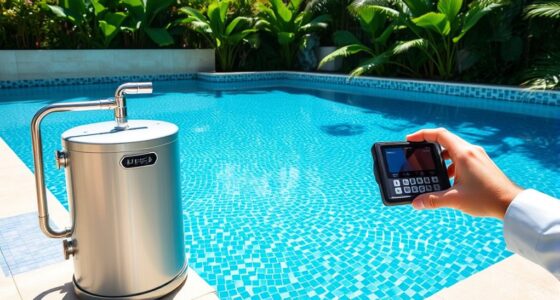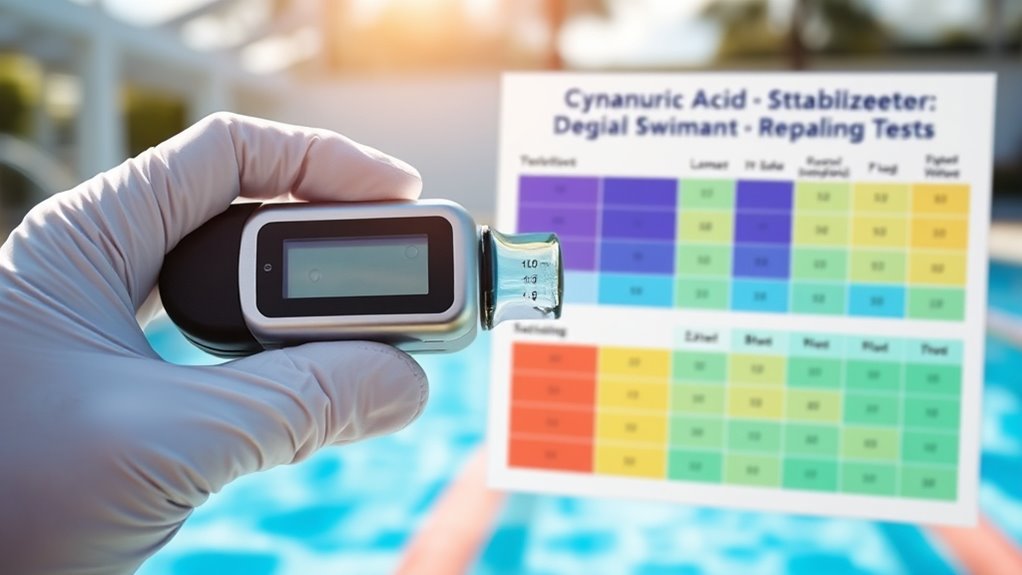

To keep your pool safe and balanced, you need to monitor cyanuric acid levels and stabilizers regularly, ideally once a week. Use reliable test kits or strips to check if your stabilizer stays within the recommended 30-50 ppm range. If levels are too high or low, adjust by partially draining or adding stabilizer accordingly. Continuing with this routine will help you maintain clear, healthy water and maximize sanitizer efficiency. Stay tuned to find out more.

Get pool and patio gear delivered free with Prime
- Fast, free delivery on millions of items
- Prime Video, Amazon Music and more included
- Member-only deals all year
Key Takeaways
- Test pool water weekly using reliable test kits or strips to accurately measure cyanuric acid levels.
- Maintain cyanuric acid within the recommended 30-50 ppm range for optimal chlorine stability.
- Adjust stabilizer levels by adding cyanuric acid or partially draining and refilling the pool as needed.
- Record test results regularly to monitor trends and prevent over- or under-stabilization.
- Be aware that high stabilizer levels can weaken chlorine’s disinfecting power, requiring corrective actions.

Keeping cyanuric acid levels and stabilizers in check is essential for maintaining a safe and balanced pool environment. When you manage these levels properly, you guarantee the pool’s chemical balance remains stable, helping your sanitizer work effectively while preventing issues like algae growth and cloudy water. Cyanuric acid acts as a protector for chlorine, shielding it from sunlight degradation, but too much can weaken sanitizer performance. Consequently, regular testing and adjustments are vital for maximum stabilizer effectiveness and overall water quality.
Maintaining proper cyanuric acid levels ensures effective sanitizer performance and a healthy, clear pool environment.
You should test your pool water frequently, at least once a week, using reliable test kits or test strips. These tests reveal cyanuric acid concentrations, allowing you to determine whether the levels are within the recommended range—generally between 30 and 50 ppm. If levels rise above this, you might notice a decline in chlorine’s ability to disinfect, which can lead to algae or bacteria problems. Conversely, if levels are too low, your chlorine may dissipate quickly, forcing you to add sanitizer more often, increasing costs and effort. Consistent testing ensures you stay on top of these fluctuations, maintaining a steady pool chemical balance.
Adjusting stabilizer levels, primarily cyanuric acid, involves careful chemical addition or dilution. If your levels are too high, you might need to partially drain and refill the pool to dilute the cyanuric acid concentration. If they’re too low, adding cyanuric acid directly can boost stabilizer effectiveness. Always follow manufacturer instructions and recommended dosages to avoid overcorrecting, which can cause long-term issues. Using stabilized chlorine products, like dichlor or trichlor, also contributes to maintaining proper stabilizer levels, since these contain cyanuric acid. However, relying solely on stabilized chlorine can cause cyanuric acid buildup over time, so monitoring and managing levels becomes even more critical. Regular pool water testing and record keeping can help identify trends and prevent over-accumulation.
Maintaining proper pool chemical balance isn’t just about adding chemicals; it’s about understanding how they interact. Excess stabilizer can hinder chlorine’s disinfecting power, while too little leaves your pool vulnerable to UV degradation. Regular testing and timely adjustments keep your pool water safe, clear, and inviting. Good practices include tracking your stabilizer levels and understanding how different products impact overall chemistry. This proactive approach ensures your pool remains sanitized effectively, minimizing the risk of water quality issues and extending the lifespan of your equipment. Ultimately, managing cyanuric acid levels and stabilizer effectiveness isn’t complicated—it’s about staying vigilant and making informed decisions to keep your pool safe and enjoyable.
pool water test kit cyanuric acid
As an affiliate, we earn on qualifying purchases.
As an affiliate, we earn on qualifying purchases.
Frequently Asked Questions
How Often Should I Test Cyanuric Acid Levels?
You should test your cyanuric acid levels at least once a week to maintain ideal water quality. During peak swimming season or if you notice cloudiness or algae, increase testing frequency to every 2-3 days. Regular testing at suitable intervals helps prevent levels from becoming too high, which can reduce chlorine effectiveness. Keep an eye on your levels to ensure a safe, clean pool environment for everyone.
What Are Common Sources of Cyanuric Acid Contamination?
Common sources of cyanuric acid contamination include pool chemical sources like stabilizers added to protect chlorine from sunlight. Outdoor contamination also plays a role, as debris, leaves, and dirt can introduce cyanuric acid into your pool. Additionally, using certain algaecides or shock treatments containing cyanuric acid can raise levels. To keep your water balanced, be mindful of these sources and regularly monitor your cyanuric acid levels.
Can Stabilizers Be Used in All Types of Pools?
Stabilizers can’t be used in all pools, and you should consider pool chemical formulations and stabilizer compatibility first. In outdoor pools, stabilizers like cyanuric acid help protect chlorine from sunlight, but in indoor or saltwater pools, they may cause issues like cloudy water or algae growth. Always check your pool type and follow manufacturer guidelines to guarantee proper use, safety, and ideal water quality.
What Are the Signs of Over-Stabilization?
You can tell you’re over-stabilized when your pool chemistry seems off; the water may become cloudy or have a strong chlorine smell, despite regular shocking. High stabilizer levels disrupt the stabilizer balance, making chlorine less effective and causing algae growth or skin irritation. Regular testing helps you uphold proper stabilizer balance, preventing over-stabilization. Keep an eye on cyanuric acid levels to ensure your pool stays safe, clear, and well-balanced.
How Do I Safely Adjust Cyanuric Acid Levels?
To safely adjust cyanuric acid levels, you should carefully add stabilizer or water, considering chemical interactions. Lower levels by diluting the pool water with fresh, unstabilized water, which also helps maintain pH balance. Always test your water after adjustments to verify proper cyanuric acid levels and pH balance. Avoid adding stabilizer directly into the skimmer to prevent uneven distribution and potential chemical imbalances.
As an affiliate, we earn on qualifying purchases.
Conclusion
By keeping a close eye on cyanuric acid levels and stabilizers, you’re guiding your pool’s health like a skilled captain steering stormy waters. Regular monitoring ensures clear, safe water and prevents costly issues down the line. Think of it as tending a delicate garden—constant care yields vibrant blooms and peace of mind. Stay vigilant, and your pool will remain a sparkling oasis, bringing joy and refreshment to every swim.
cyanuric acid level tester for pools
As an affiliate, we earn on qualifying purchases.
As an affiliate, we earn on qualifying purchases.
As an affiliate, we earn on qualifying purchases.
Columbus Day / Indigenous Peoples' Day Picks
long weekend sales
As an affiliate, we earn on qualifying purchases.